New yorker

Why are there no good films about Independence Day?

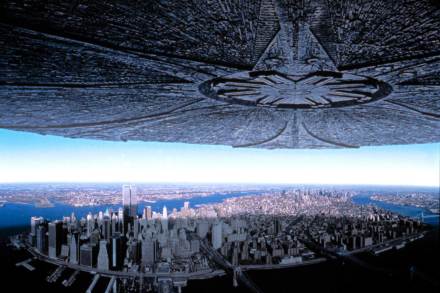
This month marks 30 years since the release of Roland Emmerich’s Independence Day, a science-fiction blockbuster best viewed as the anti-Close Encounters of the Third Kind. Spielberg’s 1977 film suggested we would be better off finding common ground with extraterrestrial visitors; Emmerich’s more bombastic picture stuck to the (surprisingly Trumpian) idea that aliens were evil, wished to destroy our planet and must be resisted at all costs, preferably with nuclear weapons. It is not a subtle film, with the most fondly remembered moment coming in the famous shot when the White House is destroyed by an alien spacecraft.

Taki’s life as a writer

It was roughly 55 years ago, at the tail end of the 1960s, that I took the monumental decision to become a writer. It wasn’t exactly an agonizing one. By then I’d been on the European tennis circuit for a decade, and was kaput. Joining the circuit at 19, I traveled nonstop seeing the world. I was never tired or hungover no matter how much I partied – and I partied relentlessly. And, needless to say, there were constant thump-thumps in the heart, as at every opportunity I pursued beautiful women. I had a great advantage in this regard. As one of the worst players on the circuit, I was usually free to chase the fairer sex by the second day of the tournament. To the losers go the spoils! Except in those days the females who followed tennis looked more like losers than the losers.

Miscellaneous Notebook

From our UK edition

I have, for utterly explicable reasons, not been asked to guest-edit Radio 4’s Today this Christmas. Had I, though, I would have revived an idea first suggested, I think, by Tony Benn. Everyone loves the Shipping Forecast. But the weather forecast? That’s a different kettle of Michael Fish. The weather is rarely read, it’s emoted. ‘I’m sorry to say it’s been a rainy old day!’ Or, ‘Brrrr, bit of a frost, do wrap up!’ So why not replace emotion with detachment? First we carve up the country into meteorologically logical areas — since it’s Radio 4, let’s use Roman names — and then apply maritime thinking inland. ‘And here is the weather forecast issued by the Met Office at 0600.

Hasan Minhaj’s race-filled fantasies

With all the focus on Russell Brand, it’s easy to forget that another comedian made headlines — for all the wrong reasons — last week. Two days before the world came crashing down on Brand, the New Yorker’s Clare Malone wrote a devastating piece on Hasan Minhaj.  Minhaj, according to the brilliant expose, has a history of fabricating narratives. What’s particularly disturbing is that his tall tales all appear to have a unifying theme: race. More specifically, racism directed towards him, an Asian American and Muslim American, and his loved ones. Much of the New Yorker piece focuses on Minhaj’s 2022 Netflix standup special, The King’s Jester, which was marketed as a biographical account of his formative years.

Joan Didion deserves better 

From our UK edition

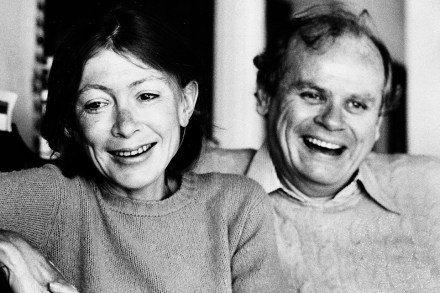
This book is an example of a regrettable new trend – the solipsistic biography. I mean lives of famous people written by unfamous people (usually women) who want to tell you a LOT about themselves. This one is about the writer Joan Didion by an academic called Evelyn McDonnell who never met Didion but believes that they had much in common. Here is her evidence. ‘She was born within one year of my mother; I was born within two years of her daughter. We are both native daughters of California. We lived in New York at the same time, though she was an Upper East Side celebrity and I was a Lower East Side punkette. We both wrote in order to live. We both thought about the sea whenever we felt troubled.’ Soul sisters, right?

Feeding frenzy: memories of a gourmand in Paris

From our UK edition

‘Bald, overweight and gluttonous’ is how the American journalist and food writer A.J. Liebling described himself. Born in Manhattan in 1904, he wrote extensively about boxing and horse racing and was a war correspondent during the second world war, taking part in the Normandy landings in that capacity. He also recounted his gastronomic adventures in Paris before the war in Between Meals, a collection of essays largely derived from a four-part series, ‘Memoirs of a Feeder in France’, which ran in the New Yorker in 1959.

The joylessness of Joan Didion

From our UK edition

Gstaad   Joan Didion, who died last December, took herself extremely seriously. American writers tend to do that, especially those whose books are unreadable, the kind who win prizes and get reviewed by the Bagel Times. Pretension aside, however, Didion was a hell of a writer, a stylist who modelled her prose on Papa Hemingway’s. We never met, but I knew enough to stay away because of a joke I played on her. Didion was godmother to David Mortimer’s and Shelley Wanger’s daughter, a young lady I have never met. Shelley is an editor at Knopf, and is the daughter of that beautiful and elegant actress of the 1940s Joan Bennett. David Mortimer is a scion of a grand old American family. I have always known them and like them, hence the joke.

You’ll tire of the wackiness and the whimsy: The French Dispatch reviewed

From our UK edition

The American filmmaker Wes Anderson has an apartment in Paris and has always yearned to make a French movie but also he has always yearned to make a film about the New Yorker, the magazine with subscribers all round the world, some of whom actually get round to reading it before binning it, and some of whom don’t. (She says, guiltily.) So The French Dispatch is, he has said, the ‘smooching’ of these two ideas, and it is, alas, a ‘smooch’ of a film. That is, not one thing or the other. I would further add it’s as if all the cast had been instructed to act wackily and off-kilter throughout because we won’t get tired of that. But I promise you we quickly do.

The Literary Disco podcast made me want to throw my laptop at the wall

From our UK edition

One of the stranger things that happened in the period just before lockdown was the sudden disappearance of audiences from TV and radio shows. Late-night hosts told jokes to silent rooms in front of a white background, dutifully pausing for a laugh that never came; panel shows were broadcast without so much as the sound of tumbleweed. Punchlines flopped, charisma evaporated. It was as if Earth’s comedians had been banished to some purgatorial realm, where they would be forced to tell jokes to no one as a form of penance. Comedy needs an audience. It’s not clear that the same is true of short stories. In Selected Shorts, well-known actors read short stories to a room full of people.

From alpha to omega

From our UK edition

Mary Norris’s book about her love affair with Greece and the Greek language starts with a terrific chapter about alphabets. That may sound like an oxymoron, but I was fascinated to learn why the Y and the Z come at the end of our alphabet. When the Romans were adapting the Greek alphabet, they ditched these letters because they didn’t need them. Later, when they started using Greek words, they wanted them back, so they tacked them on at the end. Equally, it’s nice to know how it comes about that, in England, we pronounce the letter Z as Zed — unlike in America, where Zed’s dead (and they say Zee, baby). It’s a throwback to a time we would have called it Zeta, after the Greek letter. Obvious, once you know.

High life | 4 October 2018

From our UK edition

To London for much too brief a visit: a marriage, lunch with Commodore Tim Hoare, and a look-see for a house. Yes, I am returning to live in London, but under one condition. It’s called Corbyn, and if he comes in, I’ll stay away. It’s rather cowardly, I know, but I did live in London during the closed shops of the early 1970s. I experienced the joys of the three-day week, the uncollected rubbish, the hospitals without electricity, and the unions exercising power over the government until a certain Margaret Thatcher put a stop to it. I find it hard to understand how people can root for Labour when the party is now openly a communist one. But its friends at the BBC and other channels, and in other parts of the media, pretend otherwise.

The pointlessness of banning Bannon | 4 September 2018

From our UK edition

Under David Remnick’s editorship, the New Yorker has become stronger than ever during a period where many titles have collapsed. So you'd think he might be able to fend off the kind of nonsense he's just experienced. The New Yorker has branched out to publish unmissable podcasts, regular emails, blogs and events which combine to push the magazine sales up 10pc. Remnick hasn't torn it up and started again. He managed to keep everything the same, by changing everything: projecting and protecting the magazine’s identity, on and off the page. So when he decided to conduct an interview with Steve Bannon live on stage, as part of the New Yorker Festival, it was a typically gutsy decision.

The Spice Girls sang about empowerment – better than the #MeToo whinging

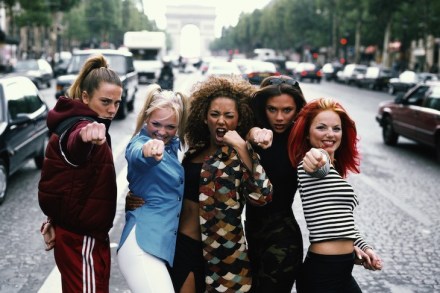
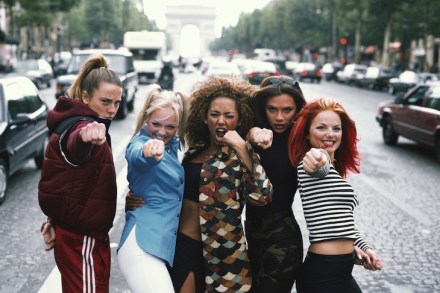
The recent news of a Spice Girls reunion will, I suspect, be greeted by some former fans with nostalgic longing and others with an embarrassed cringe. But whether you’re a fan or foe, I think it’s worth remembering that golden decade of Girl Power — the 1990s — when it was bliss to be young and female. With our present preoccupation with the abuses of male power, we’ve forgotten about Girl Power. It was a fun-fuelled feminism for the mainstream; a materialistic and hedonistic celebration of female assertiveness, ambition and self-reliance. Girl Power was Thatcherism in sexy underwear. OK, so maybe Girl Power didn’t produce much in the way of great pop music or feminist polemics.

Bring back Girl Power

The recent news of a Spice Girls reunion will, I suspect, be greeted by some former fans with nostalgic longing and others with an embarrassed cringe. But whether you’re a fan or foe, I think it’s worth remembering that golden decade of Girl Power — the 1990s — when it was bliss to be young and female. With our present preoccupation with the abuses of male power, we’ve forgotten about Girl Power. It was a fun-fuelled feminism for the mainstream; a materialistic and hedonistic celebration of female assertiveness, ambition and self-reliance. Girl Power was Thatcherism in sexy underwear. OK, so maybe Girl Power didn’t produce much in the way of great pop music or feminist polemics.

Art and aspiration

From our UK edition

When Adam Gopnik arrived in Manhattan in late 1980 he was an art history postgrad so poor that he and his wife-to-be were reduced to sharing a 9’ x 11’ basement with a bunch of cockroaches. But everything was going to be all right because Gopnik had his guitar with him and he ‘knew someone who’d once had dinner with the sister of a close friend of Art Garfunkel’s psychotherapist’. Having sent a tape of his songs over, he settled down to ‘write jokes for comedians. It seemed like a plan for life’. In a way it was. Though Gopnik has yet to hear back from Garfunkel, his oratorio about Alan Turing played recently at the Barbican.

Hit and miss | 24 August 2017

From our UK edition

Truman Capote should have been called Truman Persons. His father, Archulus, abbreviated his first name and introduced himself as Arch Persons. ‘And that,’ scoffed his son, ‘sounded like a flock of bishops.’ The young scribbler was thrilled when his divorced mother married a rich Cuban, Joseph Capote, whose zippy and eccentric name he gladly adopted. He got a job at the New Yorker and found the magazine’s celebrated wits, including Dorothy Parker and James Thurber, were embittered molluscs who hated each other. Capote’s literary life, as related by Bob Kingdom, is a parade of inspired bitchiness. He had the knack of getting to a character’s core problem. For Gore Vidal it was the knowledge that he had never written a masterpiece.

Hyped to death

From our UK edition

Hand it to the Americans. They know how to hype a young talent to death. The latest to be asphyxiated by the literary establishment is Branden Jacobs-Jenkins. He’s written six off-Broadway plays (one adapted from a script by Boucicault), and won a ton of awards and prize money. Most of the English ‘critics’, if one can call them that, have meekly regurgitated the American propaganda. Gloria, which was nominated for the Pulitzer, now arrives at Hampstead. The setting is a snobbish New York magazine, which is absolutely and emphatically not the New Yorker, according to Jacobs-Jenkins. (Before turning to drama, he worked at the New Yorker for three years.

Moments of absurdity

From our UK edition

The bestselling humourist and New Yorker essayist David Sedaris is renowned for an almost hypnotic deadpan drollery and maybe especially for The Santaland Diaries, his uproarious account of earning part-time cash as a department store Christmas elf. Now he is bringing out an edited version of his personal diaries. It’s the first volume of two, taking us from his days as a broke student, stoner and young gay man in North Carolina and Chicago, through to the years of literary fame and success in New York and Paris as the new century dawns — a distinction worn lightly. Fans, semi-fans and non-fans (I am midway between the first two categories) may well crack open this book in search of David Sedaris’s private reality.

The fearful forties

From our UK edition

In an early chapter of All Grown Up, the narrator Andrea says to her therapist: ‘Why is being single the only thing people think of when they think of me? I’m other things, too.’ ‘Tell me who you are, then,’ says the therapist. And so Andrea tells her that she’s a woman, a New Yorker, that she works in advertising as a designer, that she’s a daughter, a sister and an aunt. In her head, she adds: ‘I’m alone. I’m a drinker. I’m a former artist. I’m a shrieker in bed. I’m the captain of the sinking ship that is my flesh.’ We meet Andrea when she’s 39, asking herself, with increasing desperation, ‘What next?

The Left’s great Russian conspiracy theory

From our UK edition

The chattering classes have officially lost it. On both sides of the Atlantic. Of course they'd been teetering on the cliff edge of sanity for a while, following the bruising of their beloved EU by 17m angry Brits and Hillary’s loss to that orange muppet they thought no one except rednecks would vote for. But now they’ve gone over. They’re falling fast. They’re speeding away from the world of logic into a cesspit of conspiracy and fear. It’s tragic. Or hilarious. One or the other. Exhibit A: this week’s New Yorker. It’s mad. It captures wonderfully how the liberal-left has come to be polluted by the paranoid style of McCarthyist thinking since Trump’s victory.