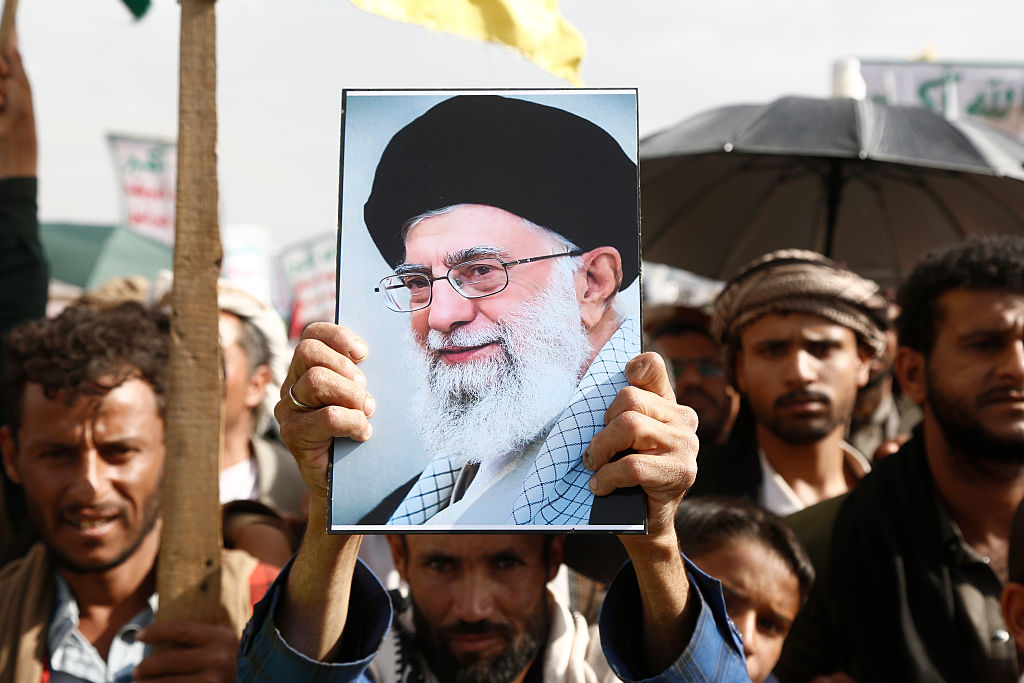
The longest-serving autocrat in the Middle East, Iran’s Supreme Leader Ayatollah Ali Khamenei, is dead. This is a historic moment for the Iranian people, the region, America, and US allies and partners around the world. Given the unprecedented nature of this US and Israeli military operation, it remains hard to predict events in Iran. But several developments give us clues about Iran’s direction of travel in the near-term.
Khamenei was a brutal ruler who not only abused his people and fomented terror around the world but was also a tyrant to his own family. His estranged sister Badri Khamenei once recounted how Qassem, a good friend of her brother, was murdered by the Iranian regime in the early years of the Islamic Revolution. All the blood from Qassem’s body was extracted by security forces, who then proceeded to cut off his legs and laid them on his chest. When Badri confronted Ali Khamenei about this atrocity, his only justification was that he had changed his mind about his friend Qassem. Khamenei also imprisoned his own niece.
The Iranian Revolutionary Guard Corps will be a critical stakeholder in any leadership selection
For Khamenei, the survival of the Islamic Revolution trumped the well-being of his people, some of his family, and his friends. His arrogance was such that he believed God spoke directly through him. He would often recount a meeting years ago where “the Almighty God was speaking! In fact, it was my tongue, but it was God’s words; it was a very extraordinary session.”
Khamenei’s death marks the second succession of the Islamic Republic since its founding in 1979. When his predecessor Ruhollah Khomeini died, many observers questioned whether the clericalist system would survive. Yet it endured. But in 1989, Khomeini died from natural causes. In 2026, Khamenei was eliminated by force. This makes for a messier transition today.
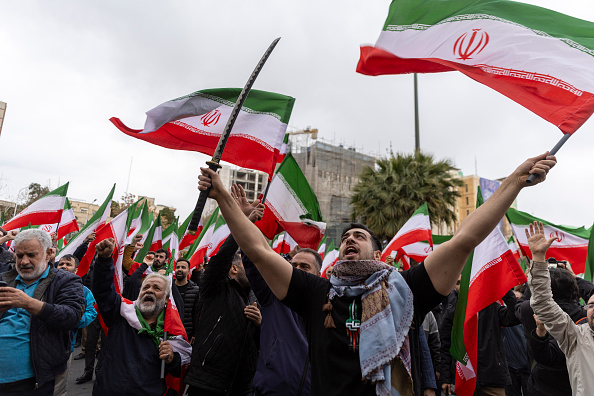
Khamenei, born in Mashhad in 1939, rose to power as a mid-ranking cleric and Khomeini confidant, serving as a Friday Prayer leader, deputy defense minister, legislator, president, and finally supreme leader. He spent his years as supreme leader hiding behind his presidents, who had become resigned to signing their own political death warrants by assuming this post. Khamenei used his presidents to deflect blame and scrutiny while centralizing authority in the Office of the Supreme Leader, which has been the nerve center of the regime – commanding the armed forces, making major foreign policy decisions, and doling out patronage. Presidents left office politically burned and bloodied. One former president, Ali Akbar Hashemi Rafsanjani, even died years later under mysterious circumstances, with his family insisting he was murdered by elements in the state after having helped elevate Khamenei to the supreme leadership.
The Islamic Republic’s constitution stipulates a succession process whereby the Assembly of Experts, a clerical body, anoints a replacement for the supreme leader should the office become vacant. In the interim, a leadership council is formed which includes the president, chief justice, and a member of the Guardian Council selected by the Expediency Council. There is also a protocol should one or more of these offices lose an incumbent.
After Khamenei’s death was confirmed by the state media the Islamic Republic swiftly announced that it had formed this interim leadership council. In addition to the president and chief justice, it named Alireza Arafi, a cleric on the Guardian Council who has headed Iran’s Seminary and is a member of the Assembly of Experts, as its third member. Membership of the council may prove a steppingstone to the supreme leadership, should a successor to Khamenei be chosen. Its clerical members, especially the chief justice and Arafi, are strong contenders to succeed Khamenei.
When Hezbollah’s longtime secretary-general Hassan Nasrallah was killed by Israel in 2024, his probable successor, the head of Hezbollah’s Executive Council Hashem Safieddine, was himself eliminated shortly after. The Iranian state will likely have this in precedent in mind and attempt to manage security risks accordingly, especially for the interim leadership council and figures like Supreme National Security Council Secretary Ali Larijani and Speaker of Parliament Mohammad Bagher Ghalibaf, who have been playing integral roles in managing state affairs. The Iranian Revolutionary Guard Corp’s (IRGC) Ansar al-Mahdi Protection Corps, which guards high-ranking state officials, and the Vali Amr Protection Unit, which protects the supreme leader, will likely play a key role.
The IRGC will be a critical stakeholder in any leadership selection. There are reports that the new commander-in-chief of the IRGC is Ahmad Vahidi, who has taken part in some of the worst abuses of the Islamic Republic. A former Quds Force member and cabinet minister, Vahidi is wanted by Interpol for his role in the bombing of the AMIA Jewish community center in Buenos Aires in 1994. Vahidi was also sanctioned for his role as interior minister overseeing the Iranian police’s crackdown on the protests that followed the murder of Mahsa Amini in 2022. The breadth and depth of his bloodstained experience make Vahidi a fearsome player in the new power order in Iran. It will also put a target on his back, especially from Israel.
In the end, these are decisive days for the future of Iran. The future remains uncertain. But one thing is certain: Khamenei, a man who has been responsible for the deaths of so many around the world, has been brought to justice.

Comments