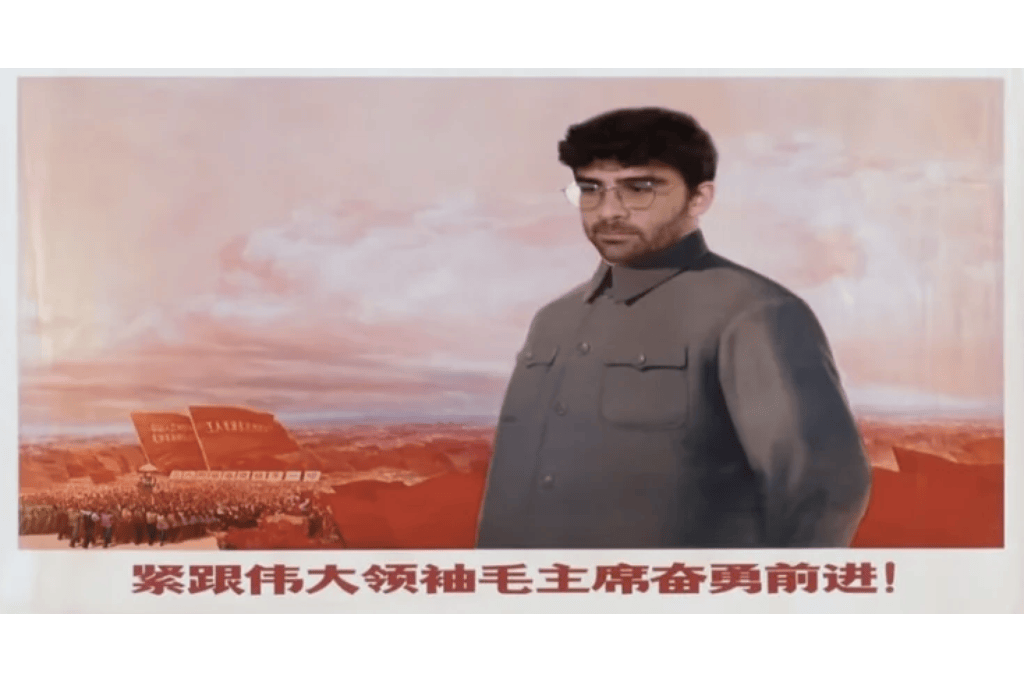
On July 18, Hasan Piker – a Twitch streamer who has made millions denouncing capitalism – addressed the national convention of the Democratic party’s student wing in a gray tunic suit of the kind Mao Zedong wore. Days later, a stream resurfaced in which Piker, broadcasting from China, called Mao “one of the great leaders of this world.” His clarification, that there were “a lot of excesses, let’s be real,” is the tone of a man returning a fish that a restaurant served over-salted, not of one contemplating tens of millions dead.
Nobody would need to care if the socialists were losing. On Tuesday a democratic socialist, Donavan McKinney, took a safe Detroit congressional seat from a sitting Democrat, and Abdul El-Sayed, a progressive who is not a socialist, beat the party establishment’s candidate for Michigan’s Democratic Senate nomination. The Democratic Socialists of America says it passed 120,000 members, making it the largest socialist organization in American history. New York City is run by one.
Almost no one votes on a movement’s foreign enthusiasms, so nobody asks who pays to keep those enthusiasms in circulation
Most of these voters are thinking about rent and hospital bills, not Mao. Almost no one votes on a movement’s foreign enthusiasms, so nobody asks who pays to keep those enthusiasms in circulation. Several are well funded.
Enter Neville Roy Singham, a former technology executive who made a fortune writing software for capitalism and lives in Shanghai spending it on people devoted to capitalism’s abolition. CBS News reported in July that a federal grand jury in Manhattan is investigating whether Singham broke tax laws and failed to register as a foreign agent. He has been charged with nothing, and he denies working for or taking instructions from any government or political party. There is no public evidence that the Chinese government funds or directs him; his fortune is his own, from the sale of his software firm in 2017.

The New York Times has traced at least $275 million into American nonprofits linked to Singham. The Times found four outfits with names like United Community Fund, almost no physical presence and addresses that turned out to be mailboxes at UPS stores. Some of the money reached the People’s Forum, a “movement incubator” named in the manner of a body that would convene you for self-criticism.
In 2008, Singham sat down with Fortune and explained the philosophy of his software business: “As a socialist I believe the world should have access to the best ideas in software for free.” His company was billing Microsoft and Oracle. He called Hugo Chávez’s Venezuela a “phenomenally democratic place.”
In March, Piker flew to Havana with the Nuestra América Convoy, a delegation protesting American sanctions on Cuba, organized in part by the People’s Forum. When reports surfaced that the Department of Treasury’s sanctions office had subpoenaed him, he said nothing had reached him and streamed for six hours anyway, under the title “FEDS ARE AFTER ME.”
The government’s real quarry, he explained, was “probably Singham and his operation,” meaning “anything that he has ever financed.” He described the people around Singham as “wonderful people.” (There is no evidence Singham finances DSA, El-Sayed or Piker.)
Code Pink are the people in pink hats who have been interrupting congressional hearings. In 2015, the organization’s co-founder Jodie Evans demanded that China stop its “brutal repression” of women’s human rights defenders. In 2017, she married Singham. Since then, the Times found, about a quarter of Code Pink’s money has come from groups linked to him. Asked in a video chat whether she had anything negative to say about China, she replied, “I can’t, for the life of me, think of anything.”
In 2023, two Code Pink activists disrupted the opening hearing of a House of Representatives committee on the Chinese Communist Party, holding up a “China is not our enemy” sign and a “Stop Asian Hate” sign that the chairman gently pointed out was upside down. That June, Evans briefed the DSA’s China Working Group, according to minutes reported by Newsweek, advising them to “focus on points that are easier to sell.”
Americans have been coming home from China with the wrong impression for ninety years. In 1936, reporter Edgar Snow spent four months with Mao’s guerrillas, writing down the chairman’s life story by lamplight. His book Red Star Over China introduced Mao to the West as a reformer. Snow found him “Lincolnesque” and felt “a certain force of destiny in Mao.”
Snow crossed enemy lines and slept in a cave only to get his story wrong. His successor is Piker, who flew to Beijing last November and told Chinese state television that the trip was “a dream come true” and that he had come to correct the “rumors” and “outright lies” westerners believe about the country.
Waiting for the dawn flag-raising ceremony in Tiananmen Square, he announced that they were “all becoming Chinese,” and a fellow streamer held up a doctored image of Mao wearing Piker’s face. A policeman appeared within seconds and asked to inspect the footage. The screen went black.



Comments