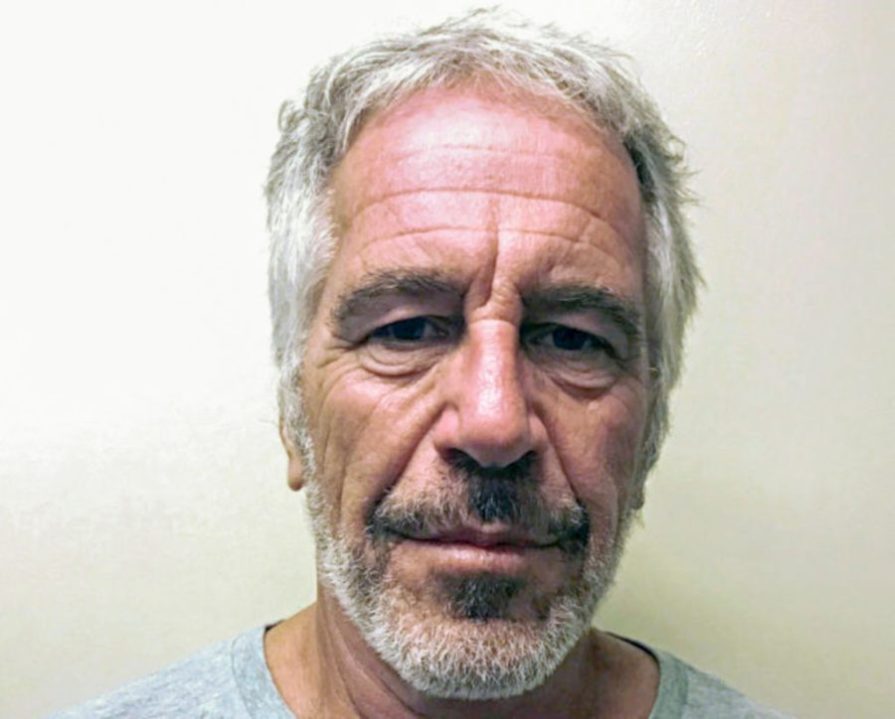
Forgive me, but I could not help shouting “Please, please, not another one”, when the BBC’s Newsnight announced, at the start of a breathless breaking news special, that the UK government had seemingly opened the door to a public inquiry into Jeffrey Epstein’s activities in Britain. “Survivors” – forgive me again, I just can’t use this word in this context without inverted commas – and campaigners on their behalf have been exultant ever since.
In fact, the revelation wasn’t quite as categorical as has been made out. With the Prime Minister Andy Burnham himself off on holiday, it was his victims minister, Alex Davies-Jones, who disclosed that the new PM was planning a Downing Street meeting with “survivors” of the late Epstein’s serial wrongdoing – something that his predecessor had never done – and had discussed convening a public inquiry when she was re-appointed last month. As was widely noted, however, the very mention of a potential inquiry makes it quite difficult for the government not to proceed without prompting howls about U-turns and betrayal.
Burnham will be pandering to what is a small, but highly articulate group of campaigners
Of course, giving the UK’s Epstein campaigners an inquiry could have some attraction for Burnham. It would offer an opportunity to draw another clear line between himself and his predecessor, Sir Keir Starmer – given that Starmer grievously mis-read how far Peter Mandelson’s Epstein connection would destroy his credibility as UK ambassador in Washington and rub off on Starmer’s own position.
However tempting that prospect might be, Burnham should resist it, not least because there are so many other ways in which an Epstein inquiry would be a very bad idea. Most obviously, the last thing the new government needs – if it really wants to build the policy momentum the Starmer government so markedly lacked – is another public inquiry into almost anything. Inquiries into contaminated blood, Hillsborough, the Post Office scandal, Covid, NHS maternity care (strictly speaking an investigation) and still in the offing grooming gangs, have all been late, prolix and – with the possible exception of the contaminated blood scandal – unsatisfactory. They have yielded recommendations that are only very belatedly, if ever, acted upon.

A full-dress, judge-led public inquiry would only add to this tally, in terms of time and money. And what, in fact, would it inquire into? The activities of a deceased American, whose only conviction in his home country was for soliciting a minor for sex, (although he was in prison, awaiting trial for sex trafficking of minors when he died), and whose links to the UK were tangential at best. Whatever his activities here, they were a tiny sideline to whatever he was doing elsewhere, chiefly in the US and on his private island. Just to recap, and let’s not beat about the bush here, he has been dead for seven years and the sex abuse claims mostly relate to many years before that.
The awkward truth is that, if he agrees to a public inquiry, or indeed an inquiry of any kind, Burnham will be pandering to what is a small, but highly articulate group of campaigners, who have spotted a way of – maybe – securing the “justice” they want by a secondary route. Having failed to persuade anyone to take up their cause seriously in the United States – where jurisdiction in the doings of Epstein surely belongs – they are looking to Britain. And not without reason.
The UK’s legislation on modern slavery and trafficking could seem to offer a promising way into the judicial system, which is the route also chosen by “survivors” alleging abuse by the late owner of Harrods, Mohamed Al-Fayed and his associates. At least, Al-Fayed was based for the most part in the UK! Like Epstein, however, Al-Fayed is dead. In effect, he got away with whatever sex abuse crimes he committed, and any claims can only be against his estate.
The only aspect of any of this, it seems to me, that might warrant further delving by the UK authorities might be the ease with which Epstein was able to enter and leave the UK in private planes with unidentified young women on board. But documents relating to 90 or so flights, reported by the BBC, have been considered several times by the police and rejected as not warranting further investigation.
The scandal here is anyway wider than Epstein. Private planes, subject to negligible checks, were also a favored way for affluent migrants to enter the country without documents, a loophole that was very belatedly closed in April last year. If, in practice, this loophole remains open, then that is a subject that surely warrants revisiting, but it would not need the paraphernalia of an inquiry.
In most other respects, the “survivors” of Epstein – and Al-Fayed – have become standard-bearers for a veritable industry of historical sex abuse accusations, which is making enormous demands on police and court time and threatening more. It is also hard to believe that, aside from wanting their experiences validated, the claimants are not chiefly after compensation. I would have a lot more time for them if they declared that money was not the objective and actually declined any financial settlement in advance.
But there is something the government could usefully do, too. Rather than dangling the prospect of an inquiry in pursuit of one dead man, or two, is it not beyond time to limit the years that can elapse between the alleged crime and a claim?
Such statutes of limitation exist in many countries, and they exist in English law, too, for most civil cases – which may be why campaigners are so keen to invoke the criminal law here. But why the discrepancy? Civil claimants have three years to make a complaint for personal injury. Introduce the same stricture to criminal sexual abuse claims and slash at least some of the burden on police overnight. It is not as though lawyers would be left with nothing to do.






Comments