In a week in which embarrassing and damaging revelations about past misdemeanours are very much in vogue, let me reveal one of my own. When I was seven years old, I wrote in to Jim’ll Fix It. My request was to play a giant Wurlitzer organ, preferably the one in the Blackpool Empress Ballroom. To my retrospective relief, Savile didn’t respond to my letter. But I did purchase a second-hand, two-tier Hammond organ when I was at university, which I played as part of an acid jazz group. No tapes of our band’s songs or gigs survive I am delighted to state.
I was reminded of my rather strange and atavistic early love of organs last week when I read of the death of Nigel Ogden, the presenter of the long-running Radio 2 show The Organist Entertains. It ran for donkey’s years and was axed only in 2018, depriving listeners of hearing vintage Wurlitzers, Mortiers and Christies being played in dancehalls around the country (although every time I tuned in it always seemed to be coming from somewhere in Llandudno).
It was only after he died last week that I finally got to see a picture of Nigel. A Morris Minor enthusiast based in Lytham St Annes, Ogden never seemed to have any ambitions to use radio as a pathway to a television career. Like the late Steve Wright (whose, seemingly reluctant, brief early 1990s foray into television marked him out very much as a radio man) and the much-missed Ray Moore, Nigel was part of the heart and soul of ‘old’ Radio 2: a place mostly populated by individuals who adored the intimacy and immediacy of radio and were seldom seen on the television. For them, a microphone, a solitary producer and a windowless studio in the bowels of Broadcasting House were more than enough.
Until quite recently, the options to broadcasters on Radio 2 were very straightforward: you either stayed on the wireless for your entire career or you graduated to television, but only after having served at least a decade behind the microphone, passing over to Colin Berry for the news and trying to avoid Derek Jameson in the corridor.
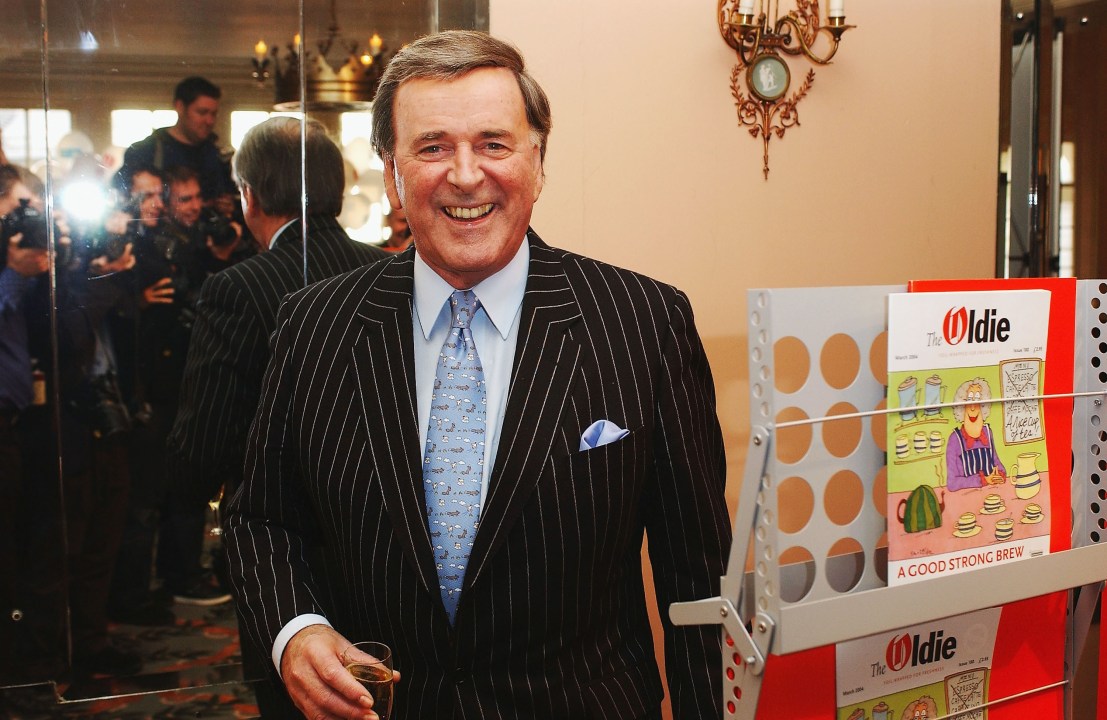
The latter option certainly appealed to Terry Wogan, who became Radio 2’s most successful graduate to the small screen. His eponymous BBC One chat show was intended to make him the British Johnny Carson, but it was always a pretty slapdash affair. Wogan worked best on his own, particularly when accompanied by a bottle of Baileys, which he admitted to having by his side when he delivered his sozzled and hilarious Eurovision Song Contest commentaries.
What has been lost is a sense of personal connection
I presented a Sunday lunchtime show on BBC 6 Music a few years ago and was thrilled to find myself in an environment where almost none of the presenters seemed to have any ambitions at all to appear on primetime television. To this day, it seems that the vast majority of listeners to 6 Music have no idea whatsoever what Tom Ravenscroft or Mary Anne Hobbs look like, and no real desire to find out. On the much bigger stage of Radio 2, however, things have changed. Whereas once the trajectory was to establish yourself on radio and only then (if you were really ambitious) make the move into television, now it appears that being a TV star with no previously publicly stated ambitions to be on the radio at all makes you a contender for a gig on the airwaves.
Take a look at the schedule: from Vernon Kay to Paddy McGuinness to Dermot O’Leary to Liza Tarbuck, it’s hard to move for presenters who made their name far away from a radio studio. It’s easy to understand of course; in an era where Spotify and smartphones are decimating radio audiences, it’s natural that the Beeb will want the biggest names possible to don headphones and become DJs for as long as possible. Some of them are even quite good. Vernon Kay has proved himself capable of filling the huge hole in the schedule left by Ken Bruce’s departure and I suspect I’m not the only one who still misses Jonathan Ross’s peerless Saturday morning show on the station from the 2000s.
But what has been lost is a sense of personal connection – one that comes only when you hear a voice for many years but cannot put a face to it. It’s one of the reasons so many people prefer The Archers to TV soap operas; my mother always used to say she couldn’t bear it when she accidentally saw an image of an Ambridge actor. ‘No, I already know what Peggy looks like in my head, I don’t want to have that spoiled’ she would complain.
Nigel Ogden was one of those people who (along with Radio 2 alumni such as Johnnie Walker, John Dunn, Alan Freeman and Alan Keith) simply adored radio, and had no desire to do much else, least of all climb the showbiz ladder to the point where they landed a Saturday night television quiz show. We knew their voices, not their faces. And, unless your ego itself is the size of a five-keyboard Wurlitzer, that should be more than enough.




Comments