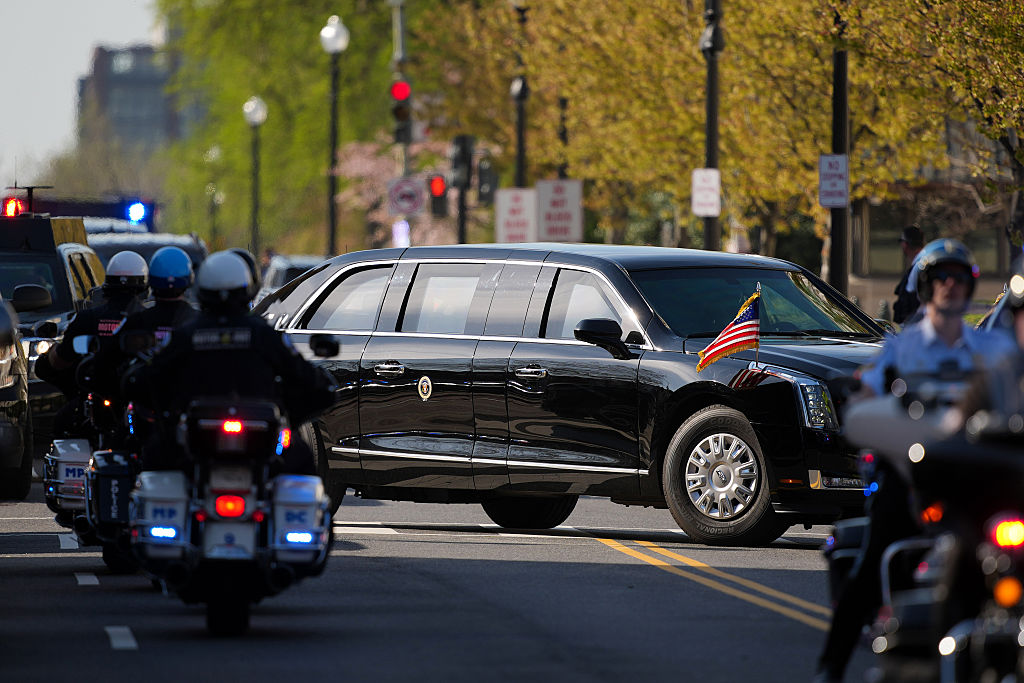
For the first time in memory – and perhaps in history – an American president has attended a Supreme Court argument in person. I recall attorney general Robert Kennedy attending an argument back when I was a law clerk in the early 1960s. But I have seen no record of presidential attendance. Not that there is anything wrong with that, even if it was intended to convey the president’s strong belief in his side of the argument.
Any fear that President Trump’s presence would influence the justices was immediately belied by the nature of the justices’ questions – which suggested some hostility to the Solicitor General’s argument limiting birthright citizenship.
The argument itself was highly technical, focusing on the text, history and interpretation of the 14th Amendment, and particularly the words “and subject to the jurisdiction thereof,” which modify the general grant of citizenship to “all persons born or naturalized in the United States.” Although it is often difficult to predict Supreme Court decisions based on oral arguments, in this case it seems unlikely that the court will fully accept the administration’s interpretation.
My own view is that birthright citizenship is wrong as a matter of policy, especially if applied literally to virtually anyone born in the United States. Under that interpretation, if a pregnant European woman flying to China suddenly has labor pains requiring an unscheduled stop in the United States, where she gives birth and then immediately goes on to China, the baby is automatically a US citizen, even if it never sets foot in this country again. As a matter of policy, such a view of citizenship is absurd. Almost no other country accepts it, and it is doubtful that the framers of the 14th Amendment intended such a result in a case like that one. But that is not the typical case that affects thousands of children born in this country to illegal aliens who have lived here for many years. If these children are brought up in the United States and are subject to its laws for many years, their argument for birthright citizenship is far stronger.
So the question remains: which paradigm should govern – the weak case involving a child accidentally born here with no other connection; or the far stronger case of the child who has known no other country but this one for many years.

Perhaps the answer should not depend alone on the ambiguous and general words of the 14th Amendment that were written in a different historical context, but on contemporaneous legislation designed to implement and make current sense of these words. Indeed section 5 of the 14th Amendment explicitly provides that “the Congress shall have power to enforce, by appropriate legislation the provisions of this article.” It would make sense therefore to leave to Congress the definition of “subject to the jurisdiction thereof.”
Congress could make refined distinctions among children born in the United States — distinctions that make more sense than the geopolitical accident of birth alone. Children born here who have no real connection to this country should not get the benefits (or burdens) of citizenship. Congress could legislate that they are not subject to our jurisdiction. The harder questions involve the children of non-citizens who are here illegally. There are arguments on both sides of that fraught issue, most of which are dependent on the specific facts of every case. That is precisely why it is better to base decisions on specific, fact based, legislation than on general abstract concepts, such as “jurisdiction.”
It is possible therefore that there will be a majority upholding birthright citizenship, but dicta suggesting that Congress can limit its application by more narrowly defining which categories of children born in the United States are subject to its jurisdiction. Such a Solomonic division of the babies born here might well come closer to achieving broad consensus than an ideologically divisive abstract ruling.
President Trump’s presence in the Supreme Court was likely intended to send a message to his base rather than to the justices. But the real audience should be Congress, which may have the power to resolve this contentious issue with compromises that reflect the current values of our nation, including our history as a nation of immigrants.




Comments