In August, Donald Trump sided with consumers by increasing the tariff-free quota on imported beef for 90 days beginning September 1. The concession will last three months. It would be a minor story with any other president in the White House. But under Trump, even dull-sounding trade news can take on a sudden importance, especially when mixed up with foreign affairs.
Trump’s justification for favoring Argentina, whose 2026 quota he increased by 80,000 metric tons, is partly geopolitical: he wants to give support to Javier Milei’s free-market regime, seeing it as a foil to left-leaning governments elsewhere in Latin America. He seems so eager to curry favor with Milei, in fact, that he’s been willing to weaken US support for British sovereignty over the Falkland Islands, abandoning an old ally because his administration remains angry that Britain failed to support his military intervention in Iran.
But it is not hard to see why Trump should be drawn to invite a little more beef into the US. The price of beef for consumers has risen by 22 percent over the past year alone. Over ten years it has nearly doubled. A large part of this is down to Trump’s “Liberation Day” tariffs imposed in April 2025. Not only have these increased the price of beef imports, they have hurt domestic beef producers too.

While supposedly about protecting American farmers, the tariffs ended up hurting them – because producers tend to be consumers too. Farmers cannot produce beef without buying feed, fertilizer, fuel and machinery. Then this year came the Iran war, which has caused a surge in the price of fertilizer and fuel.
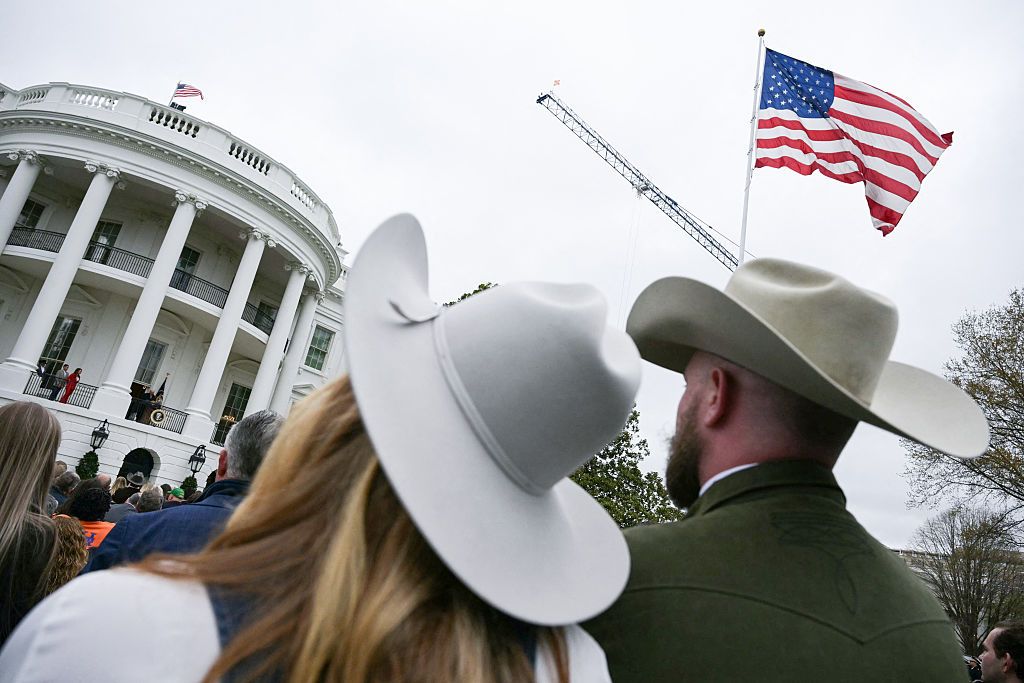
The business of livestock farming has become increasingly challenging and American farmers are struggling, with a net loss of 15,000 farms last year. The American beef herd is at its smallest in 75 years. Trump’s natural supporters include working people on low incomes, who are proportionally most affected by rising food prices, as well as rural communities, which suffer the greatest pain when food production is undermined by cheap imports.
The quota announcement leaves American farmers in a particularly bad position: it will put downward pressure on beef prices in the shops without doing anything to alleviate the rising costs imposed on farmers through high oil and animal feed prices. American farmers, who voted overwhelmingly for Trump in 2024, are going to be squeezed ever tighter. As John R. MacArthur points out, Trump’s grand talk about protecting American jobs against foreign competition has been, for the most part, misleading.
And Trump’s Argentine beef move suggests again that, when his America First policies run up against rising inflation, he is ultimately going to favor the interests of 330 million consumers over 1.9 million farms.
But it isn’t just the tariff relaxation that angers farmers: it is the shenanigans behind it. Trump is reported to have made his decision on the relaxation of tariffs on beef imports following a meeting with Joesley Batista, the co-owner of Brazilian meat-packing giant JBS. The company already has a poor reputation among farmers. Along with three other meat-packing firms that jointly control 85 percent of the market, the company is currently under investigation by the federal government for allegations of price-fixing. Even when Trump was out to protect US farmers with import tariffs, there was an enormous gulf between the image offolksy American farmers producing wholesome beef for American plates and the actual modern meat industry in the US. It isn’t just imports that the small guy has to contend with; he also has to deal with a middleman racket operating on US soil.
Trump’s championing of the American farmer has collapsed in the face of rising food prices
Like everything else, meat has become a commoditized product under the control of large corporations which wield power in their own favor. In the words of the farmer and environmental campaigner Wendell Berry, who died aged 92 last week, “the products of nature and agriculture have been made, to all appearances, the products of industry. Both eater and eaten are thus in exile from biological reality.”
Robert F. Kennedy Jr.’s campaign to Make America Healthy Again made a big deal about introducing well-reared beef as an important part of a good diet. Yet the reality of industrialized farming, and eating habits, make that a somewhat quixotic mission. According to former chief US agricultural negotiator Gregg Doud, much of the extra imported meat that comes to America as a result of the latest tariff concession will come from culled dairy cows and will end up in hamburgers rather than as steak or ground beef sold at your local grocery store.
Maybe he would say that, given that he is now president of the National Milk Producers Federation, and has a vested interest in reducing food imports. But the anger shown by him and other figures in the industry is a reminder of how Trump’s championing of the American farmer has collapsed in the face of rising food prices and commercial reality.
Were he to try to stand again as president in 2028, Trump might find that the rural vote has deserted him.





Comments