


Some years ago, I edited and provided an introduction and notes for an edition of Walter Bagehot’s book Physics and Politics (1872). The book has nothing to do with physics in the modern sense of the word (though an argument could be made that it does bear on the original meaning of the Greek word physis, nature. Rather, its elaborate subtitle sheds light on the book’s content: “Thoughts on the Application of the Principles of ‘Natural Selection’ and ‘Inheritance’ to Political Society.” Bagehot was writing a scant dozen years after the publication of On the Origin of Species. The idea that “natural selection” was the motor of evolution was all the rage and Bagehot was one of many who wondered whether the idea had at least metaphorical application to society as well as to biology.
It’s a fascinating, urbane book. I mention it primarily not to indulge in self-promotion but to remark on the name “Bagehot.” It always surprised me that Bagehot’s work is not better known. His essays are witty, insightful and bristling with intelligence. But ask a dozen of your friends and I’d be surprised if more than two or three had ever heard of him, let alone read him.
When was the last time you had a German wine made from pinot noir?
Why? I believe the American historian Jacques Barzun stumbled on at least part of the answer. Confronted with “Bagehot,” most people are at a loss about how to pronounce it. To save embarrassment, they pass over not only the name but also the author himself. (For the record, the correct pronunciation is not “Bagg-hot” but “Badge-it.”)
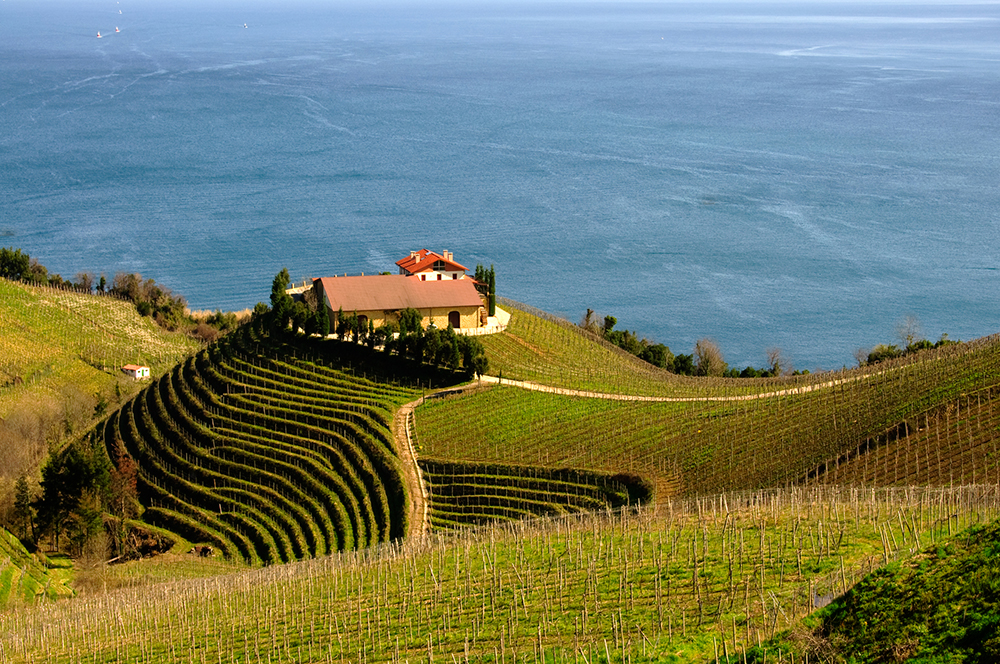
It would be a pity if a kindred fate awaited one of the three excellent and affordable rosés I have for you today: the 2025 Txomin Etxaniz (cho-meen etch-ah-nees) rosé from the Txakolina (chah-kuh-lee-nah) estate from Getaria in the Basque country in northern Spain. Euskara, the Basque language, like Finnish and Hungarian, is ancient, non-Indo-European in origin and, for most of us, forbiddingly foreign. So bear up when I tell you that the primary grape involved is called hondarrabi beltza (hondarribi zuri for the white). Fortunately, you don’t have to remember the name to enjoy the wine. It is light, slightly effervescent, pale pink but with high acidity and embroidered by notes of citrus and a portfolio of mineral elements that seem instinct with the salty Atlantic breezes wafting just 100 meters from the steep slopes of the vineyard.
Txomin Etxaniz is made by the Txueka family, which can trace its involvement with the local wine trade back to the mid-17th century. This refreshing, summery rosé is low in alcohol – just 11 percent – which means you need not stint yourself when enjoying it with seafood or by itself. Another attraction: it is only about $20, so think in cases, not bottles, when ordering.

I mentioned the slight effervescence or pétillance. Locals tell you that the best way to enhance that is by pouring the wine from shoulder height. Think of it as a sort of oenological foreplay, a ritual that, when delicately prosecuted, adds grace, jollity and satisfaction to the tout ensemble.
When was the last time you had a German wine made from pinot noir? No, I never have either. But here is the 2025 Seehof, a German rosé – another oddity – made from 100 percent pinot noir. It’s a bright, trocken (dry) wine, fresh, vibrant, lucid, bedizened with fading grace notes of strawberry and peach. The alcohol is again fairly low – 12 percent – and so is the price: $20-$23. It is the brainchild – or handchild – of Florian Fauth, an up-and-coming vintner from an old winemaking family in the Rheinhessen. Another summer wine to have on your radar.
Finally, let’s trek over to Corsica and sample the 2025 Clos Fornelli rosé. Sciaccarellu is a grape indigenous to the island. Highly aromatic, it is usually part of a blend and is often seen in and around Ajaccio in the west. Clos Fornelli, made from 100 percent Sciaccarellu, comes from the far east of the island downwind from the Castagniccia mountains overlooking the Tyrrhenian Sea. A striking salmon-to-rosewood color, this brisk, organically produced wine is full in the mouth but berry-bright and spicy with a clean lingering finish. It weighs in at 12.5 percent alcohol and an enticing price of about $18.
Last month I took you on a dizzying tour of exceptional, and exceptionally expensive, wines. Here are three palate-pleasers that are perfect ornaments to your summer outings but will not make your bank manager frown. Salut!





Comments