There is probably limited reader appetite for a dispute between two Catholic journalists over internal Church intrigue, but I must take issue with Jane Stannus’s Coffee House hagiography of the Society of Saint Pius X (SSPX). If you’re unfortunate enough to be a Protestant, you’re probably wondering what in the name of unholy Romish papism this is all about. Allow me to explain.

The SSPX is a traditionalist sect which rejects key reforms of Vatican II and has a hokey-cokey relationship with the Catholic Church. It was in and later out under Pope Paul VI, even farther out under John Paul II, then in again when Benedict XVI shook things all about. As of Thursday, they’re back out for appointing their own bishops in direct defiance of Pope Leo XIV. That’s what it’s all about.
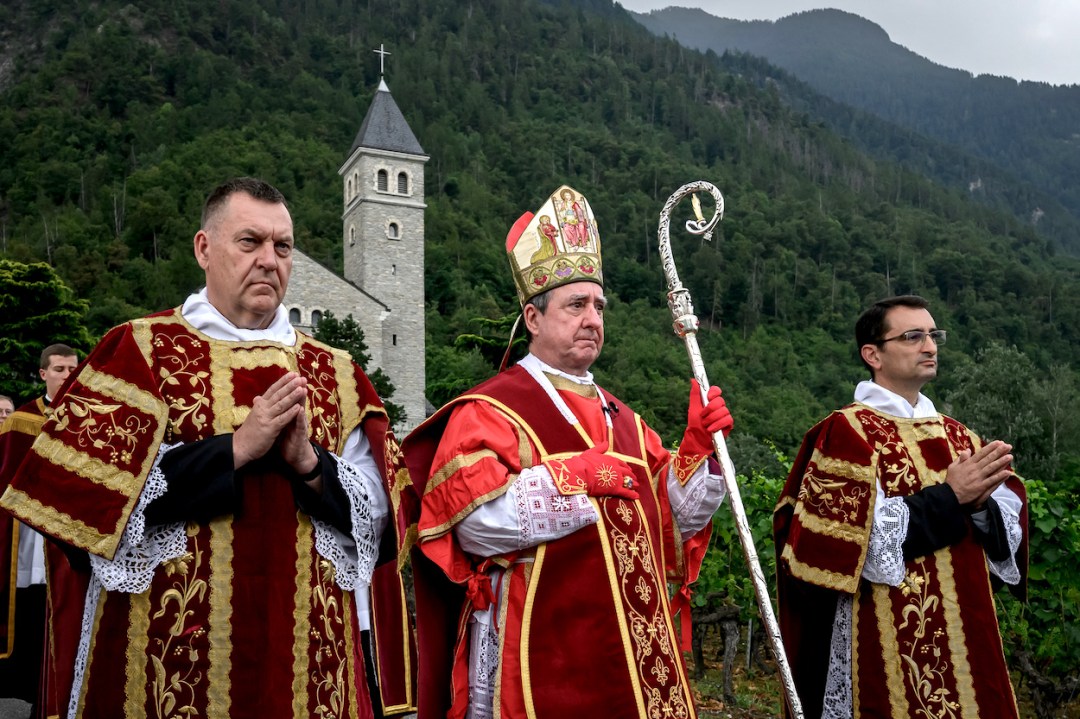
Canon law (1387) requires a pontifical mandate before a priest can be consecrated to the episcopacy – made a bishop – but the Society thought itself justified to proceed without one. The Vatican, including the Pope himself, made repeated pleas for the Society to pause its plans and take up an offer of talks. Within ten days of its announcement on new bishops, the SSPX superior general Fr. Davide Pagliarani was enjoying an audience with Victor Cardinal Fernandez, one of the Church’s most senior clerics. But it was all for naught, and in a ceremony on Wednesday, at Econe in Switzerland, the SSPX’s two bishops consecrated four of their priests.
The consequences came the following day. Cardinal Fernandez is the prefect of the Dicastery for the Doctrine of the Faith, or to use its old name, The Inquisition, and on Thursday he issued a decree declaring the SSPX to have ‘committed an act of a schismatic nature’. All six of its bishops had incurred a latae sententiae, or automatic, excommunication, and faithful Catholics were instructed to have nothing more to do with the SSPX.
For Jane Stannus, ‘the harshness of Pope Leo’ is ‘unconscionable’. She describes the Holy Father as ‘steadfastly refusing to let them come to him to explain their position’, neglecting to mention the meeting with Cardinal Fernandez. She rather gives the game away when she notes that since Leo XIV’s election ‘they have tried to approach him for an audience; in vain’. After decades of defiance and disobedience, the Society apparently expected bilateral negotiations, elevating their superior to equal authority with the Pope.
Stannus sees the SSPX as a ‘loyal branch of the Church’ – what is her bar for disloyalty? – and says it’s ‘particularly cruel’ that future marriages and confessions performed by its priests will be invalid in the eyes of the Holy See. This was a ‘startlingly harsh’ way to treat the Society for ‘the crime of wanting to practice the faith as it was before the Second Vatican Council’. Blessed are the schismatics, for they shall be called upholders of tradition.
Stannus believes ‘the injustice’ of the Society’s treatment ‘cries out to heaven’. Heaven is crying right back for these people to locate some sense of perspective. Time was when uppity priests who challenged the Pope’s authority were tied to a stake and given a preview of the eternal fires for which their souls were destined. It’s a little thing I like to call ‘the good old days’.
Fulgenzio Manfredi, a 16th century Franciscan friar, was burned for heresy, and while his guilt is disputed it is said he also ‘extolled and commended the kingdom of England’, so he was a wrong’un either way. Dominican friar Jacob Palaeologus met a crispy end for preaching against the Trinity and proposing a fusionist Christianity that incorporated the teachings of Islam. Alfonso Cardinal Petrucci was strangled for his part in a papal assassination plot possibly fabricated by his ecclesiastical rivals. All in all, the SSPX is getting off lightly.
In all seriousness, though, this version of events, in which the Society is the plucky guardian of the Catholic faith against a worldly and modernist hierarchy is a caricature. I say this as a Traditional Latin Mass-attending, Traditionis Custodes-lamenting, altar rail-kneeling Catholic with plenty of concerns of my own about post-conciliar developments in doctrine and liturgy. The SSPX is not an order for the concerned or the confused or those whose Catholicism finds a fuller expression in the traditional rites and customs of the Church. It is a body which seeks to annex to itself the very idea of tradition, as though it alone is tending a flickering flame of Catholicism which the Vatican seeks to snuff out.
SSPX wants is a Church that is pre-Vatican II in its doctrine but post-Vatican II in its discipline
The SSPX is rejectionist. It rejects the Pope’s authority in practice when it consecrates bishops without his mandate and in the face of his directions. It rejects the novus ordo, the post-1969 new order of Mass, and tells the laity they are ‘not obligated to attend’ a rite which ‘puts the faith in danger’. It rejects the Pope’s teachings on religious pluralism and ecumenism. The Church is not an organisation, with discrete departments and competing mission statements, but an organism that must be as one to remain healthy. Sometimes, oftentimes, that requires enough humility and trust in the Holy Spirit to thole decisions and directions that we might not have chosen for the Church if we had the choice.
I hope that, following these excommunications, the Holy See prepares a path back for lay followers of the SSPX by lessening restrictions on the vetus ordo, but if the Holy Father decides otherwise I will defer to his judgement on how best to follow in the footsteps of Peter and Christ. Without obedience to the Pope, there is no Catholicism, and where a Catholic deems disobedience unavoidable, he must be prepared for the sanctions that follow. What the SSPX wants is a Church that is pre-Vatican II in its doctrine but post-Vatican II in its discipline. The Society, like so many schismatics gone before, have decided they know better than the Pope, and their protest is no more faithful for having been conducted in Latin. The SSPX are protestants with incense.



Comments