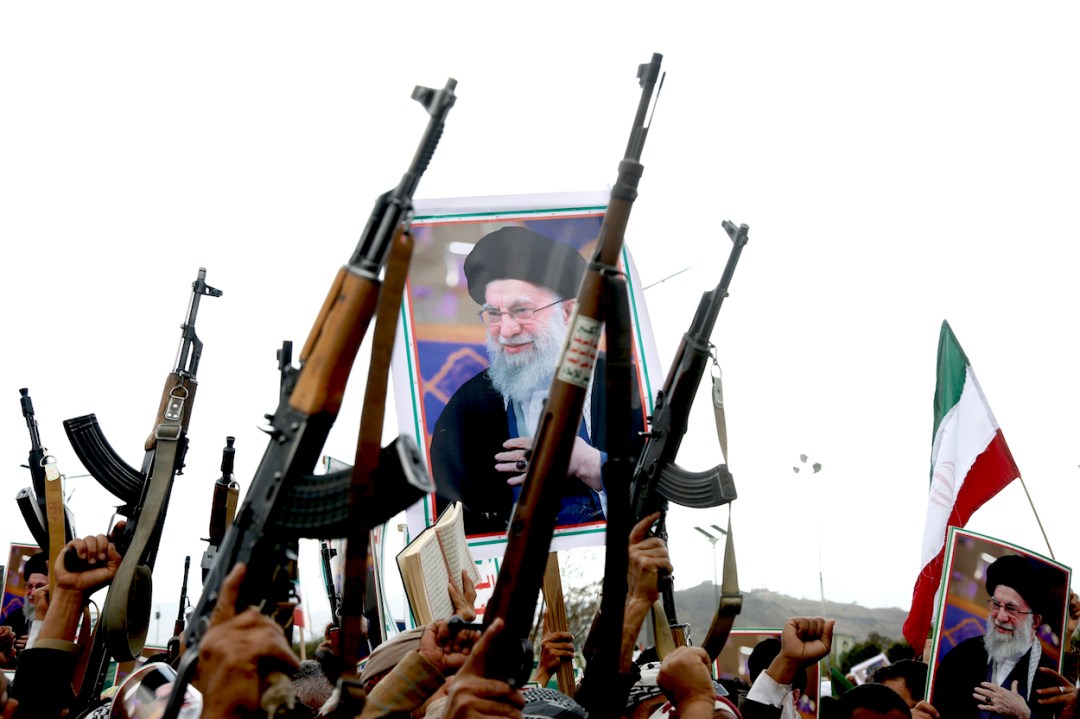
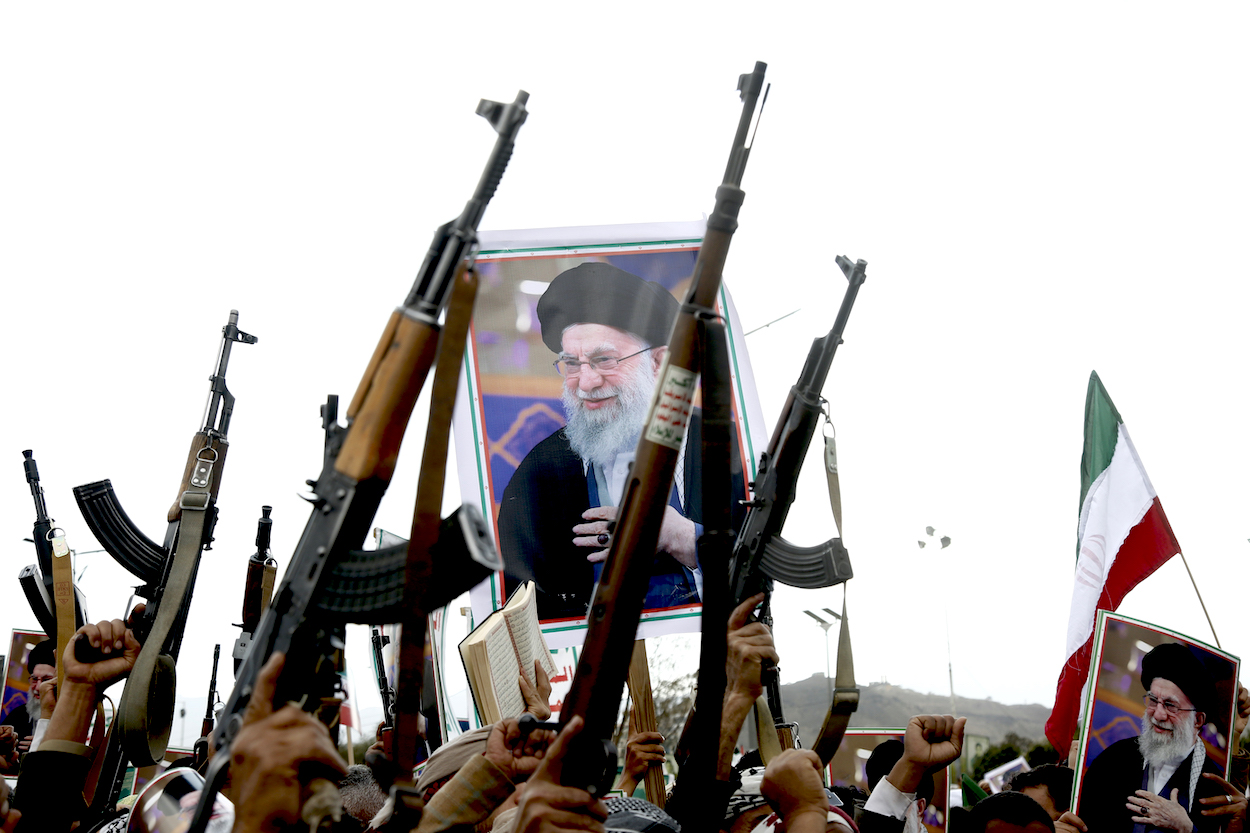
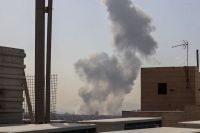
This weekend has seen the eruption of what has been building for months: a regional war in the Middle East. The United States and Israel have struck Iranian targets. Iran has retaliated not only directly but by widening the theatre, hitting Arab neighbours who assumed diplomacy and economic integration would shield them from escalation. RAF Akrotiri in Cyprus has now reportedly been targeted by Iranian drones. What began as a confrontation between Israel and Iran now entangles American assets, Gulf states and British infrastructure.
Thankfully, this is not world war three. Russia and China are watching rather than mobilising. There is no sign of escalation in Europe or the Indo-Pacific. But that reassurance misses the point. Crises like this matter less because they ignite global war than because they expose how prepared states are for larger shocks. To dismiss this as just another Middle Eastern flare-up would be complacent.
A far greater test may lie ahead. A conflict over Taiwan, a further Russian move against Eastern Europe, or simultaneous crises in both theatres would represent the most severe strain on Britain and its allies since 1945. Few would argue the country is configured for such a moment. What is unfolding now should be treated as a stress test.
Start with the Strait of Hormuz. Roughly a fifth of globally traded energy passes through the narrow channel. Thanks to threats and actual attacks on shipping, the Strait is now effectively closed. Tankers are idle, insurers have repriced risk to prohibitive levels, and traffic has slowed sharply. Oil prices have already spiked and will remain volatile so long as uncertainty persists.
If disruption endures, pressure on global energy markets will intensify. Britain is only thinly protected. The UK holds five to seven days of peak winter gas demand in storage, far less than most European peers, and relies on continuous pipeline imports from Norway and LNG cargoes from overseas. In normal conditions that model is efficient; in prolonged maritime disruption it is fragile. A serious interruption in the Gulf, the Red Sea or along wider Europe–Asia routes would be felt quickly in Britain, because the system ultimately depends on uninterrupted trade and open sea lanes.
The wider logistics picture is even more sobering. Britain is an island economy dependent on maritime trade for food, pharmaceuticals, industrial inputs and critical materials. The greatest danger in chokepoint crises is not dramatic closure but creeping uncertainty. If insurers classify routes as high risk, flows slow before ships are sunk. Freight rates alone can paralyse commerce.
This is the essence of what analysts call the 52nd Meridian Challenge: the line of longitude running from Russia through Iran, the Persian Gulf, the Red Sea and across the Indian Ocean effectively bisects Europe-Asia connectivity. Almost all trade and military movement between Europe and Asia crosses this zone. If hostile powers were ever to coordinate their substantial leverage along it, they would not need decisive naval battles. They could squeeze access through overflight bans, maritime harassment, port influence and selective disruption until economic pressure mounted.
For Britain, the issue is not whether Hormuz closes briefly. It is whether Europe could be gradually squeezed off Asian supply chains, Central Asian commodities and Indo-Pacific transit. Such restriction would not produce instant collapse, but it would generate cumulative cost, delay and immense economic and political strain.
Adversaries understand these pressure points. They monitor freight indices and public reaction as closely as military deployments. If limited uncertainty produces visible stress, systemic confrontation would multiply it. Improving Britain’s domestic resilience is therefore central.
There are other pressure points that our enemies can exploit. Iran has previously used online networks to amplify splits in the UK, including using bots to push separatist sentiment in Scotland, and to inflame polarising narratives over Gaza. Russia and China possess deeper resources and more sophisticated information capabilities. In any prolonged confrontation they would seek to widen division through narrative amplification and sustained pressure.
Modern great-power competition is fought within societies as much as between militaries
While limited regional conflict tests these dynamics at the margins, a serious crisis involving Russia or China would magnify them. Energy shocks, economic disruption and visible military commitments would create fertile ground for disinformation and political opportunism. Modern great-power competition is fought within societies as much as between militaries.
All of this comes back to the speed of preparation. At the Munich Security Conference, Keir Starmer reiterated his ambition of moving towards spending 3 per cent of GDP on defence by 2029, and spoke of the need to go faster. Yet 2029 now looks dangerously slow. The world is not fragmenting on a parliamentary timetable. Energy chokepoints are tightening, supply chains are being weaponised and information warfare is intensifying in real time. If Britain has only days of gas storage, heavy dependence on maritime imports and clear vulnerabilities along the Europe–Asia trade axis, resilience cannot be treated as a medium-term objective.
This is not world war three, but a live trial run for a harsher era. A conflict involving Russia or China would be far more consequential than what is unfolding now.

Comments