
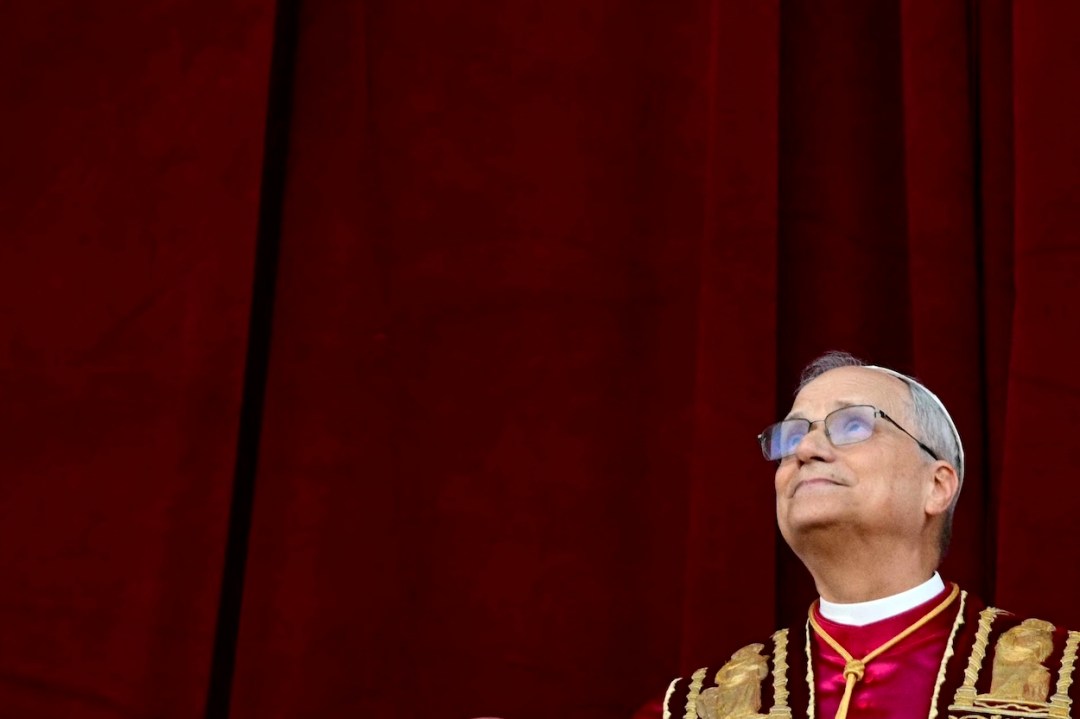
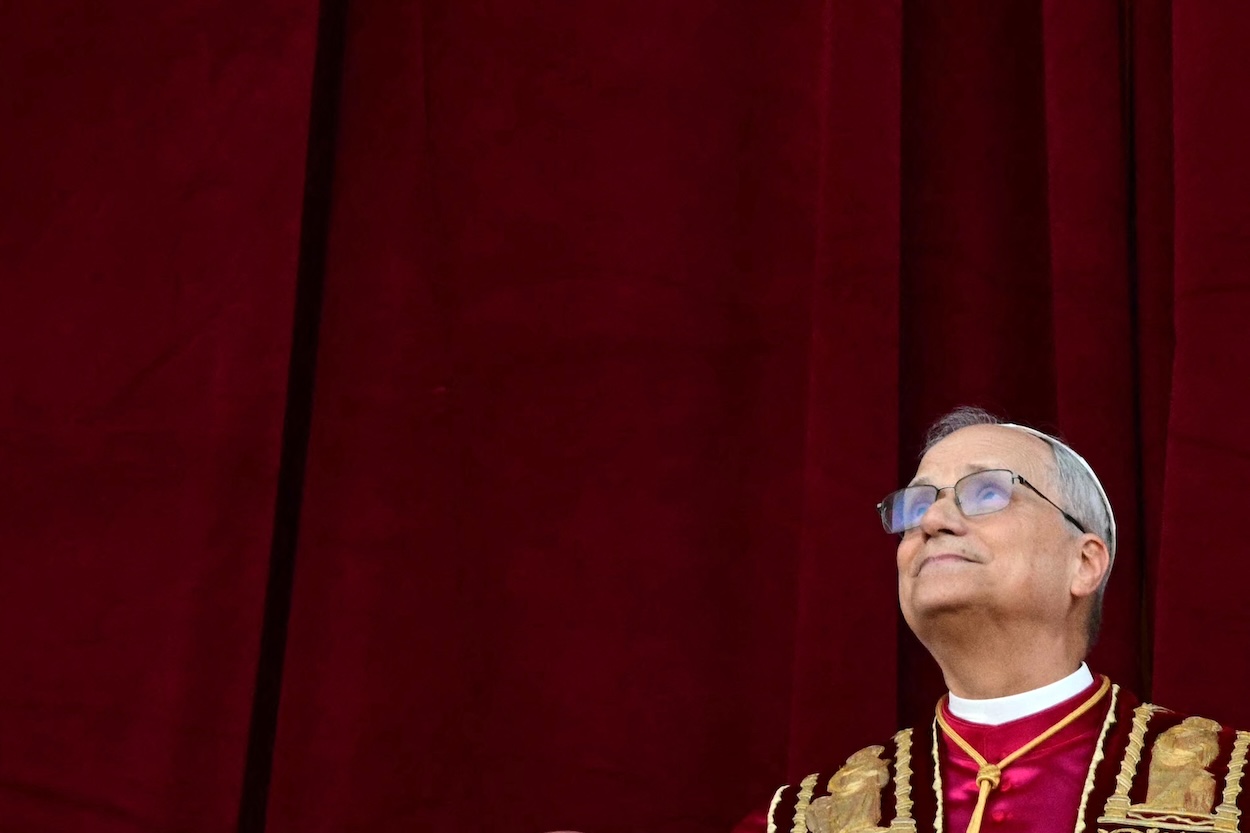
The first American pope does not like the President of the United States. One of the few things we knew about the Chicago-born Robert Prevost when he was elected last May was that – despite having an older brother who supported MAGA – he detested the immigration policies of the Trump administration. His private X account, now deleted, made that clear. Pope Leo has rejected the President’s invitation to visit the United States to celebrate his own country’s 250th anniversary; instead, he will visit Lampedusa, the Mediterranean island collapsing under the strain of thousands of North African migrants who have risked their lives to get there.
When President Trump issued his blood-curdling threat to destroy Iranian civilization, the Pope immediately condemned him. “Today, as we all know, there was this threat against the entire people of Iran, and this is truly unacceptable,” Leo said on Tuesday. Under other circumstances, this would have been surprising. One thing we have learned about the Pope is that he speaks cautiously; despite his personal disapproval of the President, he has never goaded him in the passive-aggressive style of Pope Francis, a shameless Trump-baiter. As Reuters reported, “It is rare for the Pope, who leads 1.4 billion Catholics around the world, to respond directly to a world leader.” But the warning that “a whole civilization will die tonight” had to be addressed directly: the line Leo crossed was nothing compared to the one crossed by Trump.
We have gone from a baffling reference to a medieval schism to the suggestion that President Trump may – what? – bomb the Vatican?
In any case, the Pope’s words hardly came out of the blue. He had earlier urged the United States to find an “off-ramp” to end the war with Iran and suggested that God does not hear the prayers of leaders who start wars. On Wednesday, the respected conservative Italian journalist Mattia Ferraresi published an article in the Free Press describing the escalating tension between the Vatican and the White House. It contained a startling but apparently well-sourced claim. Soon after Pope Leo gave a speech in January declaring that the postwar international order was being “completely undermined,” Elbridge Colby, Trump’s Under Secretary of War for Policy, summoned the Holy See’s then-nuncio to the United States, Cardinal Christophe Pierre, to the Pentagon. “The meeting may be unprecedented in the history of relations between the two countries – there is no public evidence of any Vatican official ever taking a meeting at the Pentagon,” wrote Ferraresi. He went on:
According to both Vatican and U.S. officials briefed on the meeting, Pentagon brass picked apart the pontiff’s January speech, reading it as a hostile message directed at Trump’s policies. What particularly enraged the Pentagon, one Vatican official said, was the passage in which Leo appeared to challenge the Donroe Doctrine – Trump’s update of the Monroe Doctrine, which asserts unchallenged American dominion over the Western Hemisphere.

And then the real jaw-dropper:
As tensions escalated, one US official went so far as to invoke the Avignon Papacy, the period in the 1300s when the French Crown leveraged its military power to dominate the papal authority’
The Avignon papacy? What on earth was that about? As several commentators observed, it was impressive that an unnamed American official had even heard of that traumatic episode. From 1309 until 1376, seven French pontiffs reigned from Avignon; the Church recognizes them as legitimate popes and their rivals in Rome as antipopes. It’s a long story, of very dubious relevance to the Iran conflict, and we don’t know the context in which a reference to Avignon was thrown into an apparently heated conversation – and the story may not even be true.
Enter, predictably, the conspiracy theorists. Christopher Hale is an ultra-partisan Catholic Democrat blogger who portrays Leo as a fanatical anti-MAGA culture warrior while conveniently ignoring the Pope’s more conservative statements on abortion, sexual morality and the liturgy. He posted the following on X: “Some officials in the Vatican saw the Pentagon’s reference to an Avignon papacy as a threat to use military force against the Holy See.”
Let that sink in. We have gone from a baffling reference to a medieval schism to the suggestion that President Trump may – what? – bomb the Vatican? I thought this craziness demanded a forceful response, so I tweeted back: “This is unbelievable bullshit. There was no threat to attack the Vatican. Anyone stupid enough to swallow such an infantile conspiracy theory has no business working for the Holy See.” To which Ferraresi immediately responded: “Largely agree. Just noting that in my original reporting that interpretation isn’t there.” Last night, the American ambassador to the Holy See, Brian Burch, confirmed that a meeting with Cardinal Pierre had taken place but said it was “frank and cordial.” Meanwhile, a Vatican official told the leading Catholic news website the Pillar that the meeting had been “tense” at times, including some “aggressive” exchanges, but insisted that there was “no question of anyone threatening anyone.” Neither side could recall a reference to Avignon.
Such is the madness enveloping not just American politics but also those of the Catholic Church. As I argued in the Easter issue of The Spectator, Pope Leo finds himself trapped in a pincer movement between extremists of left and right who, for different reasons, are determined to force him into a far-left progressive mold. His obvious lack of sympathy for Israeli foreign policy is being exploited by anti-Semites; meanwhile his silence on the subject of the Iranian regime’s massacres of its own citizens has, not unreasonably, dismayed Catholics who are otherwise loyal to him.
On the whole, I don’t think Leo has acquitted himself too badly in a conflagration from which no public figure has emerged unscathed. But perhaps he should ponder his own repeated insistence on the power of dialog. The Vice President and secretary of state in this administration are practicing Catholics; Trump himself may have deserved a reprimand for his outrageous threat to eradicate Iran, but he pulled back and, although a Protestant, is impressed by the power and status of the papal office.
Depending on how the situation develops, the Holy Father may need to find his own off-ramp out of the crisis when it comes to relations with the government of his native country. In which case, there is an obvious solution: a flight home to celebrate a big birthday.


Comments