Arriving in Oslo, the Barcode District is unavoidable. It is so named because its blocks are laid out like dominos – each design a tawdry, throwaway joke. But the Norwegians have had enough. With a spate of such controversies, Oslo has become an epicentre for an architectural uprising against the uglification of cities. Its Nordic Symposium on Beauty in Architecture has become an annual meeting point for plotting the insurgency.
Unlike on this side of the North Sea, where traditional and classical architecture found a champion in the King, Scandinavia’s counterrevolution is led by ordinary citizens. Their grievance is not only the built aftermath of modernism (unwalkable cities, tower blocks, ahistorical architecture), but that the tenets of modernism have drastically undercut architectural standards and must be reversed.
This year’s symposium began with a memorial for the Northern Irish architectural historian James Stevens Curl, who died last November. Behind a tweedy exterior and cut-glass accent, he brought an Ian Paisley-esque wrath against modernism, regularly evangelising on the traditional architecture circuit. A prolific author, he was known for Making Dystopia, an architectural version of The Ninety-Five Theses, dismantling modernism’s founding doctrines.

Most pernicious of these, as restated by classical architect Robert Adam, is the tautology that ‘buildings should be of our time’. That the present is not a continuation of history, but a break with it. But with modernist buildings and ideas now a century old, those who claim to be beyond history are themselves slipping into traditional pastiche – their favourite put-down. Yet scholarly debates over modernism’s original sin feel like the wrong battle. Factual accuracy means little in an architectural culture that has already been unmoored from history. Indeed in my own architectural education, I was prescribed more reading on black feminist theory than the birth of the Bauhaus.
There’s a fitting sense that beauty must also be defended on other grounds. At the symposium, this included brain science and the emerging field of neuroaesthetics. Neuroscientist Alexandros Lavdas demonstrated with studies tracking eye movements and microexpressions what are otherwise self-evident truths. That our brains are attracted to organised complexity: in other words, good composition and ornamentation at all scales.
Roger Scruton was sceptical of reducing aesthetics to neurons. Yet in the age of ‘evidence-based policy-making’, extreme lengths are needed to prove what is blindingly obvious. But it needn’t be so high tech. Nicholas Boys Smith’s Create Streets has elevated the visual preference survey to an art form, where given the choice between the modern proposals on the table and a traditional alternative, the public unfailingly picks the latter. The incontrovertible will of the people should be able to embarrass the most blinkered planner to think again.
Of course, planners can also be helped to do the right thing by governments. Create Streets’s pioneering approach of distilling local public opinion into a design code with clear rules was adopted across England as part of planning policy. While this was cut short by the change of government, it’s now being followed by other politicians, such as those from the Unesco World Heritage city of Bergen, who will soon be requiring new buildings to follow traditional design principles.
Traditional and classical architecture is besieged with accusations of costliness. The point is moot for luxury developers, but for affordable development it is existential. Indeed, critiques of modernism are dishonestly taken as an opposition to social housing itself. The symposium presented proof otherwise. Swedish historian Jan Ryden Bonmot offered the example of Stockholm’s low-cost housing, built by the housing cooperative and credit union HSB in the 1920s. Its mid-rise flats exemplified the best of that decade’s ‘Swedish Grace’: classical sensibilities with Scandinavian restraint, where sparse ornamentation accented façades painted in warm earthy tones. These blocks were laid out in gently irregular streets inspired by the ideas of Austrian urbanist Camillo Sitte, framing picturesque glimpses of courtyard gardens through arched portals.
Contrary to the accusation that classicism is somehow inescapably fascistic, a deep humanism pervades HSB’s designs and approach. Its rents were 40 per cent below the market rate thanks to workers building for themselves, contracting their own guilds and funding it with their pooled savings. The harmony between beauty and business sense was masterminded by Sven Wallander, both HSB’s first CEO and lead architect. Rows of anonymous tower blocks were not an inevitable result of mass production and efficiency; they were a choice. Sadly, it was a choice HSB increasingly made from the 1930s after succumbing to the contagion of Le Corbusier.
Today, Swedish architect Erika Worman of P.A.C.E. has had some success convincing developers such as OBOS (notorious for drab volume housebuilding) to return to human-centred garden city-inspired neighbourhoods, by proving it can be done at the same cost. But resistance came not from residents but from other architects, who internalised their snobbery against the suburbs and those who dared to prefer them.
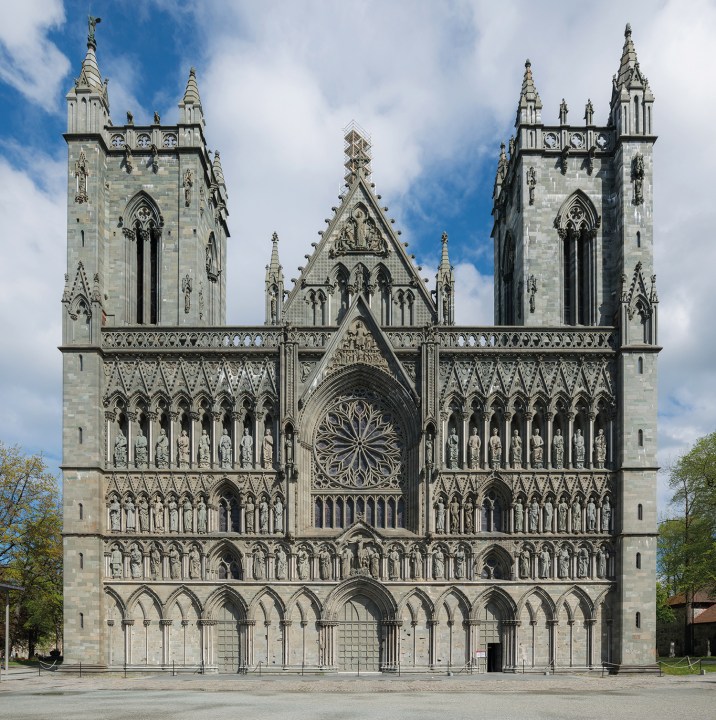
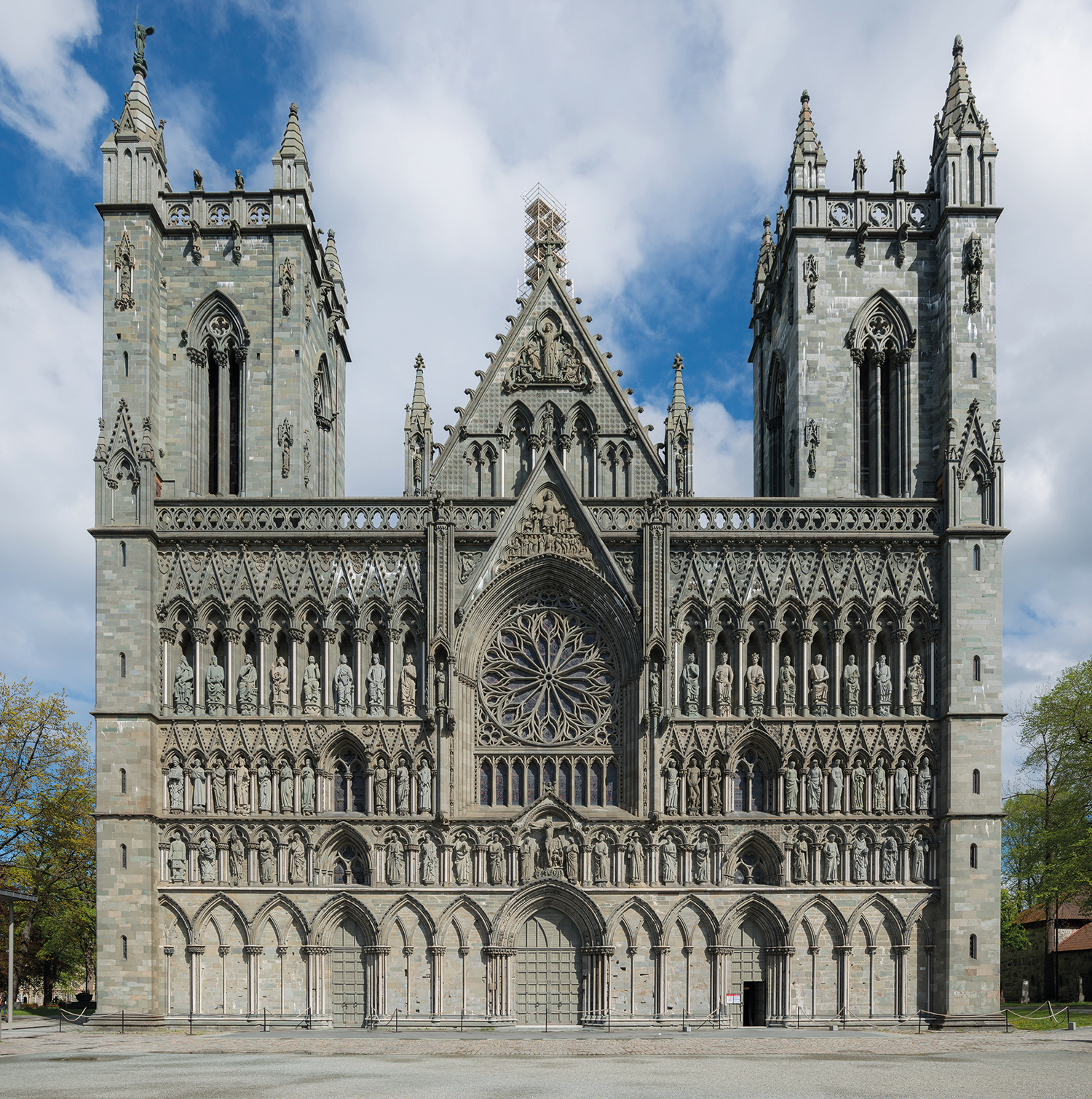
Modernism’s elimination of ornament on the grounds that it was an ‘unnecessary expense’ (or, for Adolf Loos, a ‘crime’) dealt a devastating blow to craftsmanship. However, the multi-centennial timescales of cathedral restoration have thankfully outlasted this lapse of judgment. Nidaros, the world’s northernmost medieval cathedral, has its own restoration workshop (similar to our own at York Minster) that employs and trains craftsmen, and also acts as Norway’s national hub for stone restoration.
Students once walked out of universities over the classical syllabus; now they are demanding one
Chris Pennock, a British stonemason, laments how much knowledge has already been lost, not helped by the formalised and unnecessarily academicised approaches preferred by training colleges. For Clunie Fretton, a master woodcarver, that knowledge survives in the tooling marks of historic carvings, waiting to be studied and reverse-engineered. Meanwhile, stonemason-turned-blacksmith Magnus Vartdal is forging the wrought ironwork for Nidaros’s new doors, where fine, neo-medieval curlicues will have to hold up oak weighing a ton – among a blacksmith’s most challenging work. An exquisite test-piece that he made was on display, where nestled among delicate fronds were slender dragon heads, an echo of the Norse motifs found in ancient stave churches. It is only on real projects like these that lost knowledge can be revived through hands-on trial and error.
Every one of the architects at the conference had had to first unlearn what they’d been taught at university, where traditional inclinations were often bullied out of students. This included Russell Taylor, the incoming chair of Britain’s Traditional Architecture Group, for whom principles for proportioning classical orders and mouldings were waiting to be rediscovered in once-indispensable handbooks compiled by Cordingley, Gibbs and Palladio.
Whether by accident or by design, this traditional insurgency uses methods curiously similar to those employed by the modernists: these symposiums are an echo of the Congrès Internationaux d’Architecture Moderne that once converted Europe. As the modernists understood, bringing round the next generation is critical. In this regard, Britain is a leading light, having one of the only accredited courses in Europe where one can qualify as an architect through studying the classical language. Timothy Smith and Jonathan Taylor have been teaching this way since 2011 at Kingston University. It was the first course of its kind in 80 years. Soon, however, Cambridge and the King’s Foundation will be following in their footsteps with a new traditional masters programme.
Norwegian students, true to the spirit of this uprising, have had to rely on themselves. In Trondheim they started a student club, Akantus. What began in 2024 as a series of self-taught classes in watercolour rendering became, with the help of a sympathetic professor, Branko Mitrovic, an official course where students were graduating with a classical portfolio. A generation ago students were walking out of universities over the classical syllabus; now they were demanding one.
The drawings by these students, exhibited at the symposium, reveal how things are shifting. While our entire century is put to shame by the sublime sketches produced by last century’s Beaux-Arts students (works they would submit for admissions exams), we are witnessing the emergence of new foundations out of which foliated columns might grow again.




Comments