
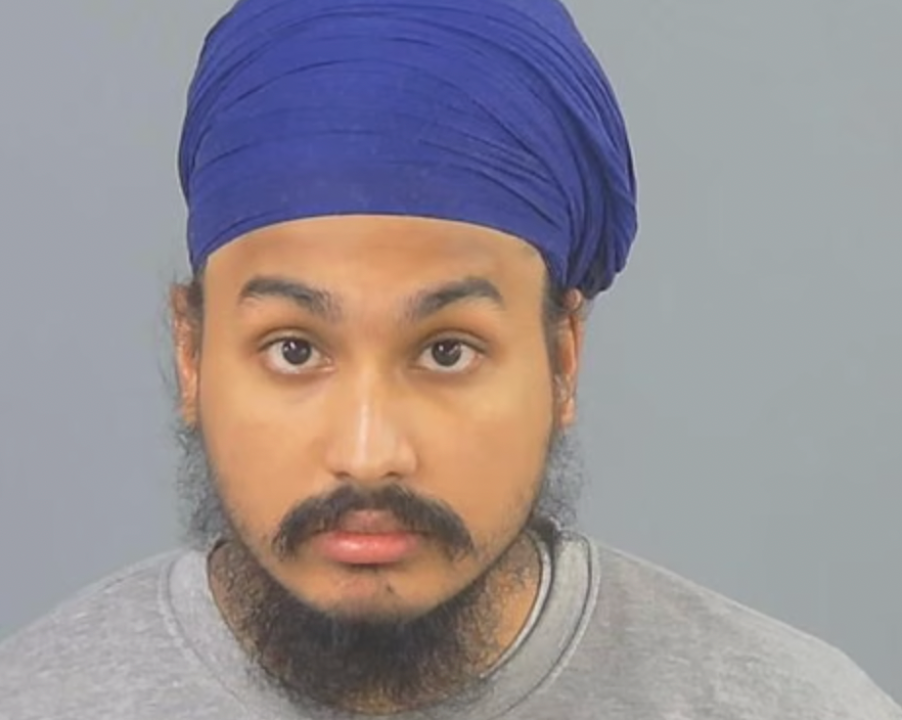
“How can you say they’re not racist?” a young Asian woman shouted from the public gallery. Vickrum Digwa had just been led down to the cells to serve a life sentence and an elderly man in a turban was calling his lawyer “a fucking bean head.” The tatty pinewood interior of the courtroom in Southampton, England, was descending, once again, into allegations of racism.
Vickrum Digwa will serve at least 21 years in prison for the murder of Henry Nowak. Last December, Digwa repeatedly stabbed the 18-year-old student with a ceremonial Sikh dagger. He then filmed Henry as he bled out, goading him.
When police arrived, Digwa claimed that Henry had been racially abusive and had knocked his turban off. The police believed him, ignoring Henry’s pleas that he was wounded even as he lay on ground, blood streaming from his head. Extraordinarily, police chose to put Henry in handcuffs. The boy kept saying “I can’t breathe.” Only once he lost consciousness did police remove the handcuffs and administer CPR.
Why has the language of policing changed so fundamentally?
No one really knows why the altercation happened. Whatever the cause, judge William Mousley KC (King’s Counsel) said that Henry had acted no more than “cheekily” with Digwa in the moments before he was stabbed. “I am sure that Henry had said nothing racist,” the judge concluded. The judge also noted that it is illegal for anyone but a Sikh to carry such a weapon. It’s something we allow in Britain, in the name of tolerance.
On the steps of the court, Mark Nowak read a statement to the news cameras in which he said his son “should not have died on the streets of Southampton in police custody. The way he was treated was inhumane and degrading.” In his victim impact statement, Mark said he was “tormented by thoughts of how Henry was feeling lying there bleeding in the road.”
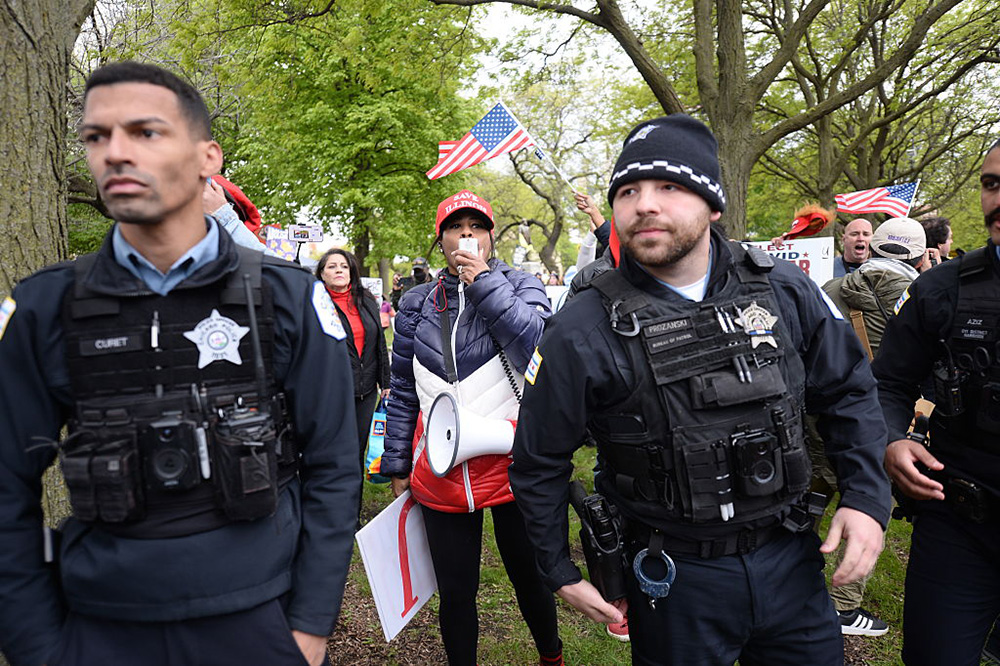
The question of Henry’s treatment by police is where this story goes next. The officers who arrested the dying teenager now face an investigation by the Independent Office for Police Conduct (IOPC), Britain’s police regulator. I have some sympathy with the arresting officers, however brutal and stupid their behavior. Not because I think what they did was excusable, but because they are trained to act in this absurd, inhumane way.
Over the past few years, a new set of principles have entered British policing. We no longer hear phrases like objectivity, reasonable suspicion and due process. Officers are instead told to be allies to ethnic minorities, to be “upstanders” rather than bystanders, to police as active anti-racists.
Just look at the training for police in Southampton, the city where Henry died. “The murder of George Floyd by serving police officers in the USA in 2020 was a pivotal moment for policing in the UK,” Hampshire Constabulary’s Race Action Plan says. “Whilst this tragic event happened in another country, policing across the UK has over many years had a strained relationship with some communities.” The action plan goes on to say British policing “still contains racism, discrimination and bias.”
In 2020, Hampshire police spent nearly £1 million ($1.34 million) on compulsory race training. The aim of this program is to “educate the workforce on organizational culture, biases, banter, microaggressions, privilege and the importance of being an ally.” The results of such training are now clear. The officers acted as allies to Vickrum Digwa, even as his victim lay handcuffed and dying in the street.
A slide show for the program, presented by the chief inspector, states that adherence to these new principles is “mandatory” and “linked to pay progression.” The county Police and Crime Commissioner also told officers that failure to engage would affect performance reviews and chances of promotion.
What happens when officers disregard this obviously partisan approach? Just look at Rick Prior, the former chairman of the Met Police Federation, a professional policing association. He was fired last year for saying what many officers privately feel. That when it comes to policing ethnic minorities, “there seems to be an assumption of racism right from the off,” he said, “particularly when it’s a white officer and a member of the public from a minority ethnic community.” The response by British police has been to act in precisely the opposite way. I spoke to one magistrate who was watching the case as a private citizen. She said police had reacted to claims of institutional racism by going to the opposite extreme.
The IOPC, the same organization now investigating the officers who arrested Henry, states that police who think there’s a lack of “tangible” or “conclusive” evidence for racism make complainants feel as though their views aren’t “real or valid.” This language is deeply confusing. The Cambridge Dictionary defines “valid” as “based on truth or reason; able to be accepted.” How is an officer, in the heat of the moment, supposed to react when they’ve been trained that accusations of racism must be treated as real?
The College of Policing, too, dictates that “police officers and staff should respond positively to allegations, signs and perceptions of hostility and hate.” Crucially for the Digwa case, the College tells police that “officers and staff should not challenge this initial perception.” How else were these police officers supposed to react?
Of course defenders of this new paradigm will say I’m misconstruing its aims. Anti-racism is merely about fairness, they say, and there has been a history of discrimination within British policing. These new approaches are merely an attempt to rectify that. But if that’s the case, why has the language of policing changed so fundamentally? Why haven’t the authorities simply doubled down on the need of officers to act dispassionately? Instead, we have this deeply loaded language of anti-racism. Police must now be allies to one member of the public, because of the color of his skin, whatever the facts, whatever the realities in front of them, even a dying teenager.
Perhaps defenders of anti-racism might say I’m focusing too much on a single case, that this was an unhappy incident of limited significance in the wider story of the British justice system. And yet we have cases such as Valdo Calocane, a black man who murdered three people. He was free to do so because psychiatric professionals were worried about the “over-representation of young black males in detention.”
Or look at the killer Axel Rudakabana, who in 2024 murdered three schoolgirls and injured 10 more at a Taylor Swift dance class. His head teacher had tried to tell Child and Adolescent Mental Health Services about his sinister behavior. She was accused of bigotry. “I was told my attitude towards risk was because I perceived him to be a black boy with a knife, they thought I was racially profiling him,” the headteacher told the subsequent inquiry.
It seems unlikely that the IOPC will consider the world they have helped create. It will be much easier for them to make an example of these unfortunate officers and try to move on. But we can see, from both police documents and their actions, that there is an institutional problem. In the words of that angry young Asian woman in Southampton Crown Court, “how can you say they’re not racist?”




Comments