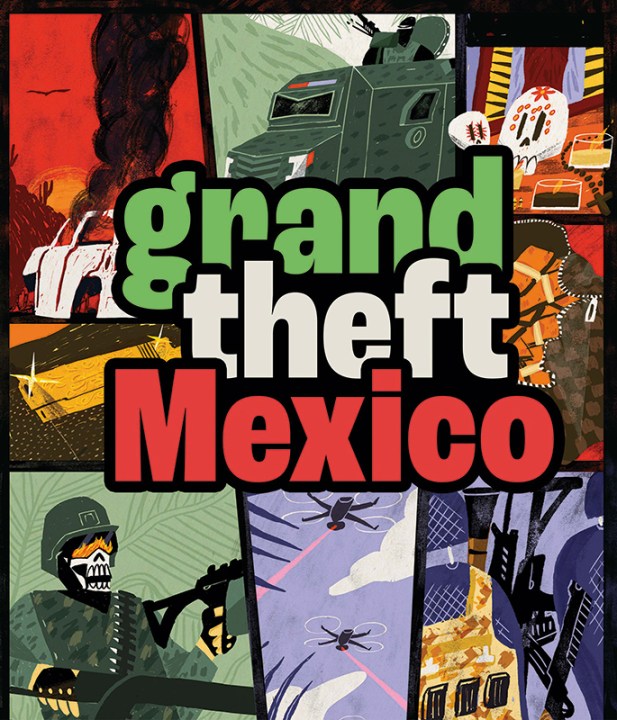
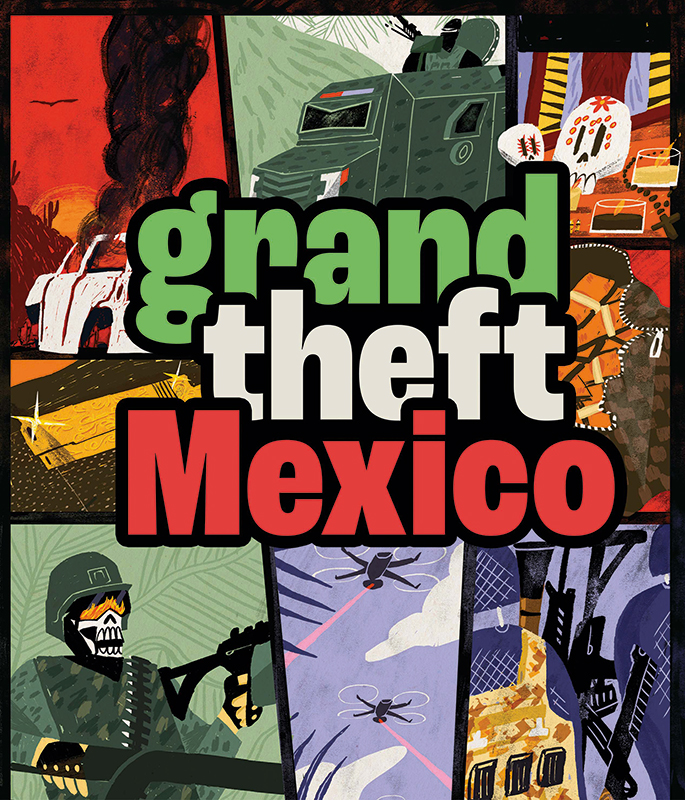
Soberanía is non-negotiable. That’s what Mexican President Claudia Sheinbaum repeats time and again, at her mañaneras, at speeches, at rallies, on television and in person. She says it, her government says it, her political party says it, her apparatus says it. The agents of the United States of America must never, ever set foot on Mexican soil in any operational capacity. The sovereignty of the nation comes first – even before the security of the nation, even before the nation’s own capacity to police itself, even before the safety and lives of its own citizens.
As Sheinbaum herself has noted, the first American intervención in Mexico cost the country half its territory. There have been plenty more since 1848, but none have resulted in further Mexican territorial losses and all of them were direct responses to the Mexican exportation of violence and insecurity into the US.
Observe the narratives of the Mexican left long enough, and you see the same themes emerge over and over: Mexico always the victim, Mexico always wronged. It’s a useful narrative that insulates the ruling elite and deflects attention from the fact that it that has served its nation exceptionally poorly for most of the past 200 years.
Of course soberanía is, in fact, entirely negotiable, because the Mexican state has been voluntarily surrendering sovereignty for decades. The prime beneficiaries of its territorial cessions in the modern era are the cartels, which control somewhere between a third and a half of Mexico, according to US Deputy Secretary of State Christopher Landau. This extraordinary loss of national territory happened by degrees, at first in a state which was too weak or too corrupted to resist – and then in a state that discovered a fruitful coexistence with its cartels, growing alongside them in power and violence.
The same themes emerge over and over: Mexico always the victim, Mexico always wronged
No Mexican political party is innocent of this phenomenon. But nothing quite matches Morena, the leftist Movement for National Regeneration, which has held the reins of governance in Mexico since 2018. The Morenista innovation is to have moved beyond ordinary gross corruption into a new model of governance that synthesizes state and cartels into the narco-estado – the narco-state.
For Morena it likely began when persons close to its founder and central figure, Andrés Manuel López Obrador, are alleged by the DoJ to have made a deal with the Sinaloa cartel in the course of his 2006 run for the Mexican presidency. They’d give his movement financing in return for state cover when Morena took power, it was alleged. López Obrador didn’t win then, nor in 2012, but in 2018, it certainly looked as if any such deal may have been in force. The then-Mexican president visited and paid respects to the mother of the infamous drug lord El Chapo, intervened to secure the release of a captured Chapito and curtailed the state’s war upon the cartels.
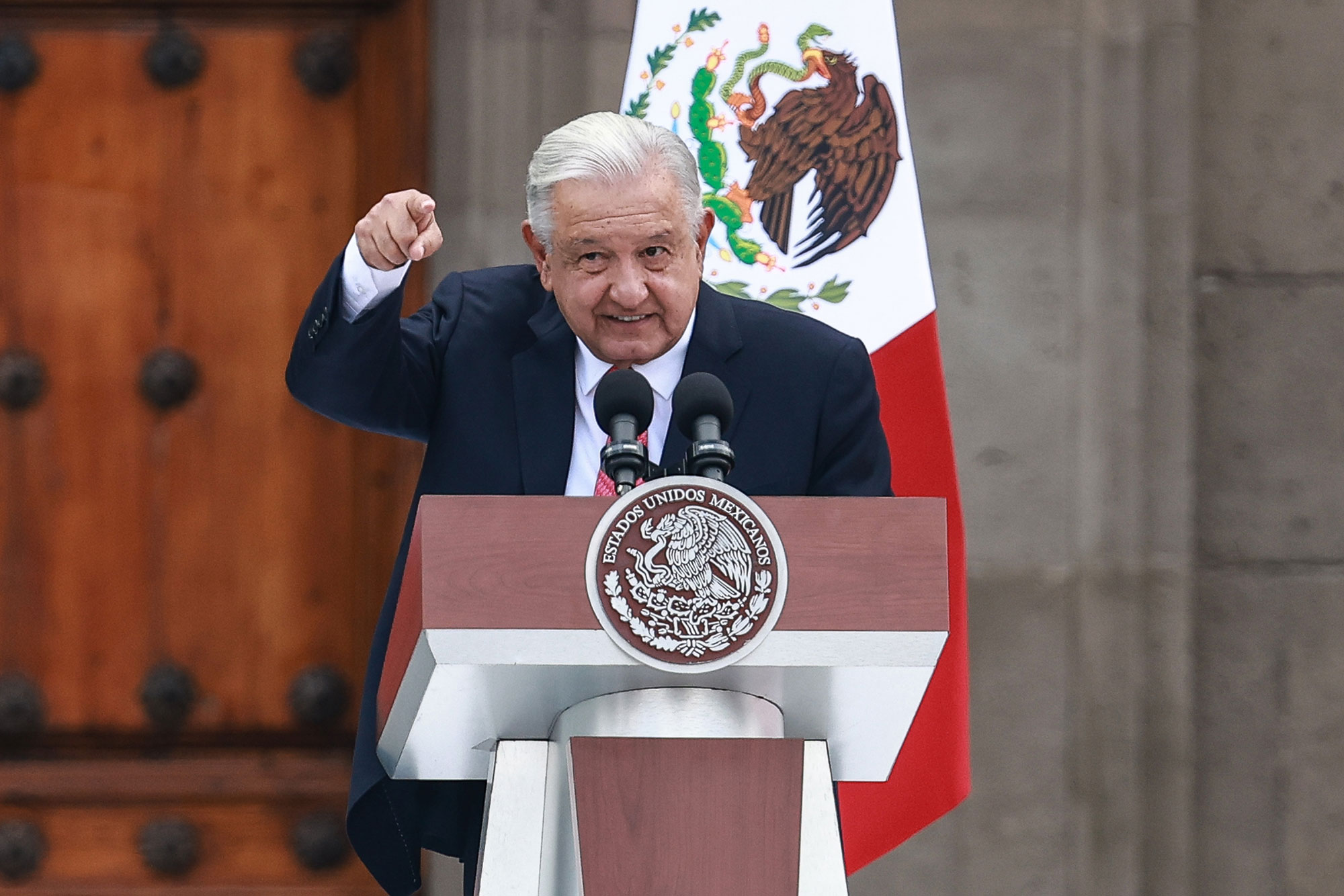
The narco-estado model was simple: the state provided the cartels with official protection (including, extraordinarily, López Obrador’s 2023 vow to defend the cartels from American action) and access to public goods, and the cartels provided the state with finances, votes and deniable actors. The appointed judiciary was eliminated in favor of all-elected judges, the independent election agency was neutered and the independent statistical agency was eliminated: an outcome consonant with Morena anti-technocratic ideology, but also serving to mask the scale and depth of cartel violence throughout the country. At every step the narco-estado strengthened, until it became impossible to speak of criminality, as to be criminal is to be against the state.
Soberanía is non-negotiable, unless you are a cartel partner of the Movement for National Regeneration.
The return of Donald Trump to the White House in January last year upended all of this. A new realism entered into the American calculus. Mexico and its regime would be compelled to cooperate, if not to reform. Sheinbaum, who was elected in 2024, would deliver to the Americans the cartel men, while preserving their allies in the party itself, who could presumably collapse both the party and the governance of Mexico if placed under threat.
Mexico was to be integrated into an American-led security order, and though this was happening across the hemisphere, from Panama to Venezuela to Ecuador to the Caribbean basin and beyond – nowhere was the process as fraught and as consequential as in Mexico.
For about a year, it worked. Under the dual stewardship of Sheinbaum’s security chief Omar García Harfuch and US ambassador Ronald Johnson, Mexico delivered narcos by the dozen to the Americans, sometimes skirting Mexican law to do so. It was revealed in the New York Times mere days ago, at the time of writing, that the CIA had aided the Mexican security apparatus in an assassination campaign against narco figures, including at least one known case of a car bombing killing a cartel man.
As far as the status quo went, it was a marked improvement from the López Obrador years. Sheinbaum, not being of the narco-political core herself, was perfectly willing to give up the party’s cartel partners to the Americans as the price of keeping her party organization intact. It was, after all, essential to her own ideological vision for a Mexico transformed into a left-populist autocracy.
Yet the status quo could not hold. Eventually the Americans decided strategic wins were necessary. The Mexican government ran out of operational and tactical wins to deliver, and it could tolerate only so much curtailment of the criminal organizations with which it exists in synthesis. The only question was what would cause the turn from managed engagement to strategic confrontation.
On April 19, that question had an answer. A vehicle carrying four officers engaged in a anti-drug operation in the state of Chihuahua crashed, and all four were killed. One was the director of Chihuahua’s State Investigation Agency, and another was a fellow Chihuahuan official. The other two were CIA officers.
Soberanía is non-negotiable and above all else that means US agents must never, ever set foot on Mexican soil in any operational capacity. Yet here they demonstrably had, and moreover had died doing so. Abruptly, the Morena regime found itself in the dreaded position of a Mexican government that has surrendered soberanía to the only enemy that matters – not the cartels, but the Americans.
That regime, and specifically President Sheinbaum, had a choice in its response. Americans had died in an operation on Mexican soil, true. And it is also true that they were apparently present in cooperation not with the Mexican federal government, but the government of the state of Chihuahua, which is controlled not by Morena but by the rival PAN party. Yet Sheinbaum and her advisors knew the CIA was also working with them, if not necessarily operationally then close enough, in the facilitation of assassinations of Mexican citizens. They also knew that a great deal of American cooperation in Mexico, from drone surveillance to intelligence provision, had already been tacitly acknowledged by the government. Further, they knew Johnson was himself a veteran of the CIA Ground Branch, the elite of the elite in the shadowy world of special operations, and that the dead Americans were, therefore, his comrades-in-arms.
A prudent Mexican government response would thus involve expressions of concern, reminders of soberanía, and above all else, expressions of condolences for the fallen Americans and their families – and thanks for their efforts to protect Mexico as much as America. All else could be addressed out of the public eye. To discern this, especially in light of the white-hot American focus on Mexico and Latin America in general under the second Trump administration, required no great wisdom and no great statecraft.
Sheinbaum and Morena chose to do the opposite. The Mexican President issued a perfunctory and almost cold statement of regret over the Americans’ deaths – and none whatsoever on the deaths of her fellow Mexicans – and pivoted immediately into a series of discourses on, naturally, soberanía. The CIA was reproached, the Americans were reproached, and most of all the vendepatrias, the traitors of the PAN in Chihuahua, chief among them Chihuahua Governor Maru Campos, were denounced in full. Mexican public diplomacy, for generations so deft at its one core task – the management of the Americans – suddenly descended to a level of functional incompetence unthinkable in all the years before Morena – and in doing so, provoked the long-feared rupture with the Americans.
Managed engagement turned to strategic confrontation as the Americans finally took aim at the heart of the narco-estado, the narco-politician cohort at the center of Morena, and plunged US-Mexico relations into their worst crisis in a century. Exactly ten days after the deaths of the CIA personnel, the US Department of Justice indicted ten Mexican political figures, including two major Morena officeholders, Sinaloa State Governor Rubén Rocha Moya and Sinaloa State Senator Enrique Inzunza Cázarez, for a long-standing liaison with the Sinaloa cartel. These were the men who always believed they would remain inviolate: the political class, the stones in the great arch of Mexican civics, whose removal might collapse the whole edifice. The bet had been that the Americans wouldn’t dare. Then the bet was called.
Again, Sheinbaum had a choice, and again she invoked soberanía. She denounced the American indictments and summoned her party apparatus to explain, in detail, why the evidence was lacking. She does not sincerely believe they are presumptively innocent, but she also knows that if she is seen to move decisively against them, a cohort might move against her – or worse from the ideological viewpoint, leave the party altogether, ending her own dream of a left-populist Mexican autocracy.
The clock is ticking. According to the 1978 US-Mexico Extradition Treaty, the United States must submit to Mexico “evidence which, in accordance with the laws of [Mexico], would justify the apprehension and commitment for trial of the person sought.” Mexico also has the option of executing a provisional arrest of the indicted individuals, at which point the US is compelled to provide that evidence within 60 days. This is typically what would happen in a case of this stature. It is not happening here: instead, both Sheinbaum and her government have repeatedly affirmed that the American case is insufficient to justify either a provisional arrest or an extradition, and Sheinbaum has gone on the rhetorical counterattack in noting cases in which the US has refused to honor a Mexican extradition request. Two things appear to be simultaneously true: that Sheinbaum is struggling to find a formula to sideline the narco-political class that never regarded her as one of its own, and also that she is likely resolved to never give a single one of them up to the United States.
If the latter is, indeed, her decision, then she is leading Mexico from a crisis into the abyss, because the US is far from exhausting its options. The US-Mexico-Canada (USMCA) renegotiation is unfinished, and the interest in it is asymmetric. If the US chooses to ignore the July 1 deadline for re-authorization of the trade treaty, shifting it into an annual review, the uncertainty and diminished investment will wound Mexico’s economy, not America’s. This is a low-end option.
Events will likely go well past this point, because the Sheinbaum government is treating the indictments of Rocha, Inzunza, et al., as a hill to die on, thereby misunderstanding their purpose. These indictments were warnings: what comes next will depend upon whether the warning is received. If it is, then there will be a painful episode in which the indicted figures are brought to justice – the real kind, not a fictitious compromise process – and the relationship will likely settle, and the focus will return to operational and tactical wins.
If it is not, as seems likely, then these indictments will merely be the first indictments. Morena is rife with narco-politicians and we can be sure that the US indictments are already prepared. After all, the indictments for Rocha, Inzunza and company were not simply thrown together in ten days following the CIA deaths. There will be more governors, to be sure, and more senators, and diputados – and there will be party figures as well as major names and major influences who constitute the life and purpose of Morena. At the apex of the pyramid, a longtime subject of US Department of Justice investigation himself, is López Obrador.
Morena as a coherent party will not survive that level of scrutiny. Even more injurious to the regime than indictments and extraditions will be the follow-on effects. Morena holds power in no small part because it brands itself the honest and non-corrupt actor in Mexican politics. At stake then is the legitimacy of the whole regime.
The status quo could not hold. Eventually the Americans decided strategic wins were needed
But the Americans will not be content with simply injuring regime legitimacy. The real intervención will not, contrary to the fever dreams of the Mexican left, be a replay of 1847, but a replay of January 3. The prospect is not the Battle of Chapultepec: it is the raid on Caracas.
For more than a year, Sheinbaum has drawn well-deserved praise for deft management of both the Americans and Trump – a talent that has eluded both the Canadians and the Europeans. Now, all her skill appears to have fled. Perhaps she is panicking, or perhaps she sees no positive outcomes before her. To the extent the latter is true, American policymakers ought to provide her with assurances of positive outcomes, yet the nature of Morena officialdom is such that even this plain common sense is mixed with political fantasy. There is a narrative dictating actions, and that narrative is the old morality play of Mexico the victim and America the aggressor.
The counselors within the Palacio Nacional have an obligation to their country to be emphatic and clear. An American-led security order is emerging across the hemisphere, and Mexico will be in it. It is in Mexico’s interest to have it deliberated and codified by treaty, a security counterpart to USMCA’s role in trade. It is not in Mexico’s interest to have this security arrangement emerge by reaction and fiat, but that is what is happening now.
Soberanía may be non-negotiable, but Mexico is not fully sovereign. That isn’t because of the Americans, but because of choices the Mexican regime made long ago. The state shared its sovereignty with the cartels, and it is reaping what was sowed. In that light, the irony is that the strongest support for soberanía Mexicana is not from the Palacio Nacional, nor from Morena, nor from the President at her mañaneras – but from the United States Department of Justice’s Southern District of New York, which is doing what the regime in Mexico City will not, and taking on the narco-politicians unworthy of a great nation.




Comments