
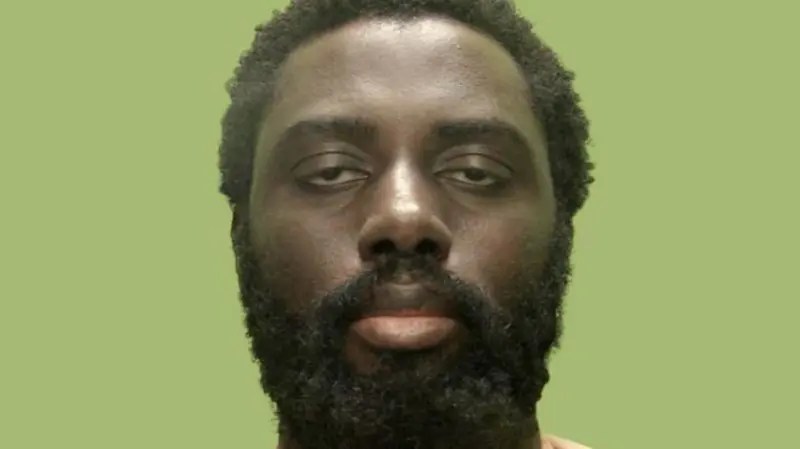
On June 13, 2023, a mentally ill man named Valdo Calocane went on a rampage in Nottingham, murdering 65-year-old caretaker Ian Coates and two 19-year-old students, Barnaby Webber and Grace O’Malley-Kumar. All three victims were clearly much loved by family and friends, and warm tributes poured out; O’Malley-Kumar had died trying to protect her friend and was posthumously awarded the George Medal for bravery. It was a senseless waste of life, all the more so because the killer had a long history of violence. Just six weeks before the murders he had attacked two people. The police failed to act.
The ongoing inquiry has proved something of a revelation about the workings of the state, in particular the way it balances the rights of suspected criminals and the general public
Calocane had been diagnosed with paranoid schizophrenia in 2020, sectioned under the Mental Health Act several times between that year and 2023, ‘and was involved with a number of violent incidents before his killings’ according to reports.
Yet, as the Times recently stated, the inquiry was told that ‘the Nottingham triple killer carried out an earlier violent attack after being released by mental health professionals’ worried about the ‘over-representation’ of young black men in custody.
The newspaper noted that Calocane had ‘tried to batter down a neighbour’s front door, frightening her so much that she jumped out of a first-floor window and badly injured her back.’ While the mental health service had been ‘leaning towards’ sectioning him, he was released after ‘the team of professionals considered the research evidence that shows over-representation of young black males in detention’.
Progressive ideology has real-world consequences beyond hot-button issues around flags and language codes. The 2024 Labour manifesto declared that ‘The operation of the Mental Health Act discriminates against Black people who are much more likely to be detained than others. Labour will modernise legislation to give patients greater choice, autonomy, enhanced rights and support.’ This informed the Mental Health Act which passed late last year, furthering the goal of combatting ‘mental health inequality’ which has long been a cause with activists and politicians. The Welsh government in 2022 promised to tackle a situation where ‘detention rates under the Mental Health Act have been four times higher for people in the “Black” or “Black British” group compared to the “White” group.’
There are two broad explanations for this disparity: it’s either the case that one group of people are unfairly targeted due to prejudice and stereotyping, or that one group has a higher proportion of people who require detention. Obviously, believing the latter makes you a bad person, and in the progressive worldview the disproportionate sectioning of black men can only be proof of racism. You might call this philosophy ‘racial equity’ or ‘Kendism’, and it is the only explanation left once you’ve made the others – genetic or cultural – impermissible.
Schizophrenia and psychosis are much more common in people of Caribbean descent than the general population. The extent to which it is environmental or genetic is a matter of debate, but both likely play a part, and there’s no particular reason why one race shouldn’t suffer higher rates than another; in the United States at least, East Asians have lower rates of psychosis than people of European descent.
Schizophrenia has a strong hereditary component, and is known to run in families, but environment certainly plays a part, in particular stress during adolescence. Minority status can be a trigger for mental health problems, perhaps because many people find it alienating. Whatever the cause of this disparity, any legislation which aims to counter it is going to have real-world consequences.
The inquiry into the murders also revealed that in January 2022, while a student, Calocane had assaulted a flatmate and caught him in a headlock. After the university was informed, the residents were assisted in leaving the accommodation – ‘creeping out’ as Calocane slept. The students were told that their violent former flatmate was ‘getting the care he needs’ afterwards – but this was not the first incident.
In fact, Nottingham had ‘first became aware of Calocane’s struggles with his mental health in June 2020 when his mother Celeste emailed the university about his first psychotic episode and subsequent admission to a mental health ward. A number of incidents followed that admission, over the next two years – some of which the university was aware of, but others that it was not.’
The university failed to expel the violent student because it might cause him ‘stress’ and would have ‘impacted on his mental health’. Instead, they had advised him to move to his family in Wales rather than return to university where he could have faced ‘stigma’ over his violent assault.
There were other complaints about the university’s conduct, such as the fact that the families of the murdered students were not told that their ‘close point of contact’ at the college had also been involved in the ‘management of Calocane’s risk’ – and only learned about this at the inquiry. The university official explained that they couldn’t be informed because of the ‘ongoing criminal investigation at the time limited what they could disclose to the families’. Webber’s parents were also only informed that the killer was a fellow student when they attended a vigil at the city.
Perhaps most troubling of all is the revelation that Nottingham University threw away Grace’s belongings, including hockey memorabilia as well as intimate keepsakes from her childhood, which had been earmarked by her parents for her friends.
The ongoing inquiry has proved something of a revelation about the workings of the state, in particular the way it balances the rights of suspected criminals and the general public. One officer claimed that the police could not ‘link two prior violent incidents, which occurred on the same day, investigated by the same force, because of the suspect’s “data protection” rights.’ The killer was ‘not forced to have long-lasting antipsychotic medication because he did not like needles.’ On top of this, after the murders,‘Calocane refused consent for toxicology samples while he was in custody’, yet his victims were tested.
This contrasts with the way that the families of the victims feel that they were treated. One of Ian Coates’s sons, James, told the hearing that he ‘learned of his father’s death when [he] was messaged by a family friend on Instagram’, and that police only contacted them ‘ten minutes before a major press conference was held’. The brothers also told the inquiry that they had not been invited to a vigil held in Nottingham city centre and only learned of it through a journalist. Coates’s son Lee said that the way they had been treated by authorities made them feel like ‘second-class citizens’.
Elaine Newton, Coates’s partner, ‘was told for hours that Ian had died in a road traffic accident but no further details were provided… The officers who explained that he had been stabbed were shocked [that] Elaine had not been told.’
Having already killed three people, Calocane stole Coates’s van and deliberately struck three pedestrians – Wayne Birkett, Sharon Miller and Marcin Gawronski. Birkett suffered such a traumatic brain injury that he lost all memory of his life before the attack. He spent six weeks in hospital before being transferred to a rehabilitation unit, but during his time in hospital the authorities apparently kept him in the dark, including about the killer’s interactions with police. Birkett’s partner said that the organisations involved had ‘tortured’ the victims’ families ‘over and over again’.
The Nottingham murders were initially suspected to be terrorism, and as is the custom with mass tragedies which may cause problems for ‘community relations’, displays of spontaneous unity followed; a vigil was held, and a website called ‘Nottingham Together’ popped up with images of the modern diverse city unified against hate, only to disappear later.
This has come to be referred to as the ‘Don’t Look Back in Anger’ response, after the Oasis song played following the Manchester terror attack: don’t get angry and don’t ask questions about acts of violence resulting from policy decisions informed by progressive ideology. In the case of Manchester, the deaths were downstream of the country’s asylum system, in that of Nottingham the unwillingness to incapacitate a clearly dangerous man with a long history of violence.
Almost all the agencies involved with this tragedy come out very badly, but what is especially notable is the secrecy that is now so characteristic of the British state. Emma Webber, Barnaby’s mother, even claimed that ‘she and other families were forced into a non-disclosure agreement, preventing them speaking about the investigation’. Indeed, one wonders to what extent the families of victims are pressured into playing along with the authorities’ preferred narrative when such horrors occur.
This article first appeared in Ed West’s Wrong Side of History Substack.




Comments