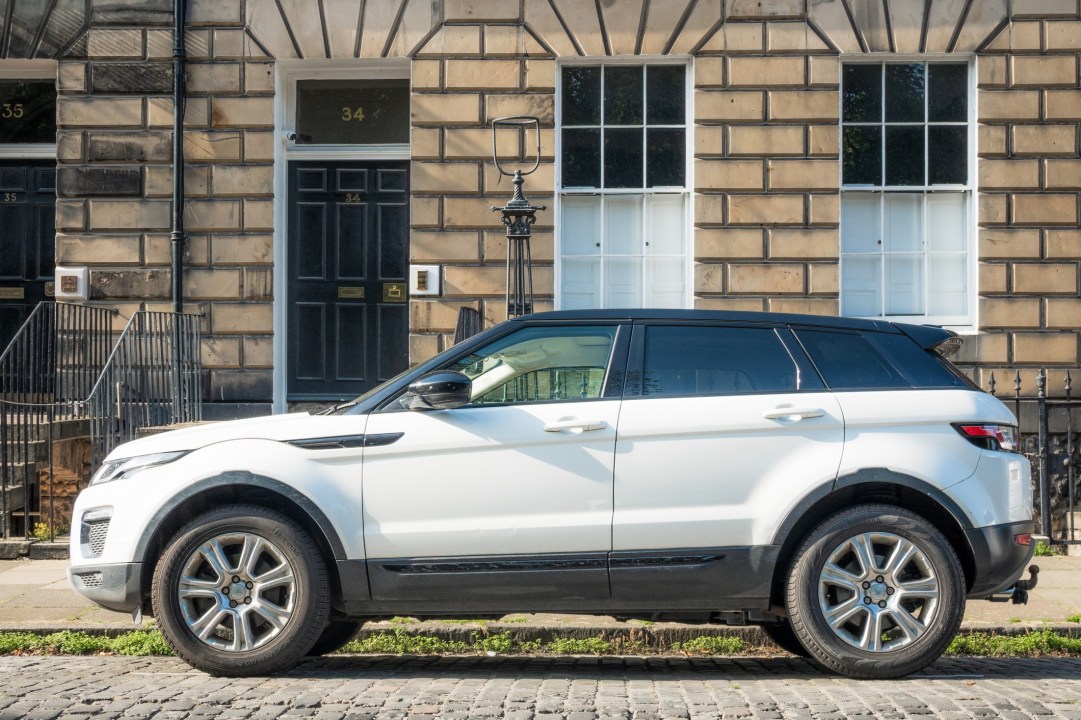
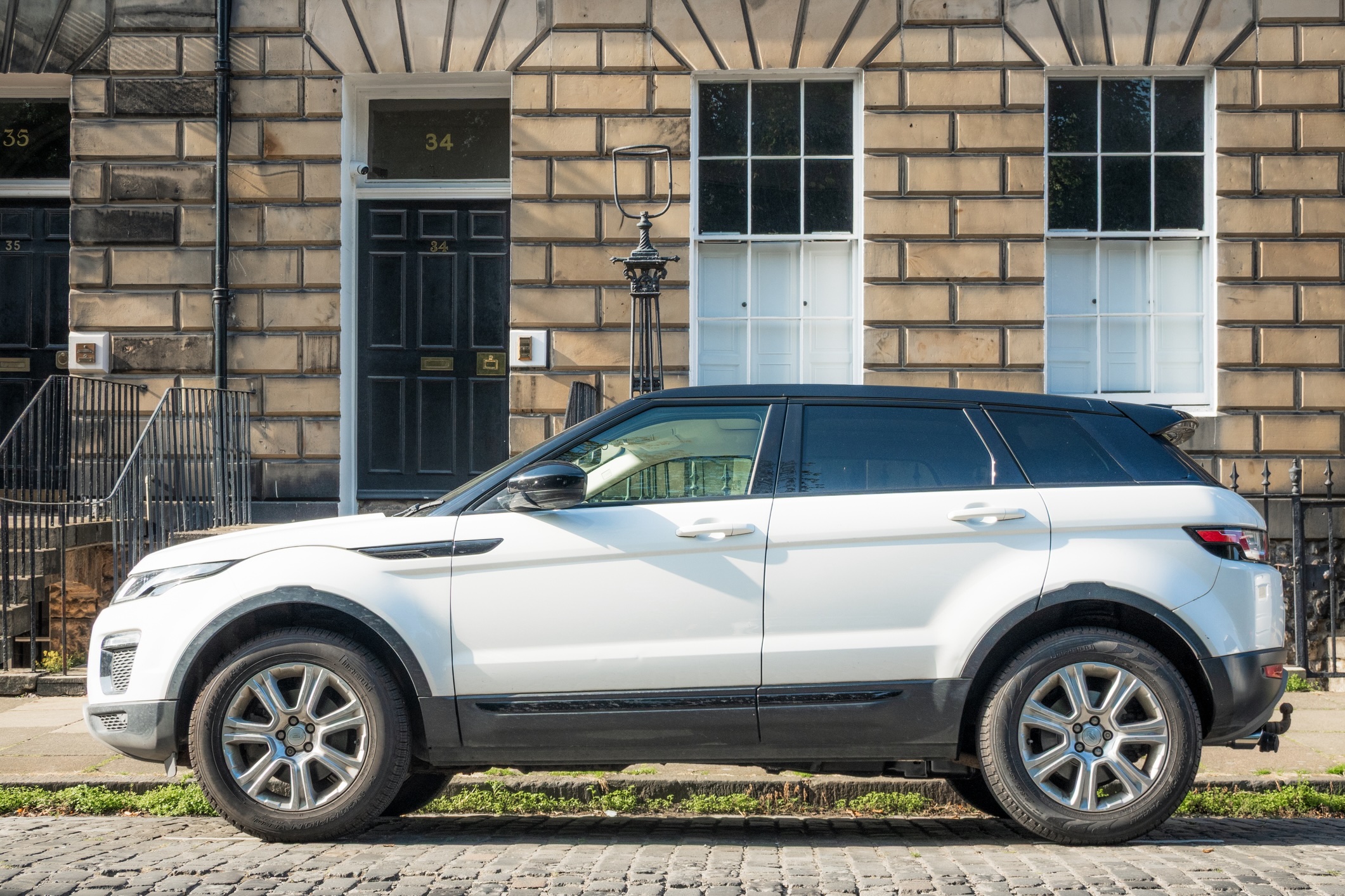
It’s a busy Saturday morning and in the supermarket car parks of Britain we are forced to indulge in a cartoonish game of automotive Tetris, performing 15-point turns to coax our modern SUVs, EVs and people-carriers into parking spaces painted in 1971 for a Morris Minor. Alloy wheels scrape kerbs and mirrors bang bollards as children are extracted through two-inch gaps in doors that can now barely open.

The monstrous inflation of modern car sizes crashed into the headlines last week with the latest transport crisis dubbed ‘carspreading’ or ‘autobesity’. It was sparked by a study from Transport & Environment, a multi-million-pound green-leaning Brussels quasi-quango, heavily backed by the EU, telling us our cars are too big.
It would be easy to dismiss these technocratic elite boffins who want to ban your family hatchback while they glide between climate summits in chauffeur-driven limousines, but this time their data is more compelling: the average car has been expanding in width and length by more than a centimetre a year. The modern ‘Mini’ now matches the footprint of a seventies Jaguar.
Cars have undergone the vehicular equivalent of the Wayne Rooney trajectory. We started the century with something lean, agile and stripped-back for speedy action. 20-odd years later, a considerable amount of surplus structural heft has appeared, wrapped in heavy-duty luxurious padding. Cars, like some football pundits, now occupy a significantly wider footprint on the turf.
Anti-car lobbyists responded by pointing fingers. Middle-class drivers were branded greedy, spatial slobs intent on colonising the People’s asphalt with their selfish urban tractors. Parking spaces were being lost, roads cluttered and worst of all our selfish sizeism is threatening the lives of child pedestrians who are now at greater risk from these larger vehicles.
But hang on, nobody has ever browsed garage forecourts, tape-measure in hand, trying to buy the biggest vehicle to occupy the most road space. Is this enlargement epidemic really the consumer’s fault?
Middle-class drivers were branded greedy, spatial slobs intent on colonising the People’s asphalt with their selfish urban tractors
Like Wayne’s own mid-life enlargement, it’s easy to blame it on lazy over-indulgence, like buying too many multi-packs of crisps. That’s ignoring ultra-processed food conglomerates who engineered food for increased profit, stuffed it with addictive sugars and flooded supermarkets. The same logic applies to our roads. British motorists didn’t suddenly demand to pilot military-grade tanks down narrow Cornish lanes. Somehow, we’ve been cornered into it.
The answer is that the wheelbase waistline crisis is really the result of an unholy alliance between meddling safety bureaucrats and cynical manufacturers who found a shared interest in bulk.
From Europe’s tyrannical NCAP overseers has come a relentless avalanche of required upgrades. To achieve five-star crash ratings, cars were forced to grow thick blind-spot-inducing pillars, massive crumple zones and heavy pedestrian-protection bonnets. Then came electronic nannies: lane-keep assist, speed-limit monitors and driver-drowsiness cameras adding size, cost and weight.
Faced with expensive regulatory burdens, manufacturers realised they could no longer make big profits on small hatchbacks. Instead, they dressed up the same platforms as luxury tanks and charged premiums for extra bulk we never asked for in the first place.
Let’s take the UK’s top-seller. This is what most people chose to buy – and it’s not even close to the biggest cars on the market. Few people choose, say, a Range Rover instead of a Qashqai or, back in the day, a Granada instead of a Cortina.
From the seventies on, the UK number one was Ford’s nippy little supermini, the Fiesta. Its length grew steadily from 3.56m to 3.95m in 2010. Top seller or not, Ford decided to drop the much-loved Fiesta in 2023 and replace it with a mini-SUV on the same underpinnings at a 15-30 per cent higher price, calling it the Ford Puma.
Now that’s become our number one seller. It’s on the Fiesta platform but measures 4.21m long. It’s grown more than two feet longer. And more than a foot wider too. Puffed out for profit, its weight has ballooned from 700kg to almost 1.3 tonnes. Yet it’s almost the same car underneath. Ford is up-selling us air.
Similarly, today’s ‘Mini’ Countryman is nearly a metre and a half longer and three times heavier than the original Mini. Perhaps more pertinently, it physically occupies the same road footprint as a classic seventies Range Rover, one of the biggest cars available at that time.
Car brands created an effective narrative to sell this process: ‘big is safe’. Bulk is about family pride, security and protection. In reality, it’s mostly about profit. Motorists now feel forced to buy a larger, heavier car because they feel intimidated by everyone else’s massive vehicle. Huge is the new normal.
The consequences are heavier, wider cars that are dangerous to pedestrians because of towering front-end blind zones. They are thirsty, less fun to drive and astronomically costly to run. In the rare event of hitting a pothole, a replacement tyre for a 1980s Metro cost the price of a pub lunch; a massive 20-inch low-profile SUV tyre regularly shredded by ubiquitous road craters caused by these heavier vehicles will set you back at least £250.
The green lobby may be screaming for weight taxes to punish drivers for ‘carspreading’ but it’s their fault, not ours. Nobody demanded a wider vehicle. We’ve been forced into tanks and left us to suffer the consequences in the supermarket car park every Saturday.



Comments