
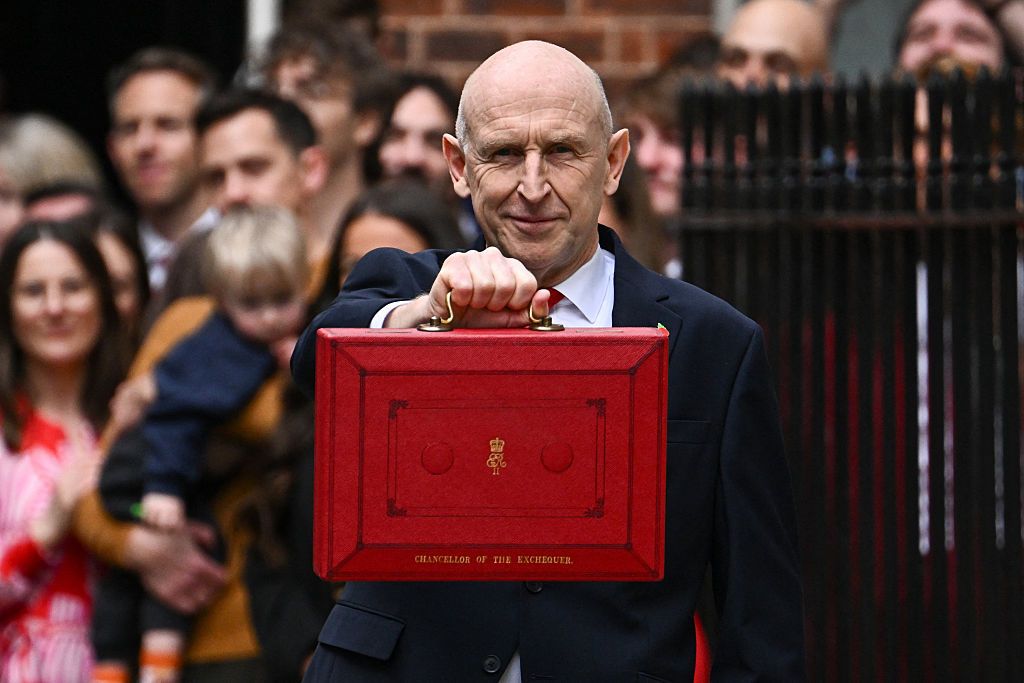
I’ve been writing about politics for 25 years and, putting aside the two years (2007-09) I was based in Washington, John Healey’s first Budget on Wednesday was by some distance the most boring I have sat through. As I wrote in my column this week and explained in our live Budget event on Wednesday evening, one possible explanation is that Andy Burnham wants to keep the window open for an early general election, keeping the show on the road and not spooking the markets, while Labour’s poll numbers creep upwards.
The markets gave a shrug, but so did everyone else. This was not the end to 40 years of neo-liberalism or the transformation of the British economy and society that Burnham promised. So what is he up to?
The other explanation, frankly, is that the PM sees himself as the star of his own show, and regards the Ten-Year Plan he is expected to unveil in November as the real moment of truth.
Most political strategists I know think the important thing with political plans is not what is in them, but convincing voters that you have one. Lynton Crosby persuaded David Cameron and George Osborne to pin their electoral hopes on a ‘long-term economic plan’. No one knew what was in it, but the sense that they knew what they were doing carried the day. You may have forgotten (he did) that Boris Johnson had a nine-point plan during his re-election effort as London mayor. I remember interviewing him and asking him to list the nine points. Even Bojo only managed four of them.
Burnham, of course, is not this cynical. He genuinely sees the devolution he will outline in the Plan as transformational. ‘His political economy is devolution,’ says a Labour insider. ‘That’s what he’s got religion on.’ The Office for Budget Responsibility (OBR) doesn’t think much of Burnham’s theory of growth, of course, scoring it as a minor boost of 0.2 to 0.4 per cent of GDP over what, in political terms, is the next geological age.
Add to this a bit of a reset with the European Union, at a summit on 20 November, with the promise of further talks – then throw in some modest welfare reforms off the back of Alan Milburn’s review and Burnham thinks he can get to the new year with an offer which the public will buy shares in. The belief of most senior Labour folk I know is that the PM will do all this, talk a big game, flutter his eyelashes and then take a look at the opinion polls at the start of March to see if he dares call an election.
The Ten-Year Plan had better be beefier than the Budget, since voters are already beginning to notice that Burnham’s vibes alone won’t change their lives. A YouGov poll for the Times found that just 15 per cent of voters thought the Budget would make them better off, one in five said they would be worse off and 56 per cent said it would make no real difference.
Luke Tryl of More in Common, who ran a focus group on Budget night, found that participants liked the £100 off energy bills for homes in council tax bands A to D and the bank tax, but wanted more detail. He also found unease among those who aren’t well off but also aren’t on benefits, with several in the group saying they are left by the government to fend for themselves.
Tryl sums up: ‘The initial reaction to the Budget in our Portsmouth focus group seems to have reinforced many of the strengths and weaknesses of the Burnham premiership. People are pleased to be getting some help with bills, think Burnham is wracking up small wins and both communicates and gets it far more than his predecessor. Yet there is a growing unease that the big things are being ducked, worries about the size of the welfare bill, and the readiness of the armed forces, and a worry Burnham wants to appease people rather than solving the big issues. Overall the impression the group gave is the Budget may have bought the government a little more time, but they are going to have to provide answers on the big stuff soon.’
Burnham, of course, ruled out an election in the next 12 months on Budget Day. Let’s take him at his word, for now. The Budget made a 2027 election easier, but not inevitable. However, I think we can state with a degree of confidence that it also made a 2029 election almost unthinkable.
Healey has made much of the IMF praising his plan to get the deficit under control. But, according to the OBR, that plan involves cuts of 2.6 per cent in unprotected departments in the final couple of years of the Parliament. When I interviewed David Miles of the OBR for Coffee House Shots on Thursday, he confirmed this means cuts of £11 billion. Given that Labour MPs went berserk over £5 billion of welfare cuts under Keir Starmer – and Healey is already finding half the cabinet failing to make even modest ‘reprioritisation’ savings to their budgets this year – the chances of pulling this off are close to the square root of diddly squat.
A senior Labour figure, one of the wiser scrutineers of the scene in that party, concludes: ‘The Budget made an early election easier and a later election so much harder. It’s potentially impossible.’ This may have been intentional, or just force of circumstance, but it has changed the game considerably. The same figure puts the chances of a general election in May 2027 at 40 per cent, with 2028 the favourite (50 per cent) and just a 10 per cent chance of Burnham going the distance until 2029.
In short, what I think we’ve learned this week is that while Burnham might not dare to call an election in 2027, he dare not wait longer than 2028.


Comments