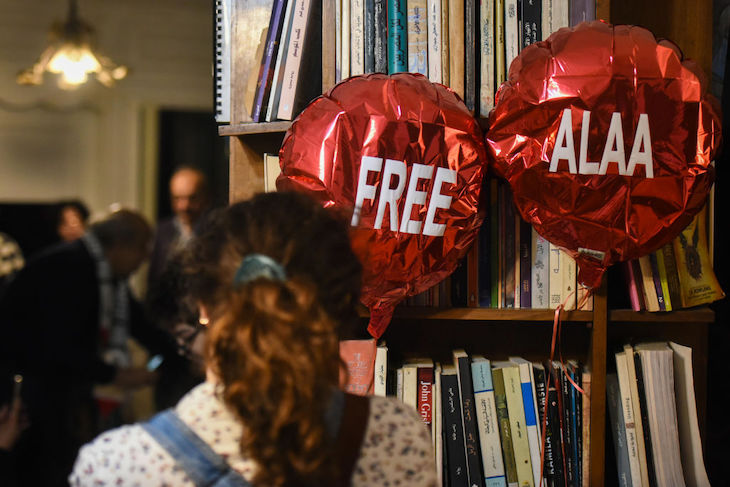
The real scandal of Alaa Abd el-Fattah is that it is nothing new, and that not enough has changed. For decades, in dozens and dozens of cases, the British state has legitimised, worked with, empowered or funded extremists and bigots; people with values deeply opposed to Western democracy; people who sometimes literally seek our destruction. Periodically, some new bad guy – in this case Abd el-Fattah – is exposed by the media or thinktanks. There’s a row. The person or body concerned is sometimes jettisoned, sometimes not. But the basic operational failure keeps happening.
As a No. 10 adviser, I was several times lobbied by MPs who plainly knew nothing about the things they were asking for
Remember Azad Ali, the man who appeared to support the killing of British troops, but was made chair of the Civil Service Islamic Society and the Muslim Safety Forum, the official Muslim liaison body with the Metropolitan Police? Or Iqbal Sacranie – Sir Iqbal – whose Muslim Council of Britain was treated as a key partner by government, though he wanted a law banning the Satanic Verses and compared Hamas suicide bombers to Gandhi.
Remember the large sums of public money paid to schools closely connected to the extremist group Hizb ut Tahrir? Or, more recently, ‘Islamophobia Awareness Month,’ with its record of promoting inflammatory lies to spread fear and division in Muslim communities, but still endorsed by dozens of police chiefs, politicians and local authorities?
Due diligence should be a fundamental part of politics. Abd el-Fattah’s views were published, in English, on social media. They had been exposed in newspapers, including the Wall Street Journal. They led to the withdrawal of his nomination for a major human rights award. Is it really possible that none of the backbenchers who rallied to his cause spent two minutes on Google?
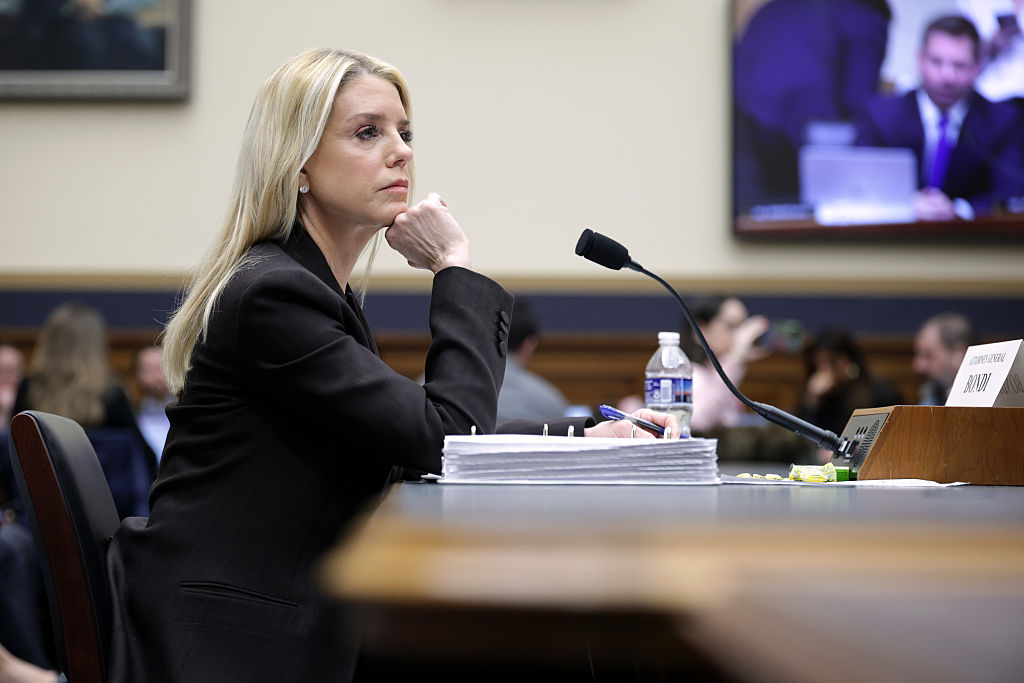
Unfortunately, yes. As a No. 10 adviser, I was several times lobbied by MPs who plainly knew nothing about the things they were asking for. They were doing it because they thought it would make them look good, or a celebrity bandwagon had started to roll, or they’d been wound up by some activist group.
Indeed, all politicians and parties seem to struggle with basic checks on people (think of Reform’s troubles.) But I can’t believe that no-one in the Foreign Office or the Cairo embassy knew what Abd el-Fattah thought. I can’t believe that the Egyptian government never told them of his views, as indeed it now says it did.
The officials may not have passed it on to their hapless ministers, but they knew. Maybe they saw it as a smear by the Sisi regime. Maybe they thought that el-Fatteh’s views on Israel and the UK were representative of the so-called ‘Arab street’. And maybe, also, there is a deeper root to the problem: that some in the British state are fine about working with people who want to undermine Britain and its values.
There’s a longstanding view in parts of British officialdom that you should treat with the bad people in order to use them against the really bad people. It’s one of the genuinely malign legacies of colonialism, from divide-and-rule officials of British India playing the Muslims and the Hindus, or the tribal chiefs of the North West Frontier, off against each other – only done today, of course, from a position of far greater weakness.
It’s one of the reasons why as late as 2010 a senior official in the then Department for Communities, Robert Mason, could recommend using Anjem Choudary’s al-Muhajiroun as a ‘legal ‘safety valve’ for extreme views.’ By then, al-Muhajiroun was already linked to 34 convicted terrorists. Choudary remained at liberty to appear on BBC current affairs programmes for a further five years; he is now serving life for directing a terror organisation.
For those who reject both our system of government and the very idea of Britain, there never can be any compromise, only grateful occupation of the ground we concede and grateful exploitation of how we empower them. The latest stage in that empowerment is the proposed official definition of Islamophobia, now rebranded ‘anti-Muslim hostility,’ which will make it harder to criticise Islamism.
There has been progress. Thanks to Due Diligence done during the last Labour government, the MCB is no longer an acceptable partner. Hizb is now banned. But the progress is fitful: losing momentum, stopping or even going backwards when ministers or government change: Michael Gove’s unit for undertaking Due Diligence on new schools – first suggested by Policy Exchange — no longer exists in the same form.
Meanwhile, our adversaries have a consistent, long-term plan, executed by the same people for years, even decades.
The vast majority of British Muslims are not Islamist. But extremists and their sympathisers do hold disproportionate power in the institutions: not only some mosques, but Muslim charities, pressure groups, media outlets. Sectarian politicians are starting to win seats. And the stronger these forces become, the closer we get to a tipping-point where democratic Muslims can’t speak out, and where action against extremism genuinely could trigger the consequences of which the state is afraid.
Extremists and their sympathisers do hold disproportionate power in some mosques, Muslim charities, pressure groups and media outlets
How do we start tackling this? The inquiry into el-Fattah ordered by the Foreign Secretary, Yvette Cooper, should be independent, not an internal backside-covering exercise. It should be about changing policy, not finding scapegoats. The first thing is to attack unacceptable behaviour. Any imam who has preached hatred or murder should be prosecuted. Any extremist who defames a public official – the abuse the former counter-extremism commissioner Sara Khan faced, for instance – should be sued for libel, at public expense.
And we shouldn’t just do the due diligence that was ignored on Abd el-Fattah. We legally require it to be done, and create a central body at the heart of Whitehall to do it. Extremism checks should be mandatory for all foreigners applying for migration or student visas, citizenship or benefits such as Chevening scholarships. We should compile lists of UK organisations, institutions and people to exclude by law from any form of support, funding or engagement from any public authority. (As with, say, Britain First, we don’t ban them; this is a free country. We just rigorously exclude them from state endorsement and money.)
It’s far from the whole answer. Support for divisive forces of all kinds is driven by the British state’s failure across a wider field than counterextremism: its failure to promote economic growth, its failure to deliver effective public services, its failure to provide competent, responsive government. The state needs to get better at those things too. But a proper strategy for exposing and excluding extremists would be a start. As the phrase goes, the truth will set you free.
Andrew Gilligan is a Senior Fellow at Policy Exchange and a former No 10 Special Advisor
Andrew Gilligan is a senior fellow at Policy Exchange.

Comments