The film playing as you enter the Nova exhibition – which commemorates the 7 October attack – was painfully familiar to me.
06:29AM – The Moment Music Stood Still, shows smiling, carefree youngsters in festival clothes, dancing on the dry broad plains of southern Israel around the Gaza Strip. Nothing could indicate that with sunrise, some 6,000 Hamas terrorists and their collaborators would invade Israel.
This Nova exhibition is perhaps the rawest, most direct and yet most respectful attempt to confront that day without abandoning Israel’s core values
I also danced at parties there with friends, after which we camped in the woods and were woken by the call to prayer of the Gazan muezzin behind the border. Like at Nova, I couldn’t hear the sirens while dancing, until the DJ stopped the music and announced a ‘red alert’, ordering an evacuation, to the frustration of the crowd. The party I went to was cancelled because of rockets from Gaza. At Nova, it ended with the deadliest attack on a music festival in history, with 413 festival-goers murdered and dozens of hostages taken.
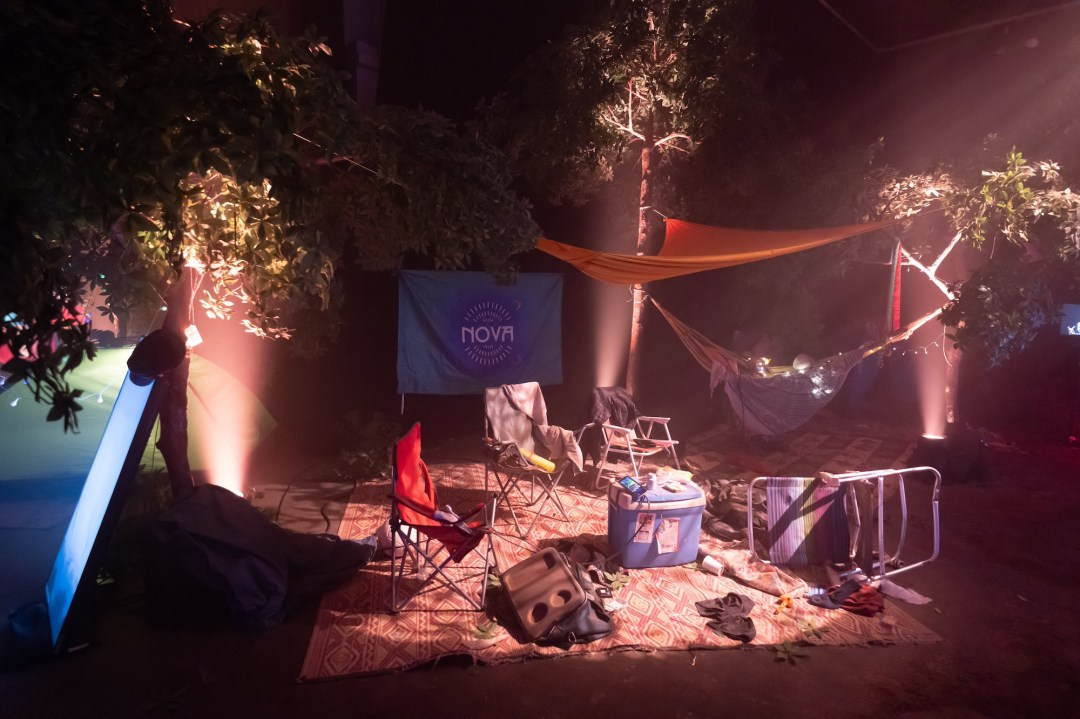
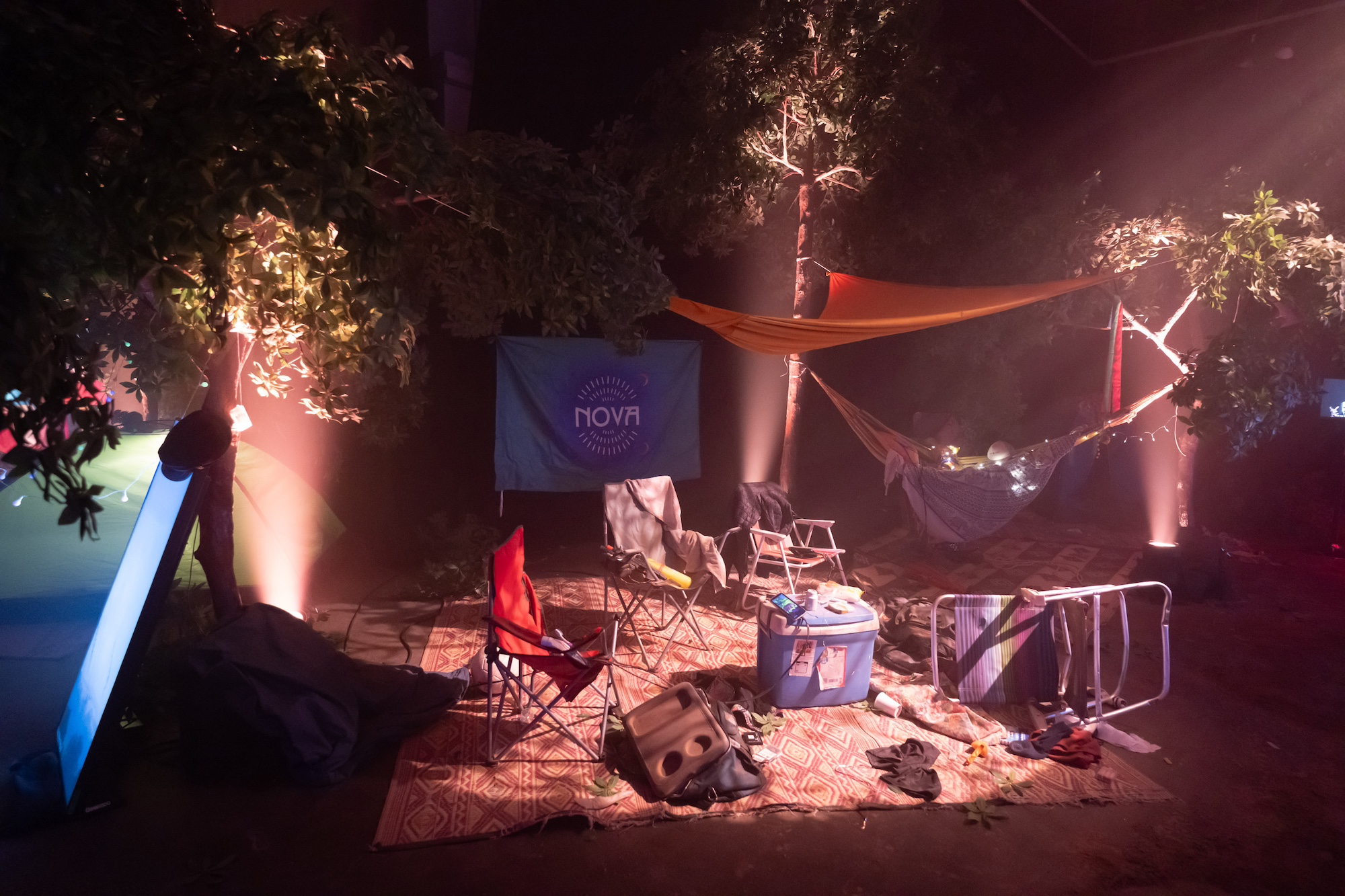
The following rooms of the exhibition depict this hell. Between original festival stalls, abandoned tents, lost shoes and empty snack wrappers, screens broadcast, in loops, videos from Hamas body cameras and from the phones of the hunted festival-goers.
The exhibition, which runs for six weeks from 20 May, features the filmed testimonies of survivors, first responders and bereaved families, alongside the burnt cars and bullet-pierced toilets where people tried to hide. It makes you feel as if you are glimpsing into the abyss of humanity.
But it is only a glimpse. ‘The idea of the exhibition came two weeks after the attack; we felt the urge to commemorate our friends, to honour our loved ones,’ says Ofir Amir, one of the co-founders of the Nova Music Festival, and one of the forces behind the worldwide exhibition. On 7 October, Amir was shot while fleeing and saw his friend die in the hours they spent hiding. ‘The exhibition is not about a country, religion or taking sides. It’s about what happened at a music festival,’ he says.

The exhibitors are quite restrained when it comes to the explicit presentation of gore and death. Some videos are blurred, while others show, for instance, the blood-soaked floor of a shelter but not the bodies bleeding out. Yet the exhibition is overwhelming as it is. ‘We don’t want people to walk in and be traumatised, but to have an experience. You finish in the light. It is very important for us that you sit in the healing area, and you have a minute to breathe, and then you meet survivors and bereaved families. You will go home with this feeling of hope and strength and see the resilience in their eyes.’ All net proceeds from ticket sales also go directly to the Tribe of Nova Foundation, which supports survivors and bereaved families.
Amir is well aware of the propaganda that emerged after 7 October. Here in Britain, while first responders were still scraping human remains off roads near my hometown in southern Israel, media and public attention quickly zipped away, and humanitarian and feminist organisations avoided acknowledging the mass murder, kidnapping and rape of Israelis, despite the revolting stream of footage filmed and broadcast by Hamas themselves.
It is almost impossible to find an Israeli who does not know a person who was murdered, kidnapped, injured or miraculously survived 7 October. Yet I saw up close how difficult it is to make non-Jews and non-Israelis truly grasp the scale of the events of that doomed day.
Driven by sorrow and frustration, and without my current journalistic platform, I found myself linking arms with hurt Israelis and Jews like me, people I had never met before, in what became Remember 7.10, a UK-based grassroots campaign that called for the release of the hostages and raised awareness of the atrocities. Already in October 2023 we realised that the world had forgotten.
By 8 October, social media and news coverage were turning to Gaza, while Israeli villages were still under Hamas occupation. It made us confront the ultimate Israeli dilemma: how does a society tell the story of its dead when it instinctively recoils from what many of us see as ‘death porn’? Is it right to circulate images of charred bodies, choked children and a half-burnt woman, forever sheltering her face with her tied hands? These are real people, with real loved ones.
Too many Israelis who survived that day have taken their own lives in the aftermath, while others who were exposed to 7 October footage have been severely traumatised. This fact, as well as national and intergenerational trauma, social norms around the coverage of countless terror attacks, and Jewish religious values about the dignity of the dead, have made Israelis loath to show the full horror of 7 October, even as denial, minimisation and indifference have spread worldwide. This Nova exhibition is perhaps the rawest, most direct and yet most respectful attempt to confront that day without abandoning these core values.
It is already having an impact. Taryn Thomas, a Stanford University student who was a prominent leader of pro-Palestinian rallies on campus, admitted in an interview that her social media did not contain any footage or information about 7 October: ‘It was entirely about Gaza,’ she says. She started to fall away from the movement almost a year later, when a pro-Palestine protest broke into the Stanford university president’s office. Then she received an open invitation to visit the Nova exhibition in Los Angeles. ‘I thought that if I went there, it would affirm my beliefs. I was looking for propaganda. But there was none. I saw last “I love you”s, kids my age being hunted down. It was a revelation that I saw a year too late,’ Thomas says. Her perspective changed forever.
Londoners Lisa and Michael Marlowe lost their son Jake, 26, at Nova, where he worked as unarmed security, saving money as he prepared to propose to his girlfriend. When the attack began, Jake stayed behind to help save others; he was shot nine times. For the Marlowe family, bringing this exhibition to London ‘feels like our boy is coming home for six weeks’. Michael stresses that people ‘still discount this day. People seem to be brainwashed about what’s good and what’s bad’. He has explained that the exhibition is aimed mainly at non-Jewish people, and expects tens of thousands of visitors, who will have to pass an extensive security check and receive the exhibition’s location only shortly before their booking date due to security concerns.
‘The people at Nova were murdered brutally through hate. And this hate continues to this very day, certainly here, in Europe. Across the world, anti-Semitism is probably at its peak. It needs to be stopped. If we can get only 20 people and re-educate them, we’ve done a good job,’ he says.
He’s right. Which is why anyone who claims to care about the Israeli-Palestinian conflict and human rights should seize this rare opportunity to visit the exhibition.




Comments