Space exploration

Elon Musk is deluded about life on Mars

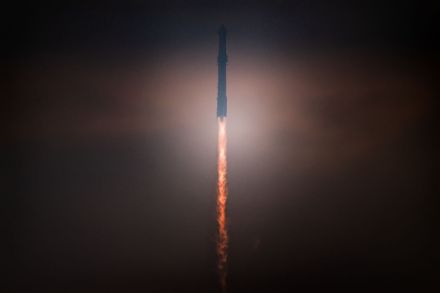
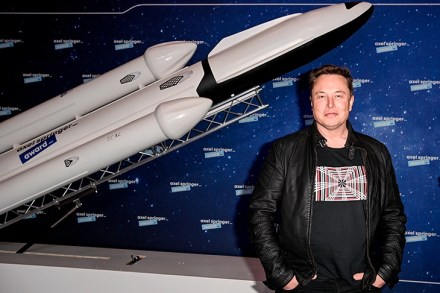
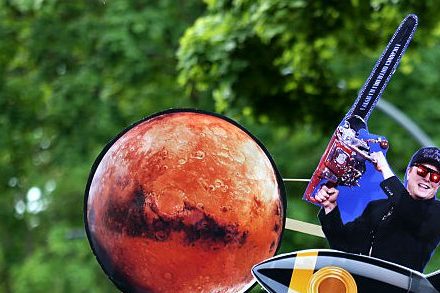
Elon Musk, already the richest person who ever lived, is at the center of the biggest share offering of all time. A valuation of $1.75 trillion at IPO would hand $75 billion to his company, SpaceX. Musk is being allocated two sets of shares, with performance-based conditions. They will materialize if SpaceX reaches a market capitalization of $7.5 trillion, and if a colony of a million people is established on Mars. The first of these is possible, the second is not. On the face of it, you wouldn’t bet against SpaceX. By 2024, it was launching more rockets than the rest of the world combined. Its Starlink internet service generates oodles of cash. It has more than 9,600 satellites in orbit that require constant replenishment, so the market is firm.
Elon Musk Mars

How Artemis II returned to Earth

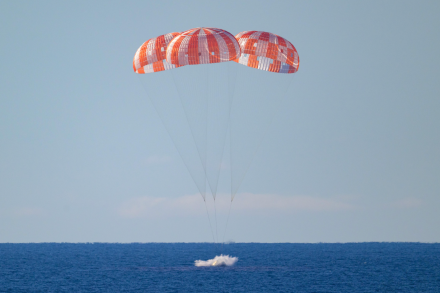
The key event in the return of the Artemis II crew was the moment of real drama during what mission controllers call Entry Interface. The capsule is 400,000 feet above the Earth and still traveling at 25,000 miles an hour. They were among the fastest humans even though they did not break the incoming speed of the Apollo 10 mission. It is only fourteen minutes until splashdown in the Pacific, there is no turning back, no second chance, re-entry will happen no matter what. A few hours earlier the crew donned their orange so-called crew survival suits and lowered their visors. In essence these are personal spacecraft providing everything they need to survive for up to six days. Their water-cooled inner suit was keeping them cool even though the cabin temperature was normal.

Artemis II

Will Biden support Ukraine’s attacks on Russia?

From our UK edition

46 min listen

This week: will Biden support Ukraine’s attacks on Russia? Owen Matthews writes the cover piece in light of the Zelensky drone offensive. Ukraine’s most successful strategy to date has been its ingenious use of homemade, long-range drones, which it has used to strike military targets as well as oil refineries and petrol storage facilities in Russia. The strikes are working but have alienated the US, who draw a red line when it comes to attacks on Russian soil. Owen joins the podcast alongside Svitlana Morenets, author of The Spectator’s Ukraine in Focus newsletter to debate what comes next.

How the US military became world experts on the environment

From our UK edition

In 1941, as it entered the second world war, the US Army barely bested Bulgaria’s for size and combat readiness. Nor did US forces have very much idea of what conditions were like in their new theatres of operation. In the winter of 1942, hot-weather gear and lightweight machinery landed in the deserts of North Africa where hot and dry conditions were assumed to persist throughout the year. Men froze half to death, even as their digging equipment foundered in winter mud. Sand, Snow and Stardust is the story of how the US military shed its ignorance and, by harnessing logistical intelligence and environmental knowledge, turned America into a global superpower. Before the second world war the US operated just 14 overseas military bases.

The space race gets serious

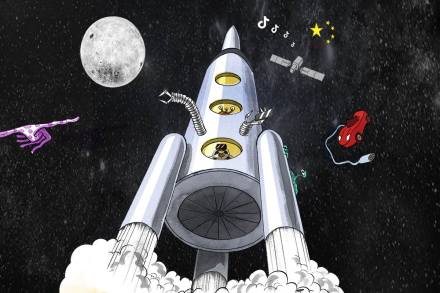
We are shifting from the early era of space exploration to a more serious phase extending ever further from Earth’s orbit, focused on key opportunities such as mining and manufacturing as well as military purposes. This newly expanded playing field will determine not only who rules in space, but who ends up dominating Earth. The protagonists include some familiar faces — the US, Russia and the European Union — but much competition will come from emerging powers, notably India and China, both of which look upon the “final frontier” as critical to their economic and military futures. Yet the rise of non-state space entrepreneurs, notably SpaceX, has introduced a fresh and potentially decisive factor to the new space race.

space

Is the West ready to face the challenges of advancing technology?

The theme of this month’s edition is technology. The advancement of space exploration, defense technologies, artificial intelligence and the like should excite us. Yet the geopolitical issues they present are great and Western governments seem ill-prepared to grapple with them. Watch any congressional hearing where a crusty congressman tries to keep pace with Silicon Valley’s top autists if you need further evidence — and read Spencer A. Klavan’s analysis of the high-skill but low-status rejects uniting into a formidable social class on p.12. The Silent Generation and boomers simply cannot keep up. The Space Race is back on, as tycoons seek to cash in on the final frontier.

space technology
space

Scientists’ strange offering to the final frontier

Dr. Jonathan Jiang dreams of beaming an easy-to-read message into space before civilization collapses. He’s run the simulations to test humanity’s self-destruction rate. According to his computers, there’s a 0.1 percent chance that humanity destroys itself in the not-so-distant future. He’s even more pessimistic than Stephen Hawking, who bowed out of public life saying, “I don’t think we will survive another 1,000 years without escaping beyond our fragile planet.” Jiang, who works for NASA’s Jet Propulsion Laboratory, co-authored the 2022 paper “A Beacon in the Galaxy,” which argues for the importance of streamlining the communications we send into space hoping they might be intercepted by an interplanetary species.

When the moon brought America together

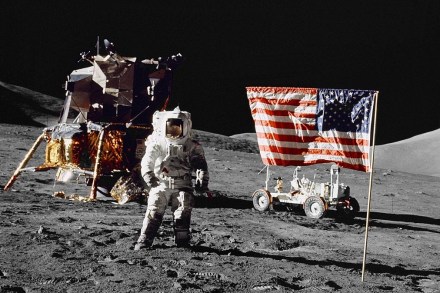
The Artemis rocket is back from the moon. Within a couple of years, if all goes to plan, it will bring men to the moon’s surface. It is a great loss that a bigger deal hasn’t been made of this expedition. I was only three when John F. Kennedy died, and his famous 1962 pronouncement that we would go to the moon not because it was easy but because it was hard was already history. The picture books I got on birthdays always included him in the history of space exploration. Those books made sure every kid knew how “we” were going to get to the moon. They changed us, and with us, America. We started with Mercury, baby steps mostly proving we could launch men into space. Then Gemini, a long proof-of-concept program to try out the technology of docking.

Let’s ban the metaverse and colonize space

The way I see it, there are two options for the future: a transplanetary society or a transhuman one. What got me thinking about this was right-wing billionaire Peter Thiel’s recent interview with Mary Harrington, which she wrote up in UnHerd. As Harrington puts it, Thiel’s diagnosis of modern social ills is not that “progress is inevitably self-destructive,” but that we’ve been making the wrong kind of progress. "We’ve had continued progress in the world of computers, bits, internet, mobile internet, but it’s a narrow zone of progress. And it’s been more interior, atomizing and inward-focused,” Thiel said. Meanwhile, “there’s been limited progress in the world of atoms.” So far, so good. But then the interview took a strange turn.

Life on Earth is too tame for eccentric American billionaires

From our UK edition

For many of us, Elon Musk is a hard man to like. He’s the richest man in the world (or second richest, as he and Amazon founder Jeff Bezos whirr back and forth in top spot), but acts online like a bratty teenager astonished by his own intelligence. He proposes underground tunnel networks as a transport solution for Miami (which is a swamp less than 10ft above sea level), moots takeovers of his companies with 420-themed weed jokes and hypes cryptocurrencies. Yet as you read Liftoff you can see what so many people find to admire in the man — at least for a while.