

It was a weekend of mixed emotions for the European Union. There was the news from Donald Trump that he will impose a 10 percent tariff on eight European countries in retaliation for their opposition to his plans to take control of Greenland. But on a brighter note, the EU finally signed the Mercosur trade agreement with several South American countries. The European Commission hailed it as the creation of ‘a free-trade zone of roughly 700 million people’, one which they promise will save EU companies more than €4 billion a year in customs duties.
Ursula von der Leyen, the Commission president, said: ‘We choose fair trade over tariffs, we chose a productive long-term partnership over isolation.’
The prospect of a trade war between the US and EU may convince MEPs to ratify this deal
The Federation of German Industries praised the deal as a strong signal for free trade, delighted with what it will mean for the automotive industry, mechanical engineering and the pharmaceutical sector. Currently, car exports to Mercosur countries are subject to a 35 percent tariff.
The response in France wasn’t quite as ecstatic. Jordan Bardella, president of the National Rally, called the deal an ‘extremely dark day for French agriculture’ and pointed the finger of blame at Emmanuel Macron. The fact that it had been signed in the face of French opposition, said Bardella, ‘symbolizes a series of failures and abandonments on the part of a President of the Republic who is incapable of defending the higher interests of the nation’.
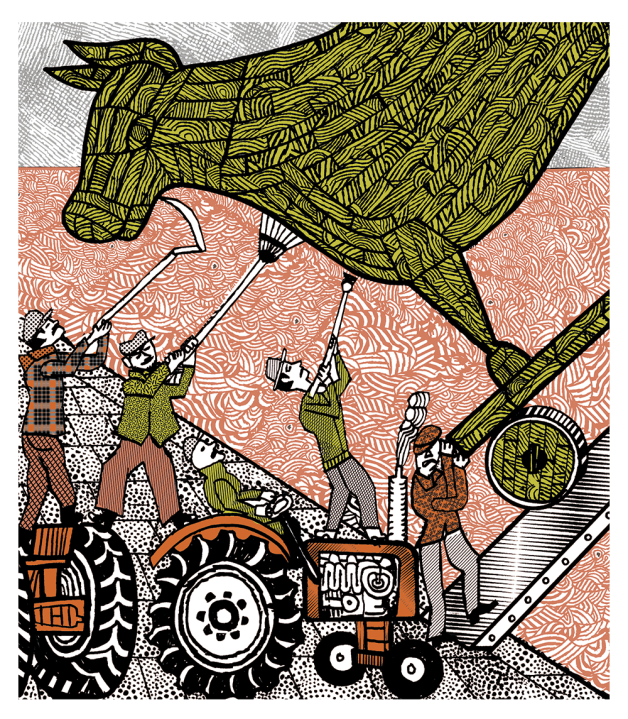
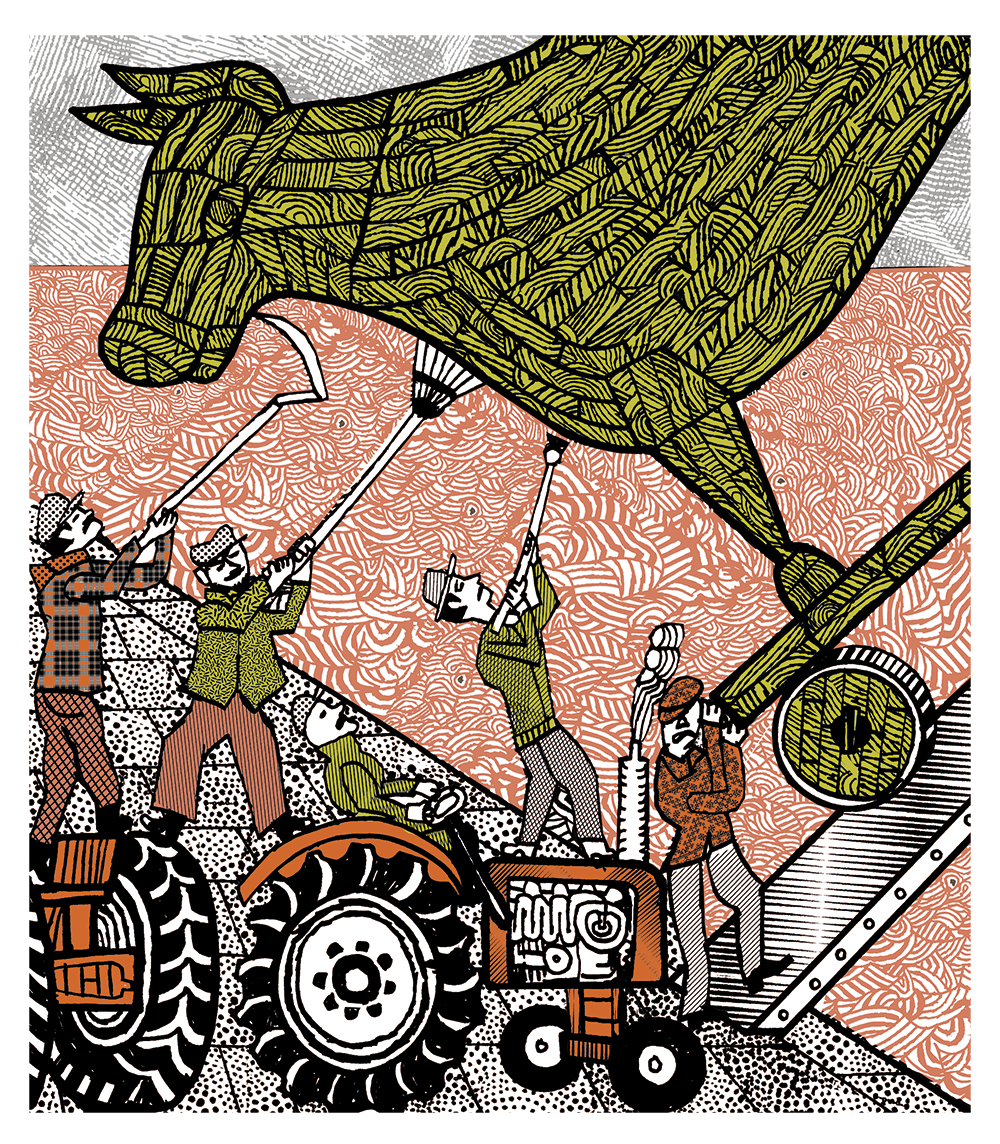
This view is shared by farmers. More than 5,000 of them and 750 tractors invaded Strasbourg on Tuesday and there were clashes with riot police outside the European parliament. Regardless of whether MEPs voted on Wednesday to refer the Mercosur deal to the European Court of Justice, the farmers will keep the pressure on Paris and Brussels.
It has not gone unnoticed by them that Macron is taking a tougher line defending Europe against Trump than he did in sticking up for their interests with this deal. Most of them believe their President is indifferent to their plight, and that soon South American meat will flood into Europe. Beef imports will be limited to 99,000 tons a year and poultry to 180,000 tons, but that isn’t really the point for the farmers. It’s the fact that South American competitors aren’t subjected to the same stringent regulations on animal welfare and the use of pesticides as they are.
Farmers believe that the Mercosur deal will be the final nail in their coffin. There were 1.6 million farms in France in 1970; today there are around 450,000, and the despair within the industry has never been greater. A farmer commits suicide every two days in France, a phenomenon that is also present in other European countries. Last year an elderly farmer took his own life half a mile from where I live in Burgundy. His brother, who continues to farm the land with the help of a manager, gave a resigned shrug when I asked him recently what he thought of the Mercosur deal. All these decisions, he told me, are made by politicians who know nothing of farming.
Politicians such as Annie Genevard, France’s minister of agriculture, was a teacher until she entered politics three decades ago. ‘Annie Genevard is not “our” minister of agriculture,’ said a spokesman for one farming union earlier this month. ‘We would never choose someone so incompetent.’
The same goes for Macron, who is held in contempt by most farmers. ‘Trump, come and get Macron, we don’t want him any more,’ declared a banner on one tractor, soon after American special forces had kidnapped Nicolas Maduro from Venezuela. The French President is talking tough, declaring on X last week that ‘the signing of the agreement does not mark the end of the story’. But very few farmers have any faith in their President to come to their aid. Instead, they are likely to take matters into their own hands, as they have already started to do.
Last week farmers set up roadblocks outside the ports of Cherbourg and Le Havre and stopped container lorries in what they described as a ‘sorting’ operation. ‘The idea is to check the containers arriving in Cherbourg,’ said one of the farmers. Any meat found coming from South America was to be offered to a homeless charity. ‘If they don’t want it, it will be thrown away,’ explained the farmer. ‘We cannot accept food made from products containing anti-biotics or growth hormones.’
Operations like this will intensify if the Mercosur deal is ratified by the EU parliament this week, and they will place the French government in an awkward position. The farmers have overwhelming public support – local governments and even some of the big distributors have pledged not to accept South American meat – and it would be political suicide for any party to side with Brussels. Local elections are in March and next year there are the presidential and parliamentary elections. France’s relationship with Brussels will be at the forefront of these campaigns.
The imminent prospect of another trade deal being signed by the EU, this time with India, will deepen hostility towards Brussels. A poll in 2024 revealed that 70 percent of French people have a poor opinion of the EU and how it functions, though only 38 percent wished to follow Britain out of the bloc. At the moment not many politicians mention the F-word, but the Mercosur deal may well give Frexit some serious momentum.


Comments