South america

Colombia can’t give Trump the cocaine crackdown he wants

When President Donald Trump hurled abuse at Colombia’s President Gustavo Petro last month, branding him a "sick man who likes making cocaine and selling it to the United States," it was strikingly audacious. Trump leaned into bombastic provocation: there is no evidence to suggest Petro himself makes cocaine. And yet, Trump’s claim didn’t come as a shock – the two leaders have spent the past year locked in a volley of barbs with one another. Petro, Colombia’s first left-wing leader, likes to fire back with ideological, often sermonizing lectures on imperialism and US hypocrisy. But tangled up in the rancorous exchanges – many of them about drugs – is a stubborn fact: Colombia is the world’s largest producer of cocaine.

Why EU farmers would object to a South American trade deal

It was a weekend of mixed emotions for the European Union. There was the news from Donald Trump that he will impose a 10 percent tariff on eight European countries in retaliation for their opposition to his plans to take control of Greenland. But on a brighter note, the EU finally signed the Mercosur trade agreement with several South American countries. The European Commission hailed it as the creation of ‘a free-trade zone of roughly 700 million people’, one which they promise will save EU companies more than €4 billion a year in customs duties. Ursula von der Leyen, the Commission president, said: ‘We choose fair trade over tariffs, we chose a productive long-term partnership over isolation.

Trump says the US has captured Venezuela’s Maduro

Donald Trump's undeclared war in Venezuela against the Marxist regime of President Nicolas Maduro has erupted into the open. Trump says the US has captured Venezuela's leader and his wife. In a statement on Truth Social, Trump wrote: The United States of America has successfully carried out a large scale strike against Venezuela and its leader, President Nicolas Maduro, who has been, along with his wife, captured and flown out of the Country. This operation was done in conjunction with U.S. Law Enforcement. Details to follow. There will be a News Conference today at 11 A.M., at Mar-a-Lago. Thank you for your attention to this matter! President DONALD J. TRUMP.

Chile turns rightward

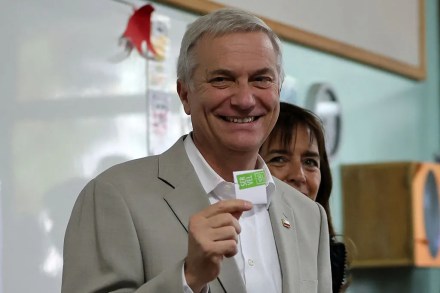
Chile has joined the right-wing trend sweeping Latin America by electing the ultra-conservative candidate Jose Antonio Kast as its first rightist president since the demise of Pinochet's military dictatorship in 1990. Kast, 59, leader of the Republican party, trounced Jeannette Jara, a communist party member, and the candidate of Chile’s current ruling left-wing coalition, winning almost 58 percent of the vote in Sunday’s poll. Jara, a former Labor minister, conceded victory to Kast, saying “Democracy has spoken loud and clear” and wishing her opponent success “for the good of Chile.

Kast Chile

Why Iran needs the Maduro regime

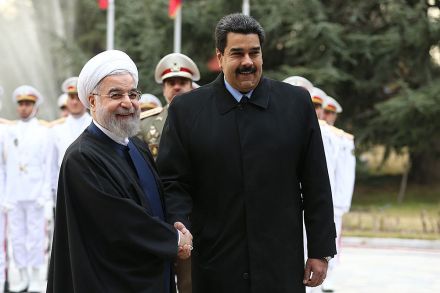
The aircraft carrier Gerald R. Ford and three warships have been sent to the Caribbean, where they are joining a dozen Navy warships already off the coast of Venezuela, in an unprecedented show of military force. President Trump and his administration are taking aim at the administration of Nicolas Maduro, over his alleged role in the drug trade which presents a national security threat to the United States. It’s clear that if the US succeeds in destabilizing and displacing President Maduro’s regime, it would be a blow to the region’s drug traffickers. What is less known is that it would also hit Iran. Venezuela has long served as a launchpad for Iranian operations to establish a foothold in South America.

South America is flush with Nazi-looted art

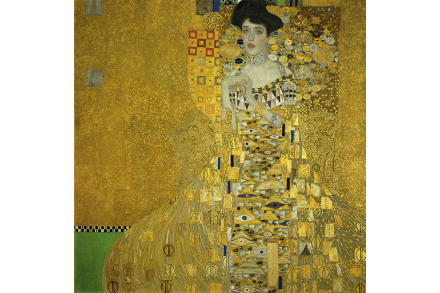
This summer, a niche story from the art world caught fire: an Old Master painting, stolen by the Nazis from a Dutch-Jewish art dealer, surfaced in Mar del Plata, Argentina. Remarkably, journalists from a Dutch newspaper spotted it on the wall of a house in a promotional photo that was part of a “for sale” real-estate listing. It turned out that one of the sellers of the house was the daughter of a Nazi official who worked for Reichsmarschall Hermann Göring, a notorious art plunderer. When the stolen painting was recognized, the daughter allegedly removed it from the wall, replacing it with another artwork – a tapestry. Argentine authorities then arrested her and her husband and charged them with concealing a crime.

nazi

Trump’s strike on the Venezuelan ‘narco terrorists’

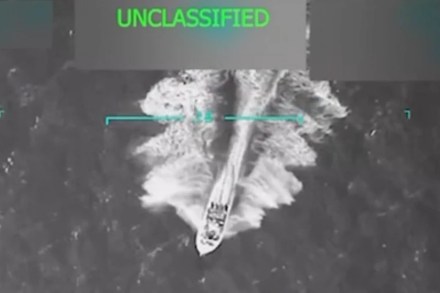
President Trump has authorized what he called a "kinetic strike" from a US warship that destroyed a boat allegedly carrying drugs from Venezuela bound for the US, killing 11 so called "narco terrorists" aboard. The action by a US naval task force in international waters in the southern Caribbean is the first since the President threatened armed intervention against narcotics smuggling by Venezuela’s drugs cartels in January. Trump said that the attack was aimed at members of Venezuela’s Tren de Aragua drugs cartel which the US branded a terrorist organization in February, and which it claims is controlled by Venezuela’s socialist Maduro regime. The US Department of Justice has called Venezuela’s President Nicolas Maduro "the world’s No.

Tren de Aragua

The Rockefeller Wing reopens

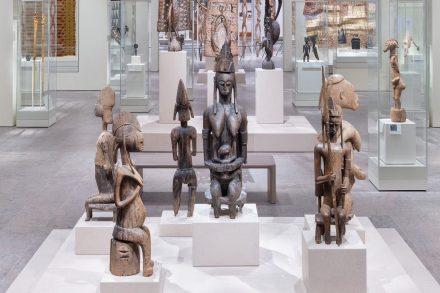
Of the 1,800 objects on display at the newly reopened Michael C. Rockefeller Wing at The Metropolitan Museum of Art, the funerary poles of the Asmat people stick out.  At 15 feet tall, they tower above the swarm of visitors and nearly touch the newly rendered, gorgeously curved ceilings. The poles, decorated with carvings of haunted-looking faces and bodies, were traditionally made to mark a violent death. Once that death was avenged, the poles were removed to the woods, where they were left to decay.  These particular poles have further meaning, though, beyond their eerie beauty and the symbolism they confer of the cycle of life. They were collected by Nelson Rockefeller’s son, Michael, on a trip to spend time with the Asmat in New Guinea in 1961.

Trump’s big Bolivia opportunity

After nearly two decades of reign over Bolivia, the Movement Toward Socialism (MAS) party was banished at the ballot box on August 17. Its fall is a dramatic political realignment to the right for Bolivians, and a rare opportunity for the United States to reform relations with a geopolitically critical nation. As one expert, Leonardo Coutinho, told us, “The Trump administration can not only contribute to the restoration of democracy but also play a central role in dismantling a fully functioning narco-state.” Despite its 25 percent inflation rate and a 93 percent debt-to-GDP ratio, Bolivia is rich in natural resources, boasting some of the world’s largest lithium reserves, making it an attractive target for both American and Chinese grand strategies.

Socialism ends in Bolivia after two decades

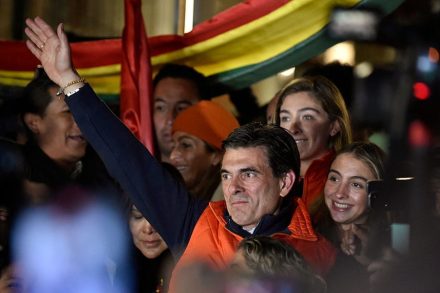
Bolivia is to be treated to a nail-biting run-off this autumn between two conservatives in the race to be the next president after the spectacular collapse of the socialist movement that has dominated the landlocked state for the past twenty years. A presidential race between two right-wingers is unusual in Latin America whose countries in recent years has been largely run by democratically elected leftists after the fall of the brutal military dictatorships that ruled so many states in the 1970s and 1980s. The second round of Bolivia’s presidential race will be decided on October 19th between the veteran former President Jorge "Tuto" Quiroga, 65, who gained 26 percent of the poll, and his center-right rival Rodrigo Paz Pereira, 57.

Why did Spain leave behind such terrible food?

I can still remember it: probably the worst seafood dinner of my life. A slice of fish that was simultaneously cold, hot, dry, crumbly and rubbery, surrounded by overcooked vegetables and accompanied by a mysterious whiff of cigarette smoke. It was so repellent that even though I was famished, I summoned the waiter, returned the dish and retired to my room, there to endure a dinner of Pringles from the minibar. What made it worse was that I was in a celebrated fishing port. All I had to do was look out the window and I could see trawlers bringing in some of the world’s finest fish from some of the planet’s richest seas. It was dismaying, saddening, deflating and left me starving. What it was not, however, was surprising.

Spanish

Get ready for Trump’s ‘FAFO’ foreign policy

President Donald Trump posted an AI-picture of a gangster version of himself on Instagram at around 3 p.m. Sunday. Behind the fedora-clad figure, the text “FAFO” — short for “fuck around and find out” — appears alongside a smiling face.  What happened earlier that Sunday, and the machine-made picture that followed, tells us a lot about how Trump 2.0. will deal with the world.  After two planes carrying Colombian illegal aliens departed the United States this weekend, self-proclaimed humanist and former guerrilla fighter Gustavo Petro, Colombia’s president, refused to allow the plane to land. “I deny the entry of American planes carrying Colombian migrants into our territory,” Petro said on X.

I was censored from talking about Chinese influence in Latin America

I represented the United States at the sixth Youth and Democracy in the Americas Summit at the Organization of American States, or OAS, last month. Most Latin Americans know this organization well, though most here in the US don’t. It is the premier regional political forum, the region’s European Union, a sort of mini-UN. When tyrants steal elections and jail journalists, the OAS becomes the center of the spectacle.  It has a reputation for defending liberty. But when it comes to China, matters get murky. So much so that the organization is willing to censor American voices that tell the truth about China’s regional ambitions. The appointment of Florida senator Marco Rubio as secretary of state may augur a new era of US focus on its hemispheric neighbors.

China

Copa América’s finale fiasco casts doubt on the US’s soccer gambit

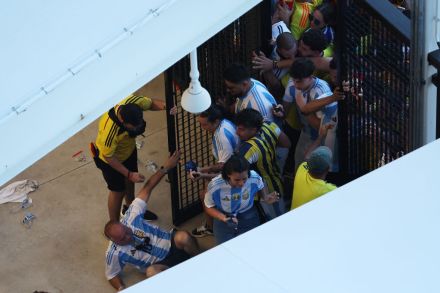
This year’s Copa América soccer tournament in the US was a dress rehearsal for the 2026 World Cup, which will also be hosted by the US, along with Canada and Mexico. And to put it mildly, folks appear to hate the dress. With the US group opener against Bolivia barely attracting 48,000 fans to an 80,000-capacity stadium and players voicing frustration over the conditions of the fields, public opinion already seemed to not be on the host’s side. What transpired last night, however, likely caused more anti-US sentiment in the western hemisphere than any military intervention.

copa ameria

You know when you’ve been ‘Peru’d’

"Did you get Peru'd?" That's the question my boss, who once lived there, always asks people when they return. The idiom implies that something has gone terribly wrong, because, so my boss argues, that's inevitable during a visit to the land of the Inca. Lost luggage, food poisoning, petty theft: all of them, or worse, constitute being "Peru'd." During a recent happy hour, a colleague was describing how much she enjoyed her recent vacation to Lima and Cuzco. “Did you get Peru’d?” my boss queried. No, the woman asserted, she did not; it was a lovely trip. Another colleague piped in: “But didn’t you get Covid?” Well, yes, that’s true, she did get Covid. “You got Peru’d,” my boss decreed.

Peru

Should Biden change his Venezuela approach?

Venezuela has been leading the United States on, maintaining the pretense that they will ensure that the upcoming presidential elections are free and fair. That's despite the US relieving sanctions, releasing prisoners and months of “diplomacy.” The Nicolás Maduro regime has also gone on offense, threatening to take back the Esequibo, an area now under Guyana’s jurisdiction, where American oil companies have invested billions. This Wednesday, Maduro mocked the Biden administration once again, arresting two high-level officials from opposition candidate María Corina Machado’s team and issuing arrest warrants against several others.

nicolas maduro venezuela

Why Joe Biden’s Latin America policy is failing

At the opening ceremony of the Summit of the Americas in Los Angeles last year, President Joe Biden announced the Americas Partnership for Economic Prosperity, which the White House described as “a historic new agreement to drive our hemisphere’s economy recovery and growth and deliver for our working people.” The plan has become the administration’s signature Latin America policy. As noted by the White House, the region matters not solely because it’s where the US is situated, but because it also accounts for 32 percent of global GDP. Even more so, the region is rich in resources that are crucial in the development of emerging technologies.

latin america

Venezuelans voted to annex Guyana. What’s next?

Venezuela’s Nicolás Maduro carried out a controversial referendum on whether more than two-thirds of Guyanese territory is Venezuelan land this Sunday, challenging the international community and making a mockery of the Biden’s administrations rapprochement. The results for the referendum are in, with all of the propositions receiving more than 95 percent approval, according to the country’s electoral council.

guyana

What does Javier Milei’s win in Argentina mean to America?

Javier Milei, a messy-haired bombastic libertarian economist, won Argentina’s presidential elections against socialist minister of economics Sergio Massa this Sunday. With the backdrop of inflation that the International Monetary Fund projects will trail only that of Zimbabwe and Venezuela by the end of the year, Milei triumphed with over 55 percent of votes in the runoff with more than 94 percent of votes counted, according to data from the country’s National Electoral Chamber. In a brief speech before the results were announced, Massa, who came first in the October 22 election that led to the run-off, said, “Milei is the president elected for the next four years,” adding that he had called Milei to personally congratulate him on his victory.

javier milei

Escaping the city in Argentina

Planning a foreign trip is a bit like watching a trailer for a film. The research is a preview of coming attractions. I almost never made it to San Antonio de Areco, a charming country town about seventy miles northwest of Buenos Aires, because it seemed extravagantly expensive and complicated to visit. But trailers can be misleading, perseverance is a virtue, and Areco, as the locals call it, turned out to be the highlight of my visit to Argentina last summer. With just a week to spend in the world’s eighth largest country by land area, my plan was to spend four days in Buenos Aires and three in a small town, a place I hoped would give us an idea of what the country’s gaucho heartland is about.

argentina