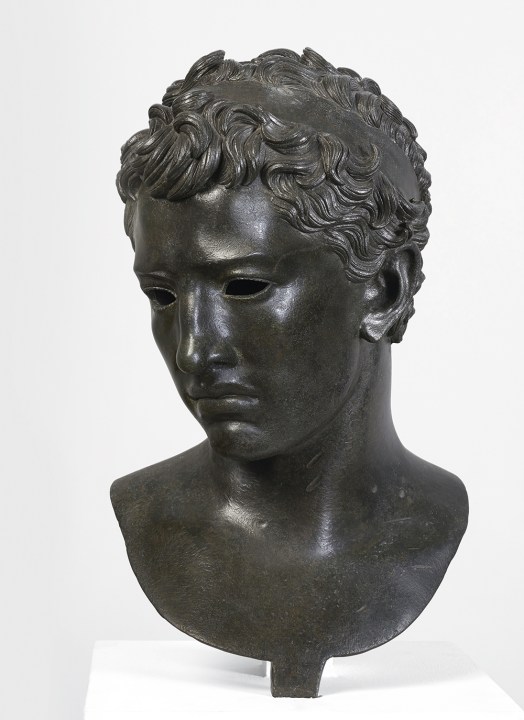
What a fantastic subject this would be for a film. Born a prince of Numidia, in northern Africa, the hero of Andrew Kenrick’s book saw his life capsized when he was barely more than a baby. His father, Juba I, was defeated by Julius Caesar and arranged his own death. Little Juba was paraded through Rome in chains, then brought up in Caesar’s household. The biographer Plutarch summed up the tension in his circumstances when he called him ‘the most fortunate captive ever taken’.
Juba grew up to be a soldier, scholar and explorer. Having personally led an expedition to the Atlas mountains in search of the source of the Nile, he claimed to have found it. It sounds strange now, but there was then a widespread belief that the Nile might originate somewhere in western Africa. Juba thought he found evidence in the form of a valley, with a lake where crocodiles lurked – a sure sign, he felt, that this was where the croc-infested river originated. Moreover, when it rained in those mountains, the Nile was said to rise.

By then the Emperor Augustus had appointed Juba king of Mauretania, a region combining parts of modern-day Morocco and Algeria. That meant Juba had a practical motive for pushing a geographical link between Mauretania and Egypt: his wife, Selene, was an Egyptian princess – the daughter of Cleopatra and Mark Antony, no less.
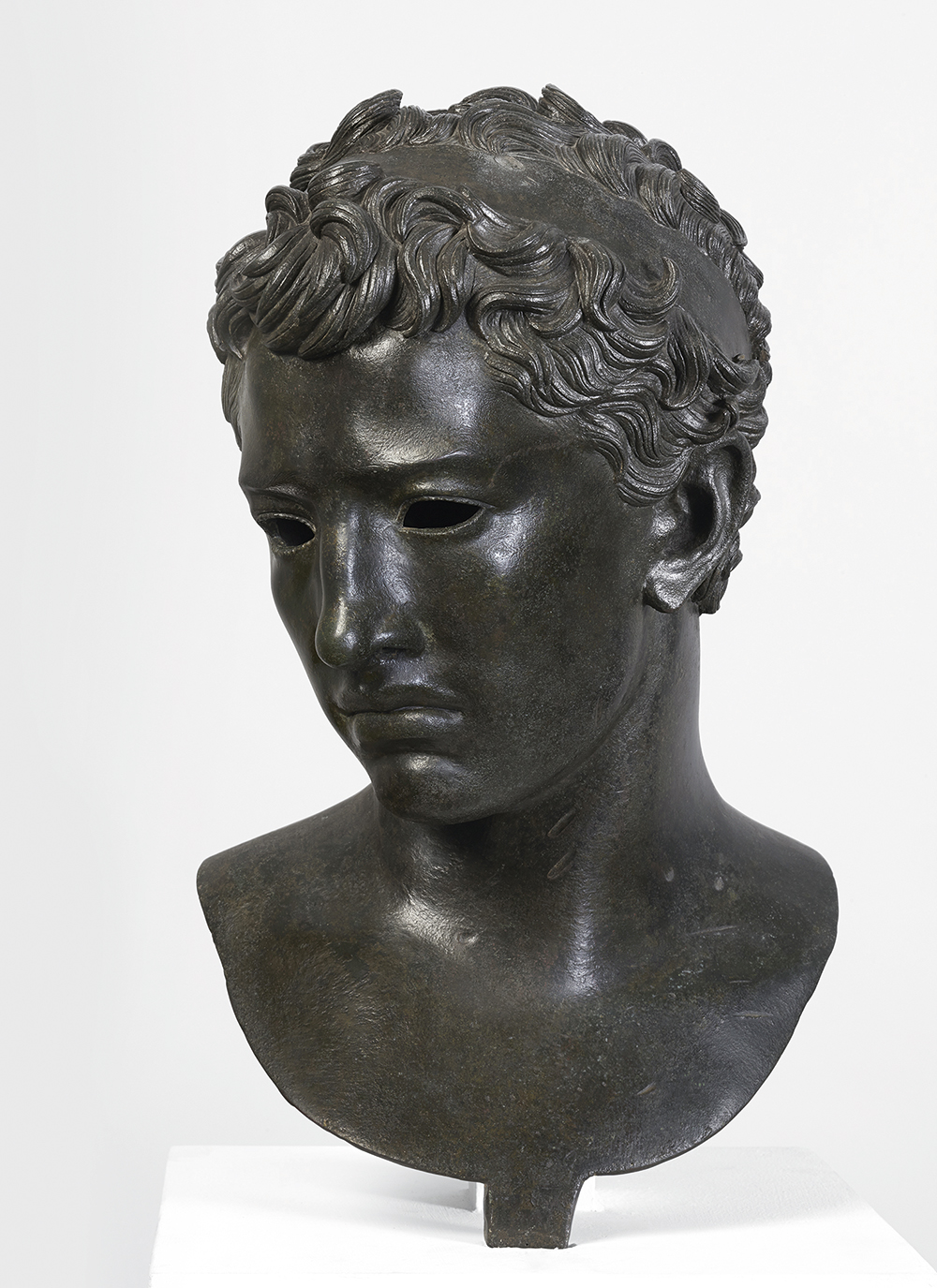
What more could a reader want? Well, a bit more, is the sad truth. The big problem facing the author of this tantalising biography is that, once these facts have been rattled off, there’s little else we know about Juba for certain – which Kenrick hints at in his subtitle. Smartly, he structures the book by lassoing each chapter to a particular artwork: a concrete piece of evidence to be scrutinised. So the Prologue is heralded by a wonderful bronze of Juba himself, presenting a sulky, arrogant demeanour. And Chapter Ten kicks off with an even more lifelike representation of his insolent looking son Ptolemy.
But the difficulty remains that so many of the key questions about Juba’s life go unanswered. We’re not sure whether his marriage to Selene was a love match or forced on him by Augustus; nor what he felt when she died in 5 BC; nor, indeed, how she died, although we are told it was probably in childbirth.
Frustratingly, none of Juba’s literary works has survived. We know he wrote them because other authors tell us. But we don’t have one paragraph from his books on painting or theatre or archaeology. In his Natural History, Pliny the Elder includes a description of the Nile that could be a direct quote. If so, Juba’s prose was somewhat poetical – as when he says the river emerges from underground ‘when it senses mankind’.
There are times when Kenrick’s hero feels like an empty cuirass moving through this extraordinary time. But to make up for it we get some wonderful stories about the surrounding characters. For instance, we learn of Pliny the Elder’s compulsive work ethic. According to the younger Pliny, his nephew, he only stopped to take a bath, and even then would dictate notes to his secretary while being rubbed dry. When in Rome, he never walked, but was carried everywhere in a chair, so he could keep working.
The Elder Pliny only stopped working to take a bath, and even then he dictated notes while being rubbed dry
We also read of the death of Juba I. After defeat in battle, he knew the game was up. So he and his comrade Petreius ate a hearty dinner before engaging in single combat. The hope was they might each inflict a mortal wound on the other. Unfortunately, the burly Juba slew Petreius but emerged himself unscathed. So he had to order a slave to run him through.
Then there is the death of Juba II’s son. Summoned to Lyons by the psychotic Emperor Caligula, Ptolemy turned up in an impressive purple cloak, which he thought appropriate for the occasion. Alas, the sight of it enraged Caligula, either because he envied Ptolemy’s wealth or because he thought the garment, sometimes worn by triumphant generals, was a jibe aimed at his own lack of military distinction. He ordered Ptolemy’s execution, and thus Juba’s line was wiped out.
The death of Juba himself pales in comparison – as, arguably, does his life, for all the efforts of this scrupulous, smoothly written book. ‘In AD 23,’ Kenrick tells us, ‘Juba II died at the age of 72. It must have been a peaceful death, probably of old age, as the sources say nothing else about it.’





Comments