Pliny the Elder

The lessons of ancient Rome’s dangerous doctors

"I died of a surfeit of doctors,” read one Roman funerary inscription. But where did this surfeit come from? Let Pliny the Elder (d. AD 79) explain. Pliny devoted book twenty-nine of his Natural History (a vast encyclopedia of Roman life) to the history of medicine. Claiming that no discipline “undergoes more frequent changes, and none is more profitable either,” Pliny pointed the finger at Greek doctors. These had been welcomed into Rome from the third century bc with their fancy philosophical ideas — all different — which their eloquence persuaded people immediately to adopt in place of the good old experience-based Roman herbal treatments, overseen by the trusty master of the house.

doctors

The green, green wines of Portugal

If I am going to talk about summer wines, I am going to have to introduce you to Gaius Plinius Secundus, known to us as Pliny the Elder. Pliny was a busy chap. Army commander and admiral in the Roman navy. Gourmand. Pal of the emperor Vespasian. Pliny did not have writer’s block. He published the first 10 books of his sprawling Historia Naturalis in 77 AD. Despite its title, the book is about a lot more than natural history. Really, it is a sort of proto-encyclopedia. Pliny hadn’t finished revising the rest when he went to investigate the strange things that were happening down at Mount Vesuvius in 79. He died in the conflagration. The chap we know as Pliny the Younger — the elder Pliny’s nephew and heir — was with him.

vinho verde green

In the shadow of Vesuvius

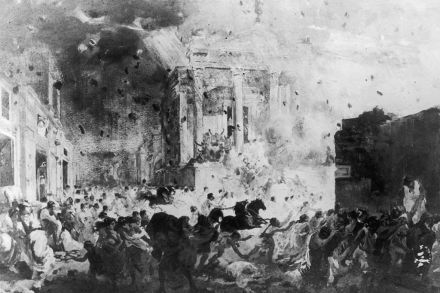
AD 79: Pliny the Elder, admiral of the Roman fleet and author of an encyclopedia of Natural History, sails towards Mount Vesuvius as it erupts.For several hours, the fleet held course across the Bay of Naples. Despite heading in the very direction whence others were now fleeing, Pliny the Elder was said to have been so fearless that ‘he described and noted down every movement, every shape of that evil thing, as it appeared before his eyes’. To any sailors who survived to tell the tale of their admiral’s fortitude, the chance of reaching land in safety must have seemed increasingly remote as they proceeded across the water. First ash rained down on them, then pumice, then ‘even black stones, burned and broken by fire’. This was no hail storm.

vesuvius