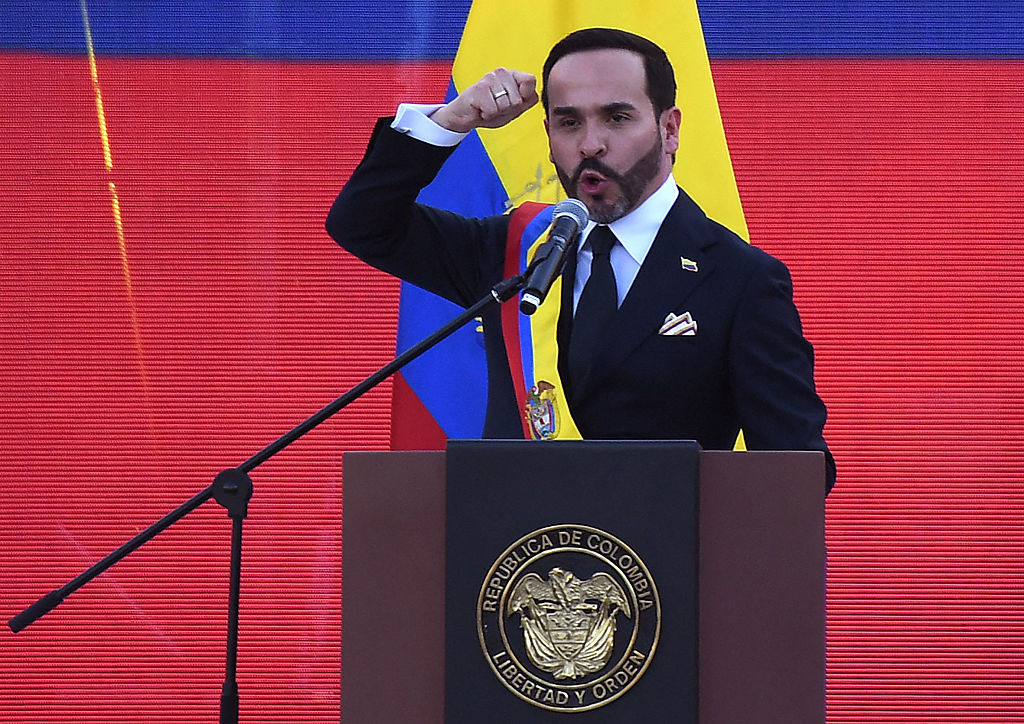
When Abelardo de la Espriella was sworn in as Colombia’s president on August 7, he had a long list of problems he wanted to tackle. An earthquake was not one of them.
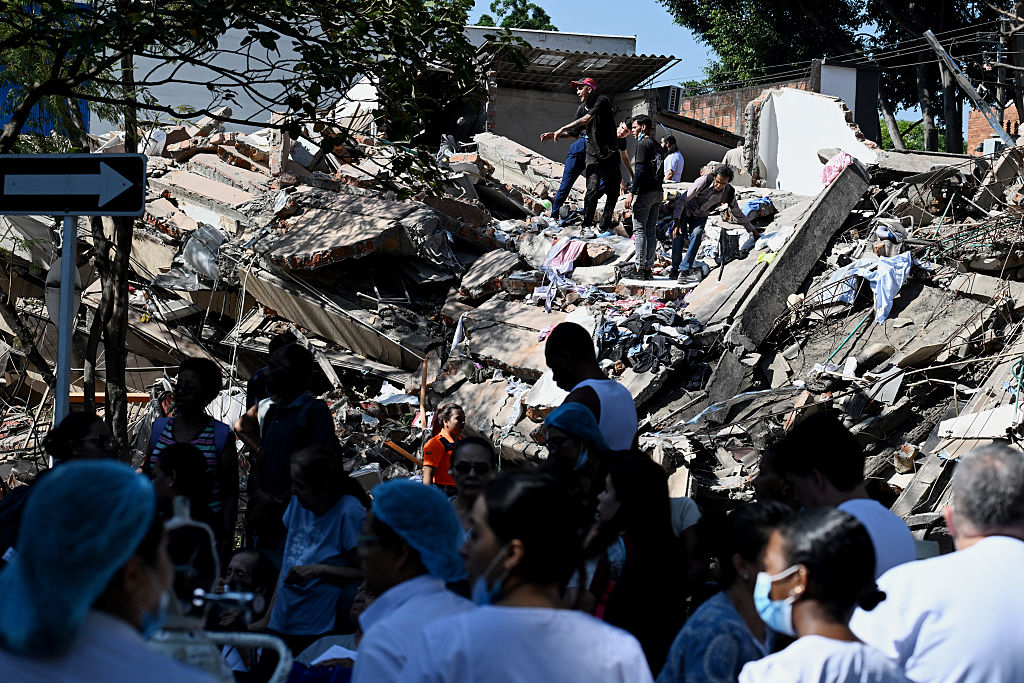
Yet just three days after his inauguration in Cali, the country was hit by a magnitude 7.4 quake. Videos of the devastation show some buildings in Cali damaged or completely collapsed, residents trapped under broken concrete and tangled metal and locals and rescue teams scrambling to find survivors.
Across parts of Colombia, the picture was similar. The earthquake struck near San José del Palmar, in Chocó, one of Colombia’s poorest and most remote departments. Damage was also reported in and around the coffee-growing region, including cities such as Pereira and Manizales. At least 100 people have been killed so far, a figure that is expected to rise.
The new right-wing president, who narrowly won the election in June, came into office promising to tackle Colombia’s growing insecurity: the proliferation of armed groups, the expansion of illicit economies and the loss of territorial control in parts of the country. A former criminal lawyer with no formal political experience, his campaign was built in part around the promise of a stronger state capable of confronting those threats. But now he and his government will also have to deal with a major emergency, followed by the enormous task of reconstruction.
On Monday the government quickly declared a national disaster. De la Espriella announced on social media that he had established an emergency command center at Colombia’s disaster management agency, UNGRD, where he would oversee efforts to assist affected communities.

“To the Colombians who are going through difficult times today, I want to say: You are not alone,” he said, before signing off with his campaign slogan: “Strong for the Homeland!”
Official announcements said military personnel were being sent to affected areas, while information about temporary shelters spread across social media. Declaring a national disaster allows the president to take extraordinary measures to mobilize emergency funds and ensure state resources are directed immediately towards a severe and unforeseen crisis.
But the government will be keen to avoid another kind of disaster: the political fallout that followed the earthquakes in neighboring Venezuela just six weeks ago.
In late June, two back-to-back earthquakes measuring 7.2 and 7.5 struck Venezuela, destroying hundreds of buildings and killing more than 5,000 people, according to government figures. Thousands more remain missing.
The initial pictures were remarkably similar: dust-filled air surrounding collapsed buildings, residents scrambling through rubble, families searching for relatives in homes reduced to ruins. Yet the state response, even in the first hours, looked very different.
The government of Venezuela’s interim president, Delcy Rodríguez, who took power after Nicolás Maduro was captured by US forces in January, faced ferocious criticism over its handling of the earthquakes. Families complained about a lack of information and assistance from the government. Communities said they were left to organize searches for missing relatives themselves, or rely on international rescue teams.
Both Colombia and Venezuela sit in a seismically active zone because of their geological and tectonic configuration. Neither government can prevent an earthquake, or immediately repair the damage once one has struck. But Colombia’s initial response has so far appeared more organized and faster-moving than Venezuela’s.
It would be rash, and unfair, after just three days in office, to credit de la Espriella alone for that. Colombia’s existing institutions have been central to the response: the government has mobilized its disaster-management agency, while local authorities, emergency services and the military have been involved in rescue, recovery and logistics.
The role of the military has also been markedly different. Soldiers have been deployed to help reach affected communities, support rescue and recovery efforts and provide logistical and security assistance. In Venezuela, by contrast, the military became a source of criticism, with soldiers seen directing traffic while families spent days, and in some cases weeks, searching for relatives themselves.
The Venezuelan response came after almost three decades of chavismo, during which infrastructure and public services have deteriorated, corruption has flourished and state institutions have been hollowed out.
It is far too early to properly assess Colombia’s, or its president’s, response. But one thing the media-savvy de la Espriella has done quickly is communicate, using a social media strategy that helped propel his campaign, to also keep Colombians informed following the disaster.
Even so, for Colombia, the rescue operation is only the beginning. Roads have been severely blocked in parts of the country, while flights were suspended at multiple airports as inspectors checked for structural damage. Health facilities in some areas have also been damaged. The government will eventually face the much harder task of rebuilding homes, hospitals, roads and other infrastructure, much of it in some of the country’s poorest and most remote areas.That will require money, coordination and a state capable of getting resources to communities that have often struggled to receive them.
The earthquake may have been an unexpected addition to de la Espriella’s list of problems. The response, and the reconstruction that follows, will now form part of his first year in office.




Comments