

Dante’s Beach, Ravenna
In an attempt to avoid the infernal heat and the rhythmic maracas-style racket of the cicadas in the trees, I have become nocturnal. I go to bed at 7 a.m. and get up at 4 p.m.
This may seem wrong, a sign of moral failure or mental breakdown, but let me remind you that the wise men bearing gifts did the same. As Longfellow writes: ‘And they travelled by night and they slept by day,/ For their guide was a beautiful, wonderful star.’
It is that moment in the night before the cock-crow hour, and the silence is more or less total, apart from the stirrings of the sea a mile or so across the fields. I sit at my work station looking out from the wide-open window of my so-called study at the star-spangled sky above me and the lights of the gas rig known as Angiolina on the horizon.
Most popular
Steven Edginton
Invented claims of lynchings and racist violence are irresponsible — and dangerous

I lower my gaze to the glass of red wine next to my laptop and notice a beautiful green grasshopper has attached itself to the rim. I gently prise the grasshopper off with a forefinger and thumb and toss it out of the window. Then I take a swig of the wine: Chianti Superiore from Lidl at €3.99 a bottle. I am allowed to drink during the World Cup and am making the most of it like a demobbed soldier.
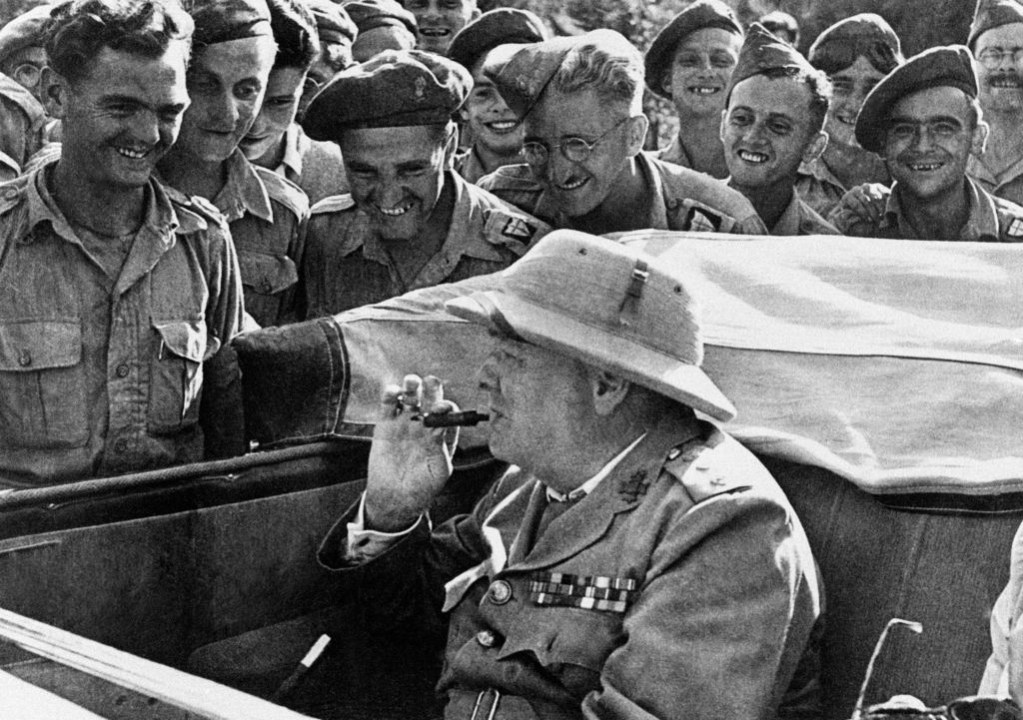
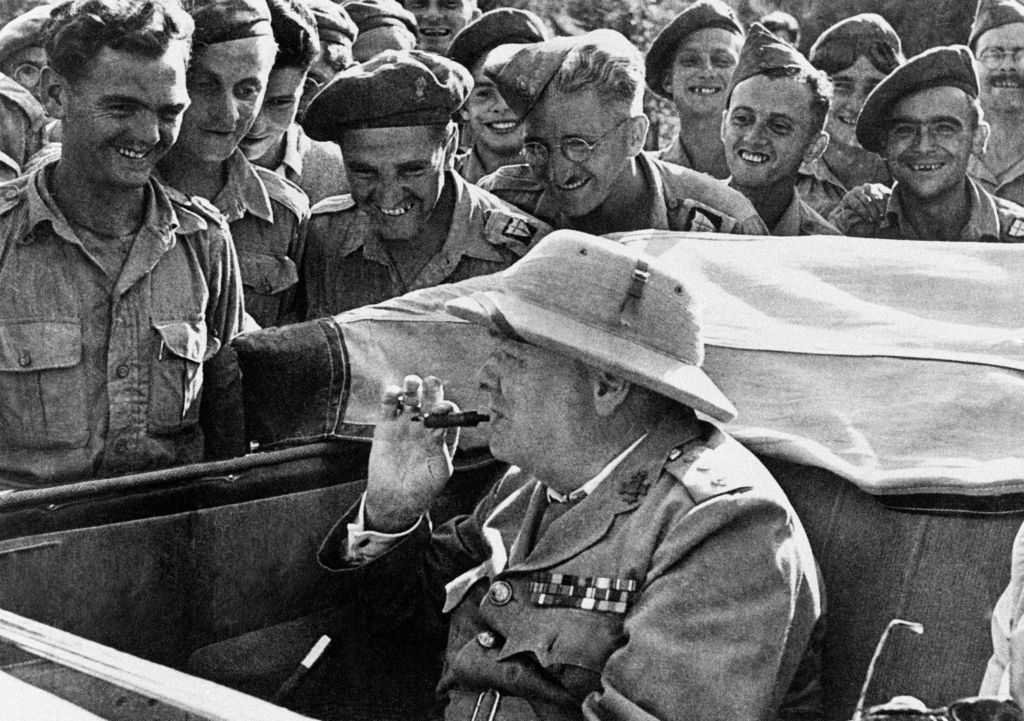
In my last column I discussed the old Italian conspiracy theory that Winston Churchill wrote deeply compromising letters to Benito Mussolini before and during the second world war. I feel I must return to the issue, not least because a reader wrote in the comment section that at long last I had written something interesting, but also for the sake of fair play.
What had prompted me to write about ‘the Mussolini-Churchill correspondence’, as it is called in Italy, was a recent three-hour documentary broadcast by the Italian equivalent of the BBC, which accused Churchill (more or less) of ordering the execution of Mussolini and his mistress after their capture by partisans on Lake Como in April 1945 en route for Switzerland. Churchill’s motive? To stop the Duce making the letters public.
Italy’s top TV political talk-show host Bruno Vespa, who also writes popular history books, was wheeled out to state categorically that the letters exist. Plenty of forged letters have come to light but no genuine ones, apart from Churchill’s entreaty of May 1940, urging Mussolini not to enter the war, and the Duce’s dismissive reply. But it’s not just Vespa – even Italy’s greatest historian of the fascist period, Renzo De Felice, author of an eight-volume biography of Mussolini, believed the fantasy, though he was never able to produce any proper evidence before he died in 1996.
There is, however, one character in this classic Italian conspiracy tale whom I did not mention but who does lend it a certain credibility: Malcolm Smith. It is said that in the summer of 1945 Churchill sent this ‘007 inglese’, as the Italians call him, to Lake Como to retrieve his letters from a villa and hand them to Churchill when he arrived in September for a painting holiday.
The first Italian to mention Malcolm Smith was Duilio Susmel, in a 1967 article which contained extracts from a set of fake Churchill-Mussolini letters. Susmel wrote that the source who had told him about Smith was ‘Signor X’ who was ‘very close’ to Smith.
Right, well here’s the thing. Major Malcolm Smith really did exist and was a member not of the ‘Field Security Service’, as Susmel claimed (though he meant Field Security Section), but was actually commanding officer, codename ‘Trusty’, of the No. 3 Special Counter Intelligence Unit run by MI6. I found this out via Rupert Allason, the former Tory MP, spy writer and old friend whom I address as Mountain Climber. He calls me Dogwalker and put me on to a secret services chat site and they told me. They also said that Smith was indeed in Milan and Como until September 1945, when he went to Rome.
I am allowed to drink during the World Cup and am making the most of it like a demobbed soldier
Smith was born in Palermo in 1910 and lived before the war much of his adult life in South Africa. He remained in Italy after the war in Milan, where he was honorary South African consul and died in 1991, I believe in Brianza, near Como. An Italian historian, interviewed at length in the documentary to say that ‘of course’ the letters exist, claims to have been to Smith’s former house there, where he found ‘sensational’ documents. But he refuses to say where it is orwhat they say – or speak to me unless paid.
The key to all this lies, I feel, with Smith’s wife, Elda Ribetti, who was a famous soprano from Florence. She was the daughter of a ‘fascistissimo’ Italian infantry colonel and died in 2003. But there is hardly any info about her private life online.
How did Smith end up with her? And did they have children? We must find out. So I emailed another friend, the equally well-known soprano Wilma Vernocchi, whom I have not seen for some years. She replied swiftly: ‘You write to me about an incredibly interesting argument… I have mobilised my sister-in-law in Prato whom I call “007”.’
For the Italians, despite their passion for la bella figura, the truth is never what you see but what you do not see that lurks dietro le quinte (behind the choir stalls).


Comments