Politics

Harold Wilson is the new Labour lodestar

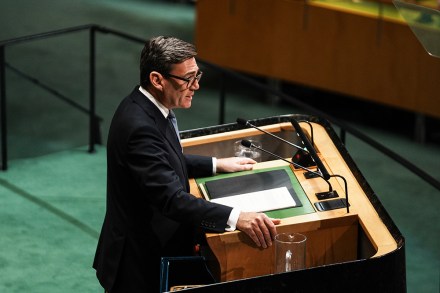
After Andy Burnham’s speech at the Labour party conference on Tuesday, one veteran factionalist declared: ‘We are all Burnhamites now.’ Romantics love the rhetoric; cynics respect the ruthlessness. ‘Game recognises game,’ says one Labour figure. The Prime Minister’s address was pitched at a wounded party seeking support. Emotive and personal, yet also intensely political, it showed a keen awareness not just of Labour’s values, but of its interests too. Right to Buy, which attracted legions to the Tory ranks, will be halted for new homes; a new National Care Service will bring thousands more members into the unions’ fold.

‘I shall always want to say thank you to this country’: the gratitude of a former kindertransport refugee

From our UK edition

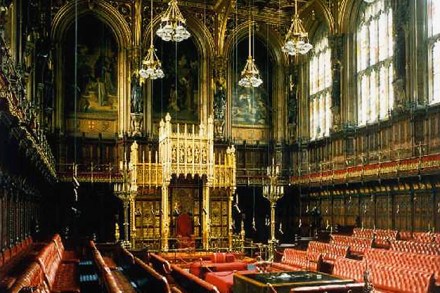
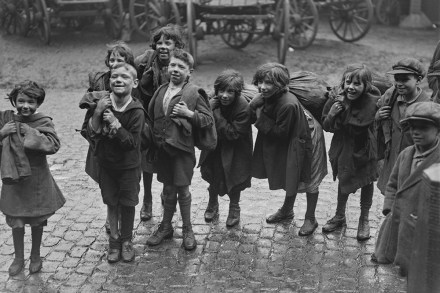
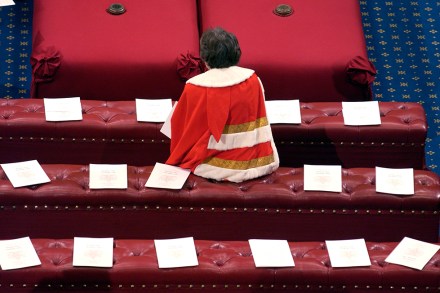
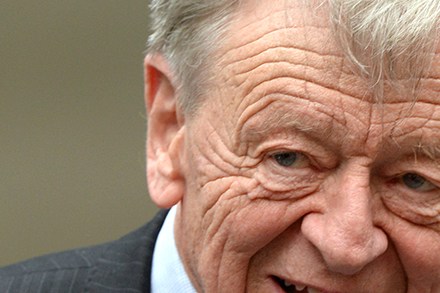
For all that it is an anachronism, the House of Lords contains some remarkable specimens, not least Alf Dubs. The child of a mixed marriage – his father was Jewish, his mother not – he arrived in this country from Prague on one of the kindertransports organised by Sir Nicholas Winton, with his possessions in a knapsack and a luggage label on his coat identifying him. Many of his Jewish compatriots were not so lucky and perished in the death camps. He was fortunate in another respect, too. Unlike with many of his companions, his father had already made it out and was there to greet him. His mother eventually managed to join them, arriving in the UK just four days before the outbreak of war.

Is Abdul El-Sayed America’s next Obama?

Twenty years ago, as America fought in the Middle East, a junior Democratic senator from the Midwest, a forty-something man with a Muslim name, decided he was going to run for president. Against the odds, Barack Hussein Obama of Illinois, who’d dabbled in Marxist academia and whose father was born in Kenya, went on to become the first non-white commander-in-chief. Two decades on, as America fights another war in the Middle East, an even more unconventional Midwestern Democrat is rapidly advancing. Dr Abdulrahman Mohamed El-Sayed, whose father was born in Egypt, is currently the favourite to win his senate race in Michigan in November – even as Republican campaigners spend millions of dollars branding him a terrorist sympathiser.

Can Andy Burnham resist the techlash?

From our UK edition

If Andy Burnham wants a reminder of the case for artificial intelligence (AI), he need only walk down the streets of his Makerfield constituency. Drives are dominated by Ford Transits and VW Transporters, the favoured vans of the self-employed. Blue-collar, hard-working, manual labourers: these will be the people most secure in the coming jobs revolution. Their accounting is made easier via new online systems; their public services smoothed by better programmes. Wigan council is using AI to cut costs in the care system; the nearby Heinz factory deploys it in its production line. Burnham wants a ‘Makerfield test’ for all aspects of policy. Yet what does that really mean when AI is so fast-changing? https://www.youtube.com/watch?

My radical plan for the House of Lords

A neighbour betrayed me to her 16-year-old son. ‘Lloyd knows about politics,’ she told the youngster. ‘He can help you with your essay.’ I was introduced to a spotty teenager who appraised me suspiciously through a pair of smudged NHS glasses. ‘What’s the essay about?’ I asked. ‘Politics,’ he said. That seemed to leave the field wide open. ‘Contact a few members of the House of Lords and ask them to name their greatest achievement.’ He nodded. ‘Sounds good, thanks,’ he said with an air of finality, like a chef asking a new minion to sweep the floor. I accepted defeat. My plan had been to give him a sagacious ruling from on high. ‘Listen, m’lad. Always do your homework or you’ll end up doing someone else’s.’ But he understood that better than me.

Do we really want to live in a world where we’re perpetually spied on?

From our UK edition

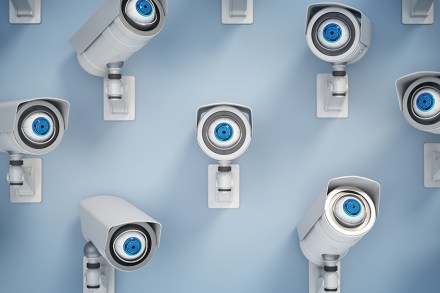
Some people think that the United Kingdom ranks as an unusually surveillance-heavy society, what with all the CCTV installations, doorbell cameras and automatic number plate recognition systems that have proliferated in the public sphere – but they would be wrong. In fact, according to Ruben Andersson’s Age of Security, the whole world is sliding towards a state of perpetual surveillance, where everybody is spied on all the time, by cameras and communications interceptions and data capture, without debate or accountability or even much public reflection on what is happening. Do we actually want to live in this state of heightened supervision, looked over by what we are told are ‘machines of loving grace’ (as the novelist Richard Brautigan once wrote)? Does it matter?

The British spy at the heart of Italy’s Churchill conspiracy theory

From our UK edition

Dante’s Beach, Ravenna In an attempt to avoid the infernal heat and the rhythmic maracas-style racket of the cicadas in the trees, I have become nocturnal. I go to bed at 7 a.m. and get up at 4 p.m. This may seem wrong, a sign of moral failure or mental breakdown, but let me remind you that the wise men bearing gifts did the same. As Longfellow writes: ‘And they travelled by night and they slept by day,/ For their guide was a beautiful, wonderful star.’ It is that moment in the night before the cock-crow hour, and the silence is more or less total, apart from the stirrings of the sea a mile or so across the fields.

The conspiracy of silence surrounding the Nord Stream bombings

From our UK edition

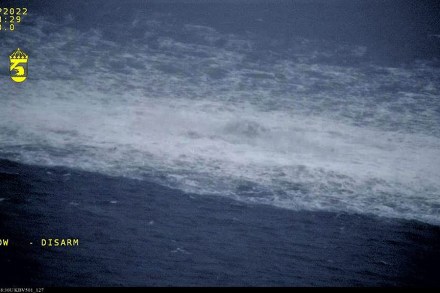
Six months after undersea explosions ripped through three of the four Nord Stream gas pipelines between Russia and Germany I wrote a 2,500-word story for The Spectator entitled ‘Were Ukrainians behind the Nord Stream bombings?’ Citing senior European security sources, the piece revealed a conspiracy of silence – for fear of an anti-Ukraine backlash – by western intelligence agencies, law enforcement authorities and government to cover up what they all knew to be the truth. Forensic evidence and a German police investigation had disclosed that pipelines carrying the Russian gas on which the economies of Germany and many other European countries depended had been blown up by a tiny team of Ukrainian saboteurs.

Why is the Italian media spreading fake news about Churchill?

From our UK edition

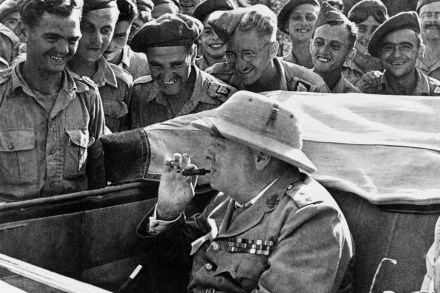
Dante’s Beach, Ravenna I know that, as the heat intensifies, you want me to write about the highly trained nudists who have stolen the best bit of our beautiful beach and what such manifestations of diversity, equity and inclusion entail. But I’m not going to, because I feel I must write instead about Churchill and Mussolini. In a three-hour documentary, the Italian equivalent of the BBC has (more or less) accused Churchill of ordering the execution of Mussolini on Lake Como in April 1945. His motive, apparently, was to stop the Duce making public secret wartime letters between the two of them that were very damaging to Churchill.

The banality of Hélène von Bismarck’s view of Britain is astounding

From our UK edition

Hélène von Bismarck twice quotes (in an officiously corrected version) Robert Burns’s lines: ‘O wad some Pow’r the giftie gie us/To see oursels as ithers see us!’ She is congratulating herself on assuming this role in writing a book about Britain as a German. There is no doubt that out of a mixture of self-regard, curiosity about other people’s points of view and the occasional outburst of ribald mockery, the British have long enjoyed accounts of themselves by visitors. Whether these narratives possess any accuracy or unusual perception is another question, but there seems no doubt that a British audience exists even for ones of the utmost mediocrity and banality.

Why the General Strike of 1926 could never succeed

From our UK edition

Although it may be in bad taste to have a favourite story about the General Strike of May 1926, one served up by David Torrance in his superb The Edge of Revolution is probably unbeatable. He quotes an anecdote told by Walter Citrine, the 39-year-old acting secretary of the TUC, who recalled a man ‘with rather sharp, hawk-like features’ turning up at the Congress’s London headquarters in Eccleston Square, near Victoria Station, and offering, in return for £1,000, to solve the unions’ problems.  He announced: I want 100 trusted men and if you cannot find them, I can. I will arm them, take them along to Downing Street, shoot the members of the cabinet and hold Princess Mary’s children as hostages.

Portrait of the week: More migrants cross, government borrowing rises and Trump warns Iran

From our UK edition

Home Iran fired two missiles at the British-American military base at Diego Garcia, 2,400 miles away, one being intercepted by a US warship and the other failing in flight. The attack was revealed after Britain announced that in ‘collective self-defence’ it was allowing America to use British bases to launch strikes on Iranian sites targeting the Strait of Hormuz. The Israel Defence Forces said that Iranian missiles could now reach London. Iran told Yvette Cooper, the Foreign Secretary, that it had the right to respond to British ‘participation in aggression’. In the seven days to 23 March, 984 migrants crossed the Channel in small boats; the French coastguard rescued another 78 when their engine failed.

The invaluable lessons of school mock elections

From our UK edition

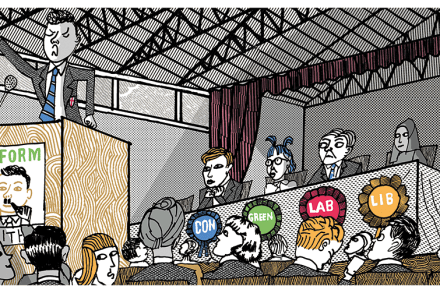
The 2005 election campaign was brutal. All the major parties succumbed to infighting, the hustings were hostile and the drip-drip of poisonous briefings reached a nadir when a Ukip candidate was compared to Hitler. One special adviser was found crying in the loos. More than two decades may have passed, but the Sherborne School mock election certainly left its mark on those who witnessed it first-hand. I remember it well. In fact, I was that tearful special adviser. I was working for the Labour party (sadly not endorsed by Tony Blair) and during one hustings managed to persuade the crowd to walk away when the Ukip candidate – a close friend of mine in the same boarding house – stood up to speak. I stayed back to watch him deliver his carefully crafted speech to an empty courtyard.

David Lammy’s depraved new world

From our UK edition

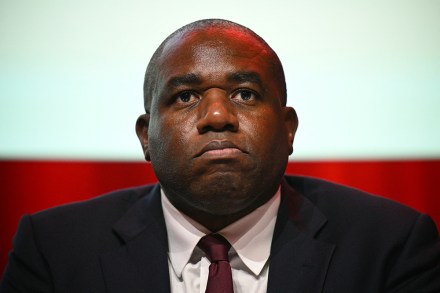
Beamish, the living history museum in County Durham, invites visitors to ‘step into the past’. It shows how people lived in the early 20th century and attracts plenty who want to see what life was like in a simpler and – in some ways – better time. On Tuesday evening, we had a Beamish moment in the House of Commons. Sir Geoffrey Cox rose to speak on the subject of the government’s abolition of jury trials. The Tory grandee brought real expertise that is rare these days in the Commons. Unlike the numerous MPs who claim the title despite having actually just sat on HR tribunals for the Cats Protection charity or CBeebies, Sir Geoffrey is a real lawyer, a barrister with silken decades to his credit.

Could Labour lose London?

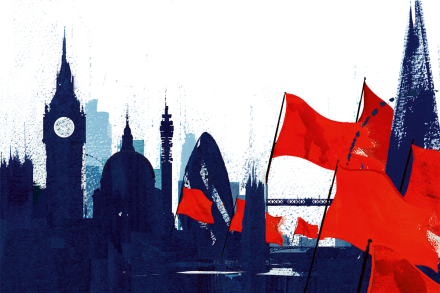
After Gorton and Denton, where next? The scale of the Green triumph in Manchester has sent shockwaves through Sir Keir Starmer’s party. Much has been written about looming losses in Cardiff and Edinburgh. But the Greens – with their appeal to urban professionals, young Muslims and the economically disaffected – pose a threat in the place that many took to be Labour’s strongest heartland: London. ‘We have almost as many MPs there as Scotland and Wales combined,’ notes one aide. ‘Some are getting a bit nervy.’ Jitters are understandable. For ten years, Labour has ridden a wave of post-Brexit cosmopolitan feeling to boast ever-greater gains and now has 58 MPs in Greater London. At London’s last local elections, Labour won 62 per cent of council seats.

A parade of monstrous and toxic generals: Beatriz Gonzalez reviewed

From our UK edition

You might be forgiven for thinking that a charity sale of particularly kitschy furniture has been set up just past the entrance of the Barbican Art Gallery. There’s a chunky brown dressing table, an ornate table several decades out of fashion and a trio of bedside tables. They are piled haphazardly and on each is a garishly painted picture, invariably a pastiche of a historical painting or a Biblical scene. Raphael’s 1512 ‘Madonna and Child with St John’ rendered slightly sloppily where the mirror of the bureau once was; ‘The Last Supper’ on the table top; three popes in profile staring impassively from the tops of the nightstands.

Keir Starmer’s selective ageism

From our UK edition

If the newspaper reports are correct and Margaret Hodge is about to be named as the next chair of Ofcom, it’s a surprising choice. The current chair, Michael Grade, had a storied television career, whereas Hodge has never worked in the media. But the most jaw-dropping thing about this appointment is that she’s 81. Not that I’ve got anything against octogenarians – I’ll be one myself in the blink of an eye. But the government has. In its manifesto, Labour promised to introduce a mandatory retirement age of 80 in the House of Lords, and it’s already set the wheels in motion. Why is Margaret Hodge considered to be too old to sit in the Upper House, but not too old to chair a public regulator? To complicate things, Sir Keir Starmer made her a peer in August 2024.

Portrait of the week: Gender in schools, election U-turns and the ‘truth’ about Navalny

From our UK edition

Home Pupils will be allowed to change gender at school, according to guidance issued by Bridget Phillipson, the Education Secretary; parents would be consulted, unless there was a safeguarding reason not to, and children would have their preferred pronouns used in the classroom. However, children older than eight would still have to use facilities according to their biological sex. A High Court judge dismissed a challenge to the Equality and Human Rights Commission’s guidance last April that single-sex lavatories or changing rooms should be used by people of the same biological sex; the EHRC withdrew its guidance in October, and its revised guidance is being considered by the government.

The thinking behind Nigel Farage’s shadow cabinet

From our UK edition

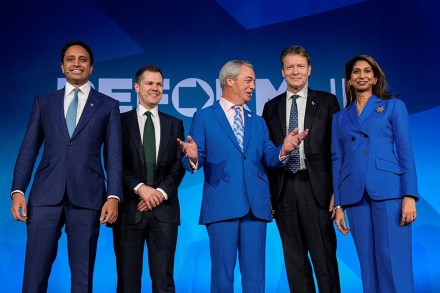
There is an old joke about Nigel Farage, put about by former colleagues. ‘Why is Nigel like a beech tree?… Because nothing grows under him.’ The comparison to this acid-leafed tree which stifles all beneath it is one the Reform UK leader has never accepted. ‘I don’t fall out with people,’ he once said. ‘They fall out with me.’ Like Tintin, Farage has enjoyed many different adventures in different guises: ‘Nigel in America’, ‘Nigel in the Jungle’, ‘Nigel in the City’. This week, we got another: ‘Nigel and the Gang of Four’, the leader who seeks power only to yield it to others. Four names were unveiled as part of Reform’s new ‘shadow cabinet’ to show he is building something bigger than himself.

‘We know where the bodies are buried’: How Kemi put Keir on the ropes

From our UK edition

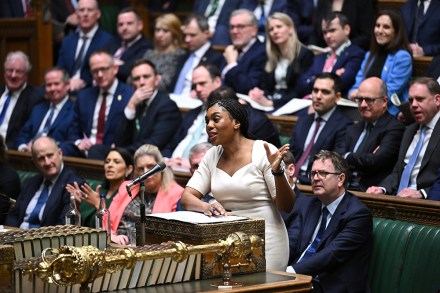
What does a dying government sound like? At 12.08 p.m. on 4 February we got an answer. Keir Starmer admitted to the House of Commons that he knew about Peter Mandelson’s relationship with Jeffrey Epstein when he made him ambassador to the US in 2024. There was a sharp intake of breath from the shocked Labour benches. It was the kind of moment that defines a premiership. And it was also testament to an effective Leader of the Opposition. In the drama of Mandelson’s disgrace, the Conservative party played its part well. After besting Starmer at Prime Minister’s Questions, Kemi Badenoch turned to coaching the Labour backbenches. She had put down a humble address, urging all correspondence be released between ministers and Mandelson. Would they back her or not?