Music and Opera

Our curation of music and opera reviews

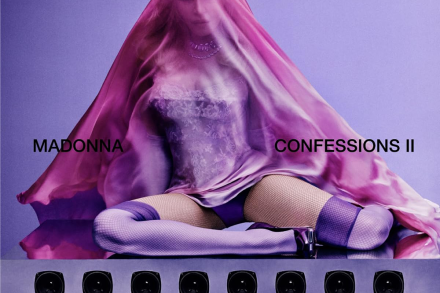
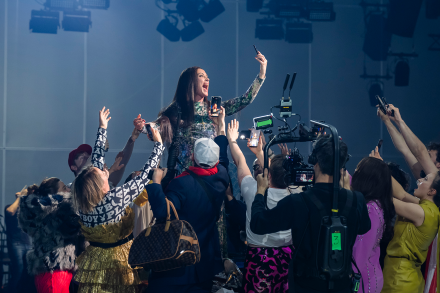
Confessions II gets thrillingly close to vintage Madonna

There comes a point in the career of any established artist when looking backward seems to be the only possible way to move forward. Madonna was a great pop star until she wasn’t. Confessions on a Dance Floor, released in 2005, was her last really successful record; “Hung Up,” from that album, her last truly unforgettable single. Ever since she has been chasing musical trends with increasingly diminishing returns, the heavy-handed concepts and contrived personae – Madame X, anyone? – no longer supported by anything approaching a properly decent song. Ms Ciccone seems to have belatedly remembered that Madonna is, and always has been, the concept So Confessions II is an act of both commercial and creative necessity. Its reclamation of the past is twofold.

The Odyssey is shallow and tiring

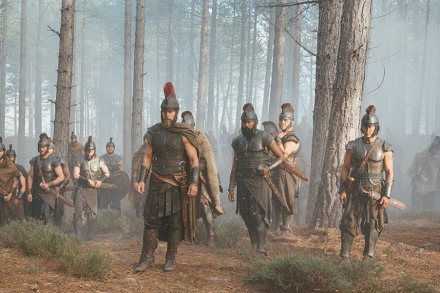
The Odyssey is Christopher Nolan’s relentless, deafening three-hour take on Homer’s epic poem, and while it is technically impressive filmmaking – IMAX cameras; massive mechanical puppets, minimally pimped up by CGI; thousands of extras – it is set piece after set piece which becomes rather tiring. Even if weariness is part of the point of the Odyssey, it’s no excuse for the film being tiring. Even if weariness is part of the point of the Odyssey, it’s no excuse for the film being tiring What we get is an action blockbuster, without significant depth, although there is some heft to the final act – everybody’s favorite act, surely. Who doesn’t love it when Odysseus finally makes it back to Ithaca disguised as a beggar and no one recognizes him?

In defense of Little House on the Prairie

You can tell things have started to get really bad by the fact that they’re bringing back Little House on the Prairie. When a society is in serious crisis – or so I’ve read – it no longer needs edgy, transgressive, exciting art to push boundaries and challenge assumptions. Rather, it needs to be soothed and cosseted with bland, undemanding and familiar comfort food. Nothing, not even The Waltons, does that quite like Prairie. People griping about the remake have clearly forgotten how dire the original was I may well have gawped uncritically at quite a few of the original series’ 200-odd episodes, the first of which aired in 1974.

The vulgarity of the Swift-Kelce wedding

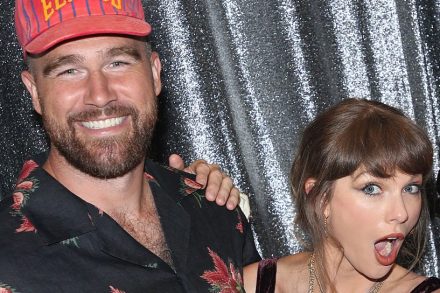
When Taylor Swift, the billionaire pop star, announced her engagement to Travis Kelce, the rather less wealthy (although still multi-millionaire) NFL player, she chose to mark the occasion by declaring, “Your English teacher and your gym teacher are getting married.” It was rather a nice way for Swift to refer to herself and her forthcoming nuptials. Those who, like me, have always been fans of both her and her music had hopes that her wedding to Kelce would not become the usual hideous exercise in celebrity tackiness. Boy, was I wrong.

Taylor Swift

Fresh, original Mozart

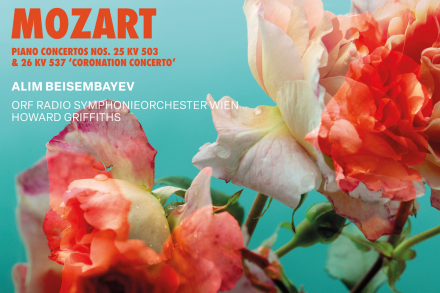
It’s spring in Vienna; well, OK, it’s early summer but it’s a gray day when Mozart doesn’t make you feel younger and I reckon this new release from Alim Beisembayev will do just that. In a world of infinite entertainment possibilities, Beisembayev has done the hard bit – the choosing – for you. Here we have two late piano concertos (Mozart wrote them between the ages of 30 and 32, as his own solo career wound down) charged with a grandeur, a playfulness and an endless smiling compassion that will come as a glorious corrective to anyone whose last experience of Mozart involved bodily fluids and confectionery in Sky’s hellish remake of Amadeus.

mozart

What went wrong with the Madonna biopic?

Madonna Louise Ciconne has had one of the more eventful American lives of the past half-century, and it is little wonder that she might wish to depict it on screen in a big-budget film. After all, as the recent success of the Queen and Michael Jackson biopics have shown, it doesn’t matter how good the pictures are, as long as they include the best-known songs that made the artists household names and a smattering of the drama that led to their current eminence. Even if, as in Michael, it was the decision to omit most of the really interesting events that led to cries of whitewashing. Yet there’s been no Madonna biopic, and this is not because she has refused to cooperate. Far from it.

Madonna

None of McCartney’s new songs will trouble his setlist for long

On May 30, 1966, the Beatles released “Paperback Writer” – a fortnight after “Paint It Black” by the Rolling Stones and only days before Bob Dylan released “I Want You” as a single. Paul Simon wrote and recorded (with Art Garfunkel) “A Hazy Shade of Winter” not long after. Yes, yes, what bliss it was in that dawn etc. But anyone predicting back then that, 60 years later, all four artists would still be releasing new music and touring to large and appreciative audiences would have been laughed clean out of the Bag O’Nails. Even when glossy monthly music magazines such as Q started appearing in the 1980s, 40 was regarded as the dark side of the moon for the foundational pop stars of the 1960s.

paul mccartney

Michelle Terry is ferocious in Brecht’s simplistic tutorial

Bertolt Brecht’s classic, Mother Courage, is about a female war profiteer who drags a wagon of supplies through no man’s land and sells them to bedraggled soldiers. During the story, she loses both her children and she discovers that war is not as marvelous as she previously thought. This spiritual journey evidently mattered to Brecht, who was born in 1898 in Augsburg, and who greeted the outbreak of World War One with enthusiasm only to become disillusioned by the mechanized slaughter of the trenches. His play is aimed at wrong-headed militaristic numbskulls who believe that war is good rather than bad. If you already hold pacifist views, you may find his tutorial a little simplistic.

bertolt brecht michelle terry

How the office has come to haunt us

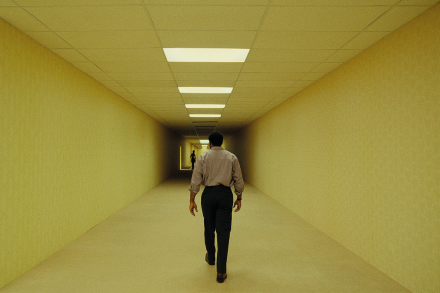
Should we hop on a call? Let’s touch base. Let’s take this offline. Let’s circle back to your last slide deck. Let’s get those action items actioned by close of play. We need stakeholder buy-in. We need deliverables. We need to make sure you’re aligned with company culture. We’re concerned you’re not leveraging your core competencies. After careful consideration, management has made the difficult decision to terminate your contract. We’re committed to helping you with this transition. Corporate jargon is zombified language. These euphemisms and elisions are the soulless husks of words, meant to blunt the sharp edges of human emotion (sorry – "maintain professionalism"). And they often leave you feeling a sneaking sense of dread.

The Arts Council’s awful vision for the future of opera

English National Opera’s first production created in Manchester is Angel’s Bone, a one-act opera by Du Yun and the librettist Royce Vavrek. It was premiered in 2016 in New York and subsequently won the Pulitzer Prize, but we shouldn’t hold that against it. Musically, at least, it’s certainly more interesting than recent US imports like Jeanine Tesori’s Blue – worthy, subminimalist Yankslop addressing the fashionable issues of the day. (It’s funny how the classical music world imagines that the way to reach British audiences in 2026 is to program stuff that was relevant to Americans in 2016.) It was a pretty horrible experience nonetheless. Daytime TV-fixated suburbanites Mr. and Mrs. X.E.

opera

Derek Jacobi on playing Lucian Freud

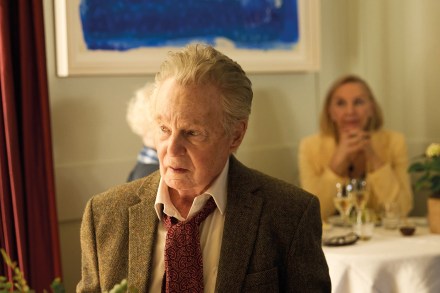
Lucian Freud almost had a second career in the cinema. He acted as an extra in a couple of films during the early 1940s; the only one in which he made the final cut was a farce starring the ukulele-playing comedian George Formby in which his 19-year-old face can be seen peering out of the background in one scene. Years later, Lucian claimed, John Huston asked him if he’d like to play the part of his grandfather Sigmund in a biographical screen drama from 1962 entitled Freud: The Secret Passion (which had, at one point, a script by Jean-Paul Sartre). Eventually Montgomery Clift was cast instead, which was just as well because Freud was definitely an observer rather than a performer.

Riveting: Kokuho reviewed

A three-hour Japanese epic about a classical performance art (kabuki) isn’t the easiest sell, I’ll grant you, but I’ll give it my best. Kokuho is multi-award winning. It is the highest grossing live-action film in Japan ever. It is sumptuously filmed. It is masterfully sweeping. The kabuki itself is stunning, so much so that you may one day wish to visit the kabuki theater in Tokyo, although be warned: the shortest production is four hours. Some last all day. Looked at this way, you are getting off lightly here. Directed by Lee Sang-il, and adapted from Shuichi Yoshida’s two-part novel, the film is a drama spanning 50 years. It opens in 1964, in Nagasaki, with the shocking killing of a crime boss while his 14-year-old son Kikuo (Soya Kurokawa) looks on.

A spring mood lifter: Tales of Love and Loss at the Linbury Theater reviewed

This year’s Jette Parker Artists showcase is a triple bill of modern-ish operas; a cleverly assembled trittico of one-acters, linked by a theme of bereavement. That sounds bleak until you consider that Puccini’s Trittico was originally inspired by The Divine Comedy, and who bothers about that today? Anyway, the three operas that make up Tales of Love and Loss are far from dispiriting in their overall effect. Like Puccini, Talia Stern – who directs all three – has gone for two tragedies plus a raucous, palate-cleansing comedy. And like Gianni Schicchi, the final laugh-fest (Elena Langer’s Four Sisters) plays out around a barely cold corpse and sends you into the night feeling uneasy, but undeniably entertained.

How good are the Rolling Stones’ alter egos, the Cockroaches?

Would you pay a tenner on the door to see the Cockroaches, the Fireman, Patchwork, the Network and Bingo Hand Job play your local pub? This unpromising lineup becomes a little more appealing (perhaps) upon learning that these are pseudonyms used by, respectively, the Rolling Stones, Paul McCartney, Pulp, Green Day and R.E.M. over the years. Pop stars spend the first part of their careers trampling over their grandmothers in the unseemly rush to demand the world take notice of who they are, and the second part whining about being pigeonholed. The only thing harder to escape in the music industry than your name is your original haircut. Hence, the pseudonymous offshoot, offering a degree of separation with very little sense of jeopardy.

Don’t blame Kanye for his abject idiocy

Grade: C– Kanye? No, I can’t, quite. I will always quietly overlook the idiotic political sensibilities of the conformist millennial legions who comprise our pop charts – the keffiyeh-clad Hamas wannabes, the BLM halfwits, the greenies, the men-can-be-women wankpuffins – in order to let their music be judged on its own merits, free from boomer political disdain. But songs such as “Heil Hitler” and all those swastikas? Well, they are just a stretch too far for me. The man is an abject moron. Some will say, so what? There have been loads of abject morons down the years in pop. Why draw a line in the sand for Kanye West? Good question. And it turns out it’s not his fault.

kanye west

Unrelentingly entertaining: Basement Jaxx reviewed

How would you like your nostalgia served, sir (and it is usually “sir”): in mist-shrouded monochrome or crazed lysergic Technicolor? Earlier this month, I saw two bands in the same venue, a few days apart. Neither having released any new material for more than a decade, both duly crammed their sets with their greatest hits. And yet one felt like the future, and the other like the past. Felix Buxton and Simon Ratcliffe, aka turn-of-the-millennium electronic duo Basement Jaxx, should be credited for having great sport with that in-built characteristic of almost all electronic outfits. Namely, that two or three blokes pushing a bunch of keys and buttons cannot ever hope to forge the kind of compelling visual identity so crucial to rock groups.

basement jaxx

Anthemic angst from The Twilight Sad

The only thing misery loves more than company is a backbeat. While capturing pure happiness surely remains the Holy Grail of any artistic endeavor, the blues is the bedrock of popular music for a reason. Sure enough, as we ready for the clocks to go forward, two albums arrive which could hardly be said to be full of the joys of spring, although they approach personal crisis – and catharsis – in very different ways. It’s The Long Goodbye, the sixth album by Scottish indie-rock band the Twilight Sad, is their first in seven years. During that hiatus lead singer and lyricist James Graham was dealing with his mother’s decline and eventual demise from early onset dementia, while also becoming a father.

twilight sad

The Royal Opera’s Siegfried is magnificent

Covent Garden’s new Ring cycle has reached Siegfried, and once again, you can only marvel at Wagner’s Shakespeare-like ability to anticipate modern preoccupations. Want to talk about the manosphere? Well, here’s opera’s most profound study of the playful, disruptive, world-making energy of the adolescent male psyche. The least interesting thing that you can say about Siegfried is that he’s an impulsive oaf. Well, duh. Have you never met (or if you’re really unfortunate, been) a teenage boy? Wagner could hardly make it more clear. Siegfried’s upbringing has been toxic. He has been isolated from humanity, and his only inkling of love has been brutally transactional.

siegfried

David Byrne has done it again

The title of David Byrne’s most recent album and current tour is Who Is The Sky? The phrase works two ways. Read literally, it has the playful 1960s feel of a Yoko Ono film or some absurdist Fluxus piece; firmly on brand, in other words, for someone as steeped as Byrne in New York’s downtown art lore. Read it aloud, however, and it becomes “Who Is This Guy?,” a more pointed title for an artist who has always seemed – to reference an old Talking Heads song – one of rock’s more slippery people. At the second of two recent Glasgow dates, both interpretations seem to fit. In Talking Heads, Byrne was a jerky, remote presence, aloof to the point of alien.

Harry Styles has a cute voice

Grade: B In which the foppish Davy Jones figure from the manufactured band One Direction (Zayn Malik being Peter Tork; One Direction didn’t have a Mike Nesmith) sheds the soft-rock pop-lite that has served him so well and goes with what he fondly believes is challengingly funky EDM, a genre which I do not believe plays to his strengths. So what you get is lyrics as fabulously inane as on “Watermelon Sugar” but very little of the pleasant tunes which accompanied that and his many other hits. There are some interesting rhythmic textures for sure, and a surfeit of old-skool playground synths. There is also a surfeit of repetition, a necessity for the oeuvre and a polite nod toward rap.

harry styles