Opera

Franco Zeffirelli’s slice of paradise in Positano

If you say the name Franco Zeffirelli to anyone under about 40, you’re likely to be met with bemusement. Find any opera or film lover over that age, however, and you will be greeted with a warm exclamation – “Ah!” – followed by a recitation of the Italian director’s greatest achievements. From his emergence in international culture in the 1960s with his seminal film of Romeo and Juliet to his legendary work on stage with such operatic titans as Maria Callas and Plácido Domingo, Zeffirelli became synonymous with tasteful, intelligent productions of the classics, all of which made him, for a time, the best-known cultural figure in Italy. It is fair to say that Zeffirelli, who died in 2019, didn’t always get it right, personally or politically.

Go to Cicoria for the food, stay for the opera

Smart Italian restaurants in cultural destinations are like buses: you wait ages for one and suddenly two come along at once. I recently praised Locatelli at London’s National Gallery. Returning to the city, it is the turn of Cicoria at the Royal Ballet and Opera, Covent Garden; a joint under the aegis of Angela Hartnett, well-known for her upscale restaurant Murano in Mayfair, her casual chain Cafe Murano and her frequent appearances on the box. Surprisingly few of the world’s great opera houses have given much thought to catering, although things are improving. I ate very well recently at Madrid’s Teatro Real and you can push the boat out with caviar at the Met in New York.

cicoria

How to fix the Met

The Metropolitan Opera has been in the hole for years and for most of that time company leadership has pleaded ignorance as to why. Just this February, general director Peter Gelb lamented audiences’ lack of interest in the Met’s slate of contemporary operas. “It’s impossible to predict hits,” said the man paid $1.4 million a year to, well, predict hits. In its 2025-26 season slate, the Met finally seems to be wising up – but it faces an uphill climb. For the better part of a decade, the company has been financially unprofitable, artistically boring and actively hostile to its audience. ‘It’s impossible to predict hits,’said the man paid $1.

Met

The struggle of the female musician

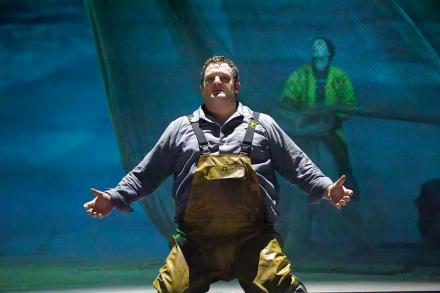
In July 2022, hundreds of elegant opera-goers gathered on the lawns of Glyndebourne Manor in Sussex to picnic in the interval of a rarely performed early twentieth century work, The Wreckers, by the suffragette composer Dame Ethel Smyth. This strikingly powerful piece of music, which tells the story of Cornish villagers who lure ships onto rocks in order to plunder them, was the first opera by a female composer to be staged at the prestigious British festival and was extremely well-received. The Times of London praised its “wild waves of passion.” Yet The Wreckers has had a difficult history.

ethel smyth women musicians

No success like failure

It is a standard narrative in all showbiz reporting — and one that arts hacks seem to be duty bound to abide by. It is the fairy tale of ‘Making It’: the story of a star whose career took time to get off the ground but, thanks to perseverance and self-belief, went stratospheric. It goes like this: ‘I was a nobody, and I was turned down from everything. And I nearly didn’t go to that final audition, but whaddya know? I turned up and... Shazam! Oscars raining down and a mini-series on Netflix.’ There is an encyclopedia of stars who toughed it out before making it big.

failure

The wonder of Wagner

Laramie, Wyoming Nearly all the famous artistic controversies in the aesthetic history of the western world — the Battle of the Ancients and the Moderns in France and the contest between the rococo and neoclassical schools across Europe in the middle of the 18th century; the subsequent rivalry between the Classicists and the Romantics and the contretemps in the late-19th century between the Realists and the Impressionists — are as dead, irrelevant and forgotten today as the wars between the Guelphs and the Ghibellines.

wagner