As the tenth anniversary of the Brexit vote approaches, renewed debate about Britain’s relationship with the European Union is perhaps inevitable. A steady drip of stories has suggested that closer ties between the UK and EU may once again be under consideration, with speculation over rejoining the customs union appearing every week since the Budget. Health Secretary Wes Streeting went further just before Christmas, arguing in favour of the move. The economic case for deeper cooperation may be compelling, but even for those who hope this is a prelude to something bigger, it is worth asking a more fundamental question: what kind of European Union would Britain be re-entering?
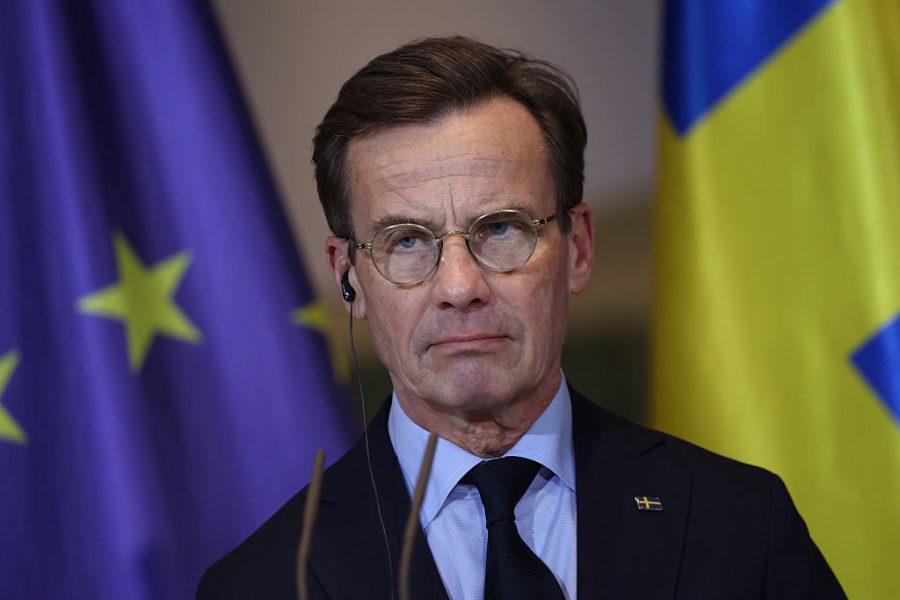
One answer can be found among the generation now beginning to shape European politics from below. In November, the youth wing of the European People’s Party (EPP) – known as YEPP – gathered in Stockholm to debate the future of Europe. The conference, titled Building a Better Future Together, was opened by Swedish prime minister Ulf Kristersson alongside other senior figures from the centre-right.
The UK must be realistic about the state of the EU now
At first glance, the conference’s tone was optimistic. Speakers praised European unity, reiterated support for Ukraine and highlighted the EU’s ability to manage multiple crises. Yet Kristersson struck a more sobering note. Considering the European Council, he observed that its longest-serving leader was Hungary’s Viktor Orbán – a reminder that, in the post-Merkel era, authority within the EU has become more diffuse. The bloc, he argued, remains a modest geopolitical player beyond its immediate neighbourhood: marginal in the Middle East, unable to stand up to China and subordinate to the United States. Kristersson’s challenge to the room was blunt: does the EU have the ambition and capacity for meaningful, long-term reform?
That question matters because YEPP is not merely a debating society. It is the youth wing of the most powerful political bloc in the European parliament – and the very grouping David Cameron withdrew the Conservatives from in the late 2000s, one step on the long road to Brexit. This is not the UK youth parliament. Delegates at YEPP include ministerial advisers in various centre-right governments, and even MEPs in their late twenties and early thirties. These delegates are drawn from across the EU, from non-members with closer ties such as Norway and Switzerland, candidate countries like Serbia and Ukraine, and even states on Europe’s periphery, like Lebanon. These are the politicians Britain would one day have to work with, especially if the UK-EU relations ‘reset’ goes further than we imagine today.
In Stockholm, delegates gathered for speeches, policy discussions and votes on a wide range of resolutions. There was broad agreement on the need for Europe to take greater responsibility for its own security, to strengthen trade relations beyond the continent and to address the energy crisis. But when it came to more contentious votes, a familiar divide emerged: east versus west.
Resolutions proposed by delegates from eastern European countries – covering issues from environmental policy to hate crime – often passed, but by narrow margins, opposed by representatives from western and northern Europe. For many eastern delegates, this enthusiasm was rooted in experience. They are the first generation from their countries to grow up entirely within the EU and have seen the tangible economic and political benefits of membership. Their instinct is for the EU to do more, not less.
By contrast, delegates from longer-established democracies, often net-contributor countries, were more sceptical. With electorates increasingly focused on domestic pressures – housing shortages, cost-of-living crises and rising defence spending – many questioned the need for Brussels to expand its remit further at all. This was not simply Euroscepticism, but understandable caution: a belief that some problems are better handled nationally, rather than at the European level. This was the familiar tug and tow of federalisation.
Given that this is the young wing of the EPP, and the resolutions are non-binding, the significance lies less in the resolutions themselves than in what these divisions reveal. As the EU accelerates its expansion in response to Russia’s invasion of Ukraine, internal agreement on its future direction looks increasingly fragile. How do you balance the countries that want the EU to do more and those that want it to do less? And at what point does the principle of unanimity become unsustainable?
This matters for Britain. The country has become obsessed with comparing itself to Europe’s new economic superstar, Poland, and ‘when’ rather than ‘if’ it could overtake Britain economically. Poland has increasingly been cast as a leader in eastern Europe yet, similar to France, it has been constrained often by domestic political tensions. A power split between rival parties occupying the presidency and premiership distracts from Poland’s ability to offer wider EU stewardship.
One senior EU ambassador in London acknowledged as much, admitting that the leadership vacuum Britain left behind after Brexit has not yet been filled – though, pointedly, not ruling out that it might be in future. There remains goodwill towards the UK in Brussels, and a sense that it would eventually be welcomed back. But goodwill alone would not resolve the EU’s deeper questions over enlargement, decision-making, and unanimity – challenges that Britain would have to confront rather than observe from the sidelines. Even ardent Brexiteers would surely prefer Britain had a seat at the table, able to shape these discussions, than in the limbo of the customs union.
It was telling that when Kristersson reflected on the defining crises of the past two decades – the financial crash, the Covid 19 pandemic and the war in Ukraine – Brexit wasn’t mentioned. This omission was not dismissive so much as revealing. Across Europe, EU politics is increasingly understood as domestic politics: decisions taken in Brussels are indivisible from national politics. That perspective never took root in Britain, even among the most committed Remainers.
As Britain debates whether to edge closer to Europe once more, the UK must be realistic about the state of the EU now. The EU has changed in the face of external threats – it is most united over defence, security and trade, and is even taking steps to cut red tape to improve its competitiveness – yet it still remains divided over the existential questions that stoked British euroscepticism in the first place. Any future relationship would require not nostalgia for the pre-Brexit past, but a clear-eyed understanding of a bloc still wrestling with its own identity and one whose next generation of leaders, led by YEPP, is already shaping the answers.


Comments