Provence
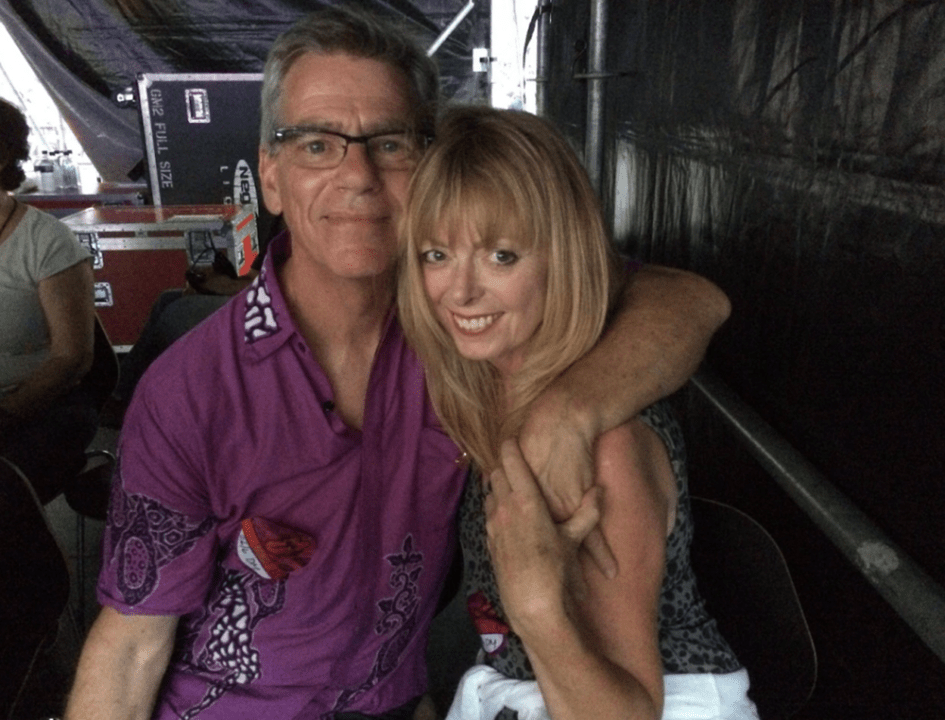
The other Monday I hosted the third annual meeting of the Jeremy Clarke Memoir Club on what would’ve been his 69th birthday. At the far end of the dining table, deep in the bare rock of the cliff, there’s a 27-inch high plaster cast of a bust by my ex of our youngest daughter as a youthful Baucis from Ovid’s Metamorphoses. The sculpture is bedecked with necklaces, a small bunch of faux anemones and part of the headdress I wore as a 21-year-old bride. In front of the bust I placed my grandmother’s black basalt Wedgwood urn which contains the remainder of Jeremy’s ashes.
André began the meeting with the five-day odyssey his Italian father took alone on foot across the Alps in 1936, to escape conscription into Mussolini’s Blackshirts. Dalmazzo was from Piemonte and left school aged 13, when the prospect for most men in Italy was hard labour and subsistence living. When his marching orders came, he and a friend both planned to speak to their families and escape the following morning. Dalmazzo’s father gave him all he could afford, a hundred lire note (€70-100 today). His friend, however, was persuaded by his family not to go. After a harrowing journey with little food or shelter, walking on roads by night and over mountains in the day to avoid arrest, Dalmazzo crossed the border into France. He worked hard and eventually owned a grocery shop in Cannes. His friend was conscripted into the Italian army and killed by Allied forces at the battle of Monte Cassino in 1943.

The journey of André’s wife, Monica, from Somerset to London, though less dramatic, was a courageous step in 1962 for a beautiful, diminutive country girl. She was drawn to the city by Radio Luxembourg and a young man she knew from the local youth hangout, the village bicycle sheds, who’d gone to Goldsmiths College. He spoke of art exhibitions, concerts and clubs. She found a boring job to cover the rent in a female-only hostel but had no idea how to get there; her mother, who owned the village pub, did. One of her customers regularly drove a milk tanker from the nearby Nestlé factory to London. They barely spoke during the long drive, and when the lorry stopped at the end of Warwick Road, Monica jumped down from the cabin with her little cream mock-leather suitcase in one hand and an A-Z in the other.
We wondered where Damien would take us after last year’s sexually incontinent youthful adventures
Mel, the foreign correspondent’s wife, told us about her brush with cancer, discovered via a medical email mistakenly sent to her on holiday post-surgery with friends. The scare has given her a new detachment from the angst of world events; a peacefulness common to those who’ve suffered.
Neighbour Geoffrey outclassed the Nigel Slater tartiflette I’d prepared with a description of his three-day quest to make the three-Michelin-star chef Paul Bocuse’s daube (beef casserole) for my birthday dinner last September. It was one of the best things I’ve ever eaten. I only wished he hadn’t sent me a photo of the ingredients beforehand.
Next came Chechnya, winter 1994/95. The foreign correspondent and his team were covering the conflict. Thick fog enveloped a hilltop village as a group of refugee women and children in winter clothes pulled sledges laden with possessions through thick snow towards shelter. The village dogs, sensing danger, began to bark. Soon Russian jets approached low while down below erupted into noise and chaos; sledges were abandoned and children swept into their mothers’ arms. Families unable to find cover fell to the ground screaming. Bombs began to crater the area around the target, a nearby TV transmitter. An old man fixing his car was severed in two. A brief silence; then the crying and wailing intensified. Near a bomb shelter, bodies. A young mother with her mouth open and partly filled with snow. Close by, her two small children. Surrounding them, an expanding halo of blood.
We wondered where Jeremy’s friend Damien McCrystal would take us next after last year’s sexually incontinent youthful adventures. He didn’t disappoint. In the early hours of a morning in 1980, aged 19 and very drunk, Damien fell asleep in a taxi and found himself dropped off near a hospital far from home. Spotting a van close by, he ‘borrowed’ it, using his house key to start the engine. Still inebriated, he sped off. A police car approached. Damien put his foot down and to his surprise, the police car disappeared. Close to home he hid the van in a churchyard. Only when he looked back did he realise the van was actually an ambulance.
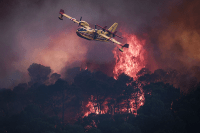
Not long afterwards he found himself on a tour of Alexandra Palace to look at the world-famous organ housed there. He approached the instrument puffing on a cigarette. After he was told to put the thing out, he dropped it, but before he could tread on it, it rolled down a gap between the floorboards. Two days later the place was almost razed by an inferno which took 50 fire engines to control. Laughing, the foreign correspondent said: ‘I remember! Was that really you?’


Comments