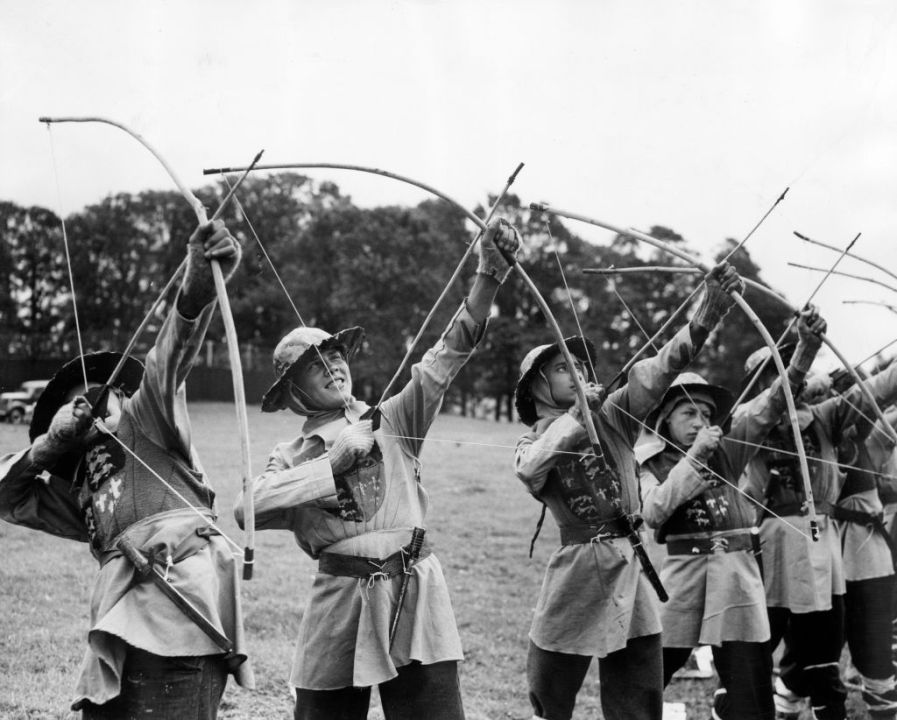
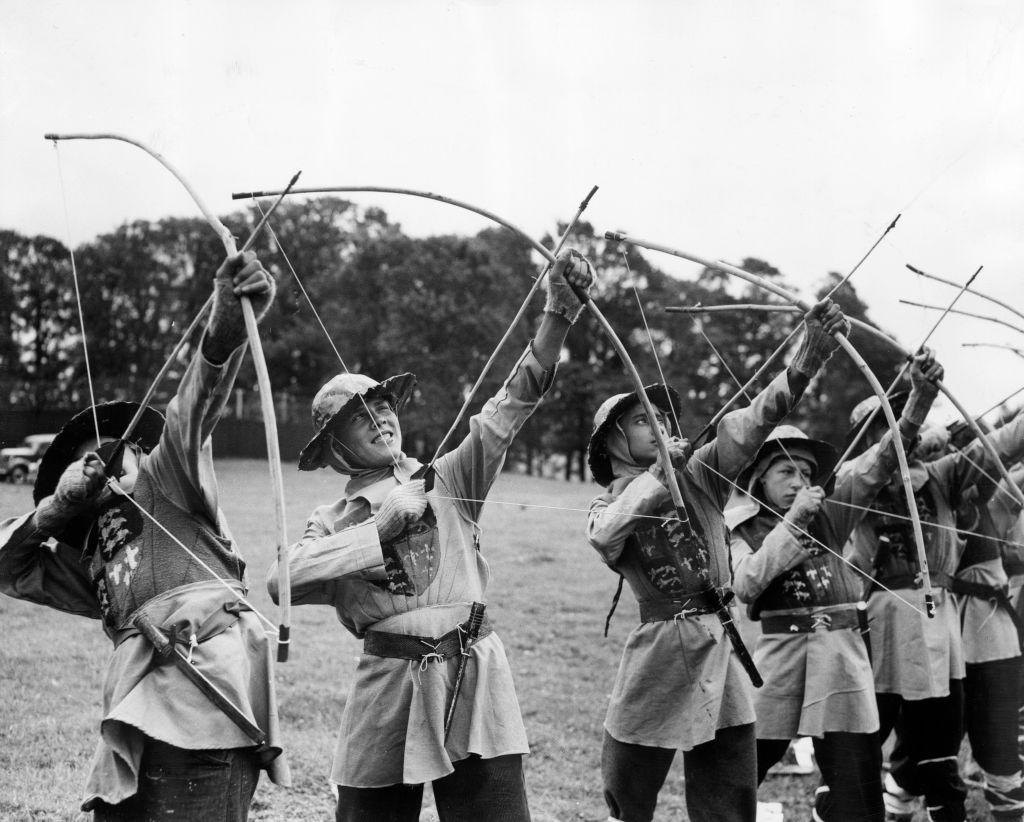
Today the clocks change and today is St Crispin’s Day, anniversary of the battles of Agincourt and Balaclava.
Legend says Crispin and Crispinian were twins, beheaded under Diocletian. Aristocratic Romans who supported themselves in exile as shoemakers, they are the patron saints of cobblers, tanners, saddlers, and curriers. The feast fell from observance long after the professions it celebrated had ceased to be common. But Shakespeare keeps it alive.
The clocks fall back and winter’s footsteps remind us of what is inevitable – and that we should eat, drink, and be merry before it arrives
Perhaps we are not now that strength which in old days moved earth and heaven, but that which we are, we are: we have our inherited culture still. Saints’ days have largely passed from our interest, but we are still stirred by anniversaries of defeating the French, or of fighting beside them, and stirred by Shakespeare.
‘O that we now had here / But one ten thousand of those men in England / That do no work to-day!’ said Westmoreland to Henry V, on the morning of Agincourt.
‘No, my fair cousin,’ replied the King:
‘If we are mark’d to die, we are enoughTo do our country loss; and if to live,
The fewer men, the greater share of honour’
The clocks change today as we adjust back to our standard astronomical time, Greenwich Mean. At a stroke the days of summer move into memory; winter’s dark nights bite with annual suddenness. Bureaucratic time shifts our clocks in summer, partly through the campaigning of William Willett, who noticed drawn blinds on an English summer’s morning over a century ago, and thought it wasteful. The Waste of Daylight was published in 1907; he died in 1915, the year before his campaign succeeded.
British Summer Time is a gift for those of us governed more by clocks than by dawns. And in the demi-monde of Twitter the twice-yearly changing of the clocks now brings another tradition, small in scale but still to be celebrated as part of our English character. Each Hitchmas a cry of rage arises from Peter Hitchens, who from his hill in Oxford shakes his fist at the artifice and bovine thoughtlessness with which we change our clocks. In recent years he has fallen into the habit of directing angry words at Tom Whipple, science correspondent of the Times. Whipple is fond of aggravating him, declaring the changing clocks give or steal an hour of daylight from his own pet, the tortoise Sophocles, who Hitchens archly notes would have been better named Aeschylus.
Roughly once every seven years the clocks fall back on St Crispin’s Day itself; they won’t do so again till 2037. We would not remember the day so well were it only Agincourt’s, brave as that great victory was (of the Siege of Orléans, there is no need to speak).
‘He that outlives this day, and comes safe home / Will stand a tip-toe when this day is nam’d,’ wrote Shakespeare. ‘Old men forget; yet all shall be forgot / But he’ll remember, with advantages.’
We are all of us tip-toeing into the night. Memory is all we have to preserve us, and culture is the accumulated memory in which we dwell – we dream and hope in streets that follow the paths our ancestors walked, near churches named for saints they worshipped.
The clocks fall back and winter’s footsteps remind us of what is inevitable – and that we should eat, drink, and be merry before it arrives. ‘And Crispin Crispian shall ne’er go by / From this day to the ending of the world / But we in it shall be rememberèd.’ Bureaucratic time plays with the hours of darkness and of light, and historical time dims all, but literary time does something else. ‘We few, we happy few, we band of brothers.’ The words summon back a morning in 1415, a film with Kenneth Branagh, and the dramatisation of the liberation of Europe from the Nazis. Before it was a series, ‘band of brothers’ was a phrase re-used by both Washington and Nelson.
Who would have guessed that a mistaken and futile cavalry charge at Balaclava, the charge of the Light Brigade, should have become a celebration of bravery that still stiffens our resolve today? Tennyson had already written In Memoriam as a home for his agonies over time’s oblivion. The poet who found nature so ruthless in her forgetting – indifferent not just to single lives but to species and epochs – became one of those who help us to remember. Almost two years ago I stood in a freezing church and read his Ulysses at my son’s funeral. Writing of him has become one of the ways I remember him.
We live, we love, we form part of the backdrop of other people’s lives and eventually the unseen pattern of their history. When the clocks change in autumn we gain an extra hour of dreams, and dark evenings to remind us how soon we will depart. Few of us are now curriers or glove makers or tanners or weavers, but we all have our household gods, and our inheritance: the treasure house of our eccentric culture. Our days are transformed by memory, with advantages.






Comments