Yann Martel, the author of Beatrice and Virgil and Life of Pi, typically explores competing storylines, narrative reliability and the nature of truth. His new novel, Son of Nobody, pursues these themes in a first-person account written by a scholar who discovers a Greek epic.
The narrator is a Canadian called Harlow Donne – a PhD student at a middling university. Offered an ‘unbelievable opportunity’ to spend a year at Oxford, he leaves home, his wobbly marriage and his young daughter. His doctoral supervisor repeats his habitual plea: ‘Just find something to say.’
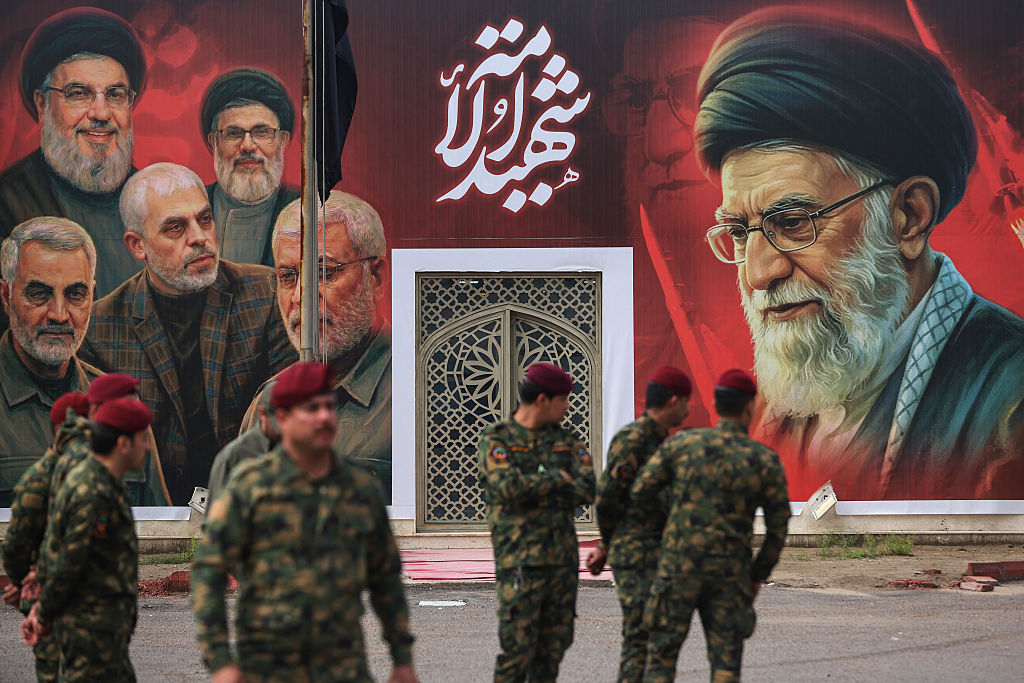
He does. From ‘hints and scraps’ found at the Bodleian Library and the Ashmolean Museum, Donne stitches together and translates 30 fragments of a lost poem of the Trojan War. He calls the text ‘The Psoad’, derived from the central character, a commoner called Psoas of Midea, whose nickname is ‘the son of nobody’.
Although there is a parallel in Homer (Odysseus outwits the Cyclops by saying his name is ‘Nobody’), Psoas’s epithet highlights his difference from the heroes of the Iliad. Whereas Homer’s hegemonic story of the war focuses on high-born Achaeans, the ‘Psoad’ emphasises the experience of ordinary soldiers. Psoas’s motivation is inherently different from Homer’s Odysseus, Ajax or Achilles. ‘I came here not for my king, but for myself,’ he says. ‘Not to win glory and honour, but loot.’
Donne presents the text of the Psoad alongside an author’s note and a detailed commentary. Most of the novel is written in these annotations, in which Donne examines Psoas’s character and studies the poem in the light of Homer and the New Testament. He finds biographical parallels with Psoas and also uses the notes to examine questions in his own life, especially relating to family, homesickness and grief.
Son of Nobody shows a deep attention to classical mythology and Martel’s interest in how narratives compete for acceptance and ascendance. There is every chance that Donne (note the poetic name) has fabricated the Psoad. In an argument about parental responsibilities, his estranged wife says: ‘You’re very good at rewriting history.’
Son of Nobody is enjoyably composed. It is a teasing metafictional work whose form invites comparisons with Vladimir Nabokov’s Pale Fire. Readers of Martel may think he is repeating old ideas and tricks but, especially in our discordant age, his preoccupations feel as relevant as ever.



Comments