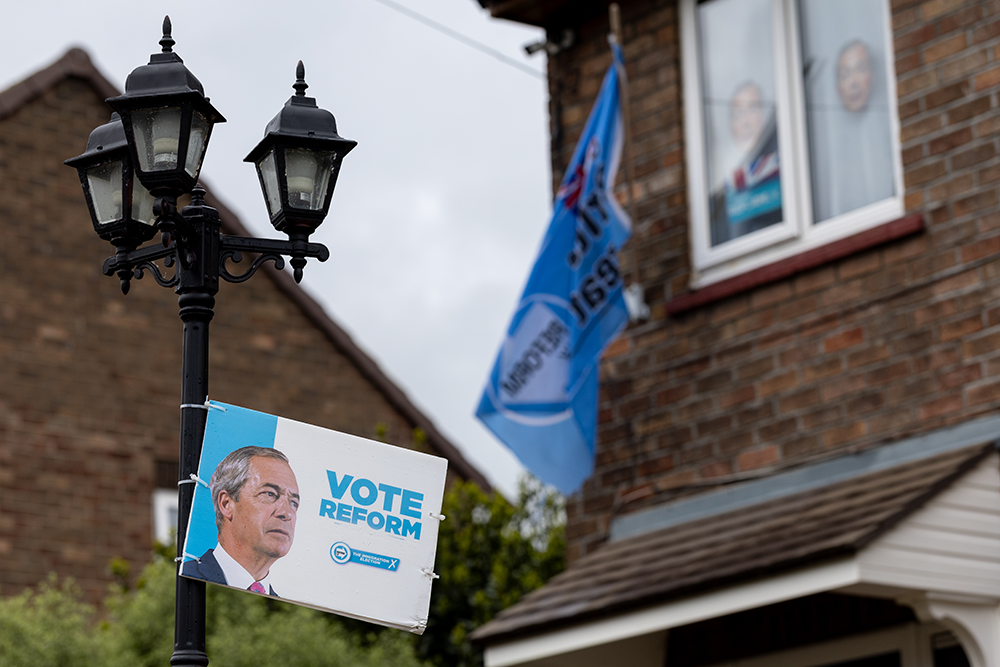


Nothing illustrates the challenge facing Reform UK better than the strained interview Danny Kruger gave to the Today programme on Monday morning. Kruger, a former Tory MP who defected to Reform last September, has been charged by Nigel Farage with preparing the party for government. He clearly wanted the interview to be a high-minded examination of the intricacies of the Whitehall machinery. Instead, he had to deal with more pungent street politics.
The interview quickly descended into questions about Robert Kenyon, the ‘plucky plumber’ and Reform candidate in the Makerfield by-election. Kruger, a thoughtful Christian, was clearly uncomfortable answering questions on sexual comments about Carol Vorderman which Kenyon had shared on social media in the past. The interview revealed a tension within Reform. On the one hand, the party wants to present itself as a thoughtful answer to our broken politics; on the other, Reform’s appeal is that it is a people’s army of rough and ready outsiders, scornful of SW1 politesse.
Isn’t it distasteful for Kruger, a polite and godly fellow, to be upstaged by the pungent views of a plumber?
Kruger’s task is to show middle–class voters that they can trust Nigel Farage to run the next government in a way that will get things done. But in Makerfield, the campaign is designed to see off a challenge from Rupert Lowe’s even more anti-establishment Restore party, where Reform feels that a politically incorrect candidate is a winner.
These twin approaches are strange bed-fellows, if not actually at odds. Kruger knows the by-election is not his hunting ground: ‘I don’t think what I’m up to is going to influence Makerfield much.’ But in an interview with The Spectator, he is clear that his work is vital if voters’ faith in democracy is to be restored, in Makerfield and beyond.
‘The whole purpose of a Reform government is to restore meaningful ministerial accountability. There is a real battle underway here. The danger to democracy is coming from the establishment left that thinks that politicians are a problem and we just need more officials.’
Kruger reveals Reform’s plans for the civil service code and ensuring civil servants exist to serve the government. ‘We want to repeal CRAG, the Constitutional Reform and Governance Act 2010, which established the civil service as a sort of independent entity with its own moral code and independent remit. We’re going to replace the civil service code with… a much more stripped-down expression of the duties of civil servants to respect the instructions of ministers and not to have independent political priorities of their own. We need to ensure that no civil servant can legitimately argue they have a duty to the constitution itself or to the Crown, rather than the elected government.’
The new code ‘would include not being involved in any kind of activism that undermines the policy of the department that they work in’. That would put an end to officials running groups that campaign against their own employer, such as diversity campaign groups or identity networks which oppose government policy. Kruger is well aware that this will put Reform on a collision course with the mandarins, but argues the decisions cannot be ducked. ‘Unless we tackle this immediately, there will not be another opportunity to do so. And in three years’ time we’ll wish we’d done it. It’s a precondition for good government, so we’ll do it up front.’
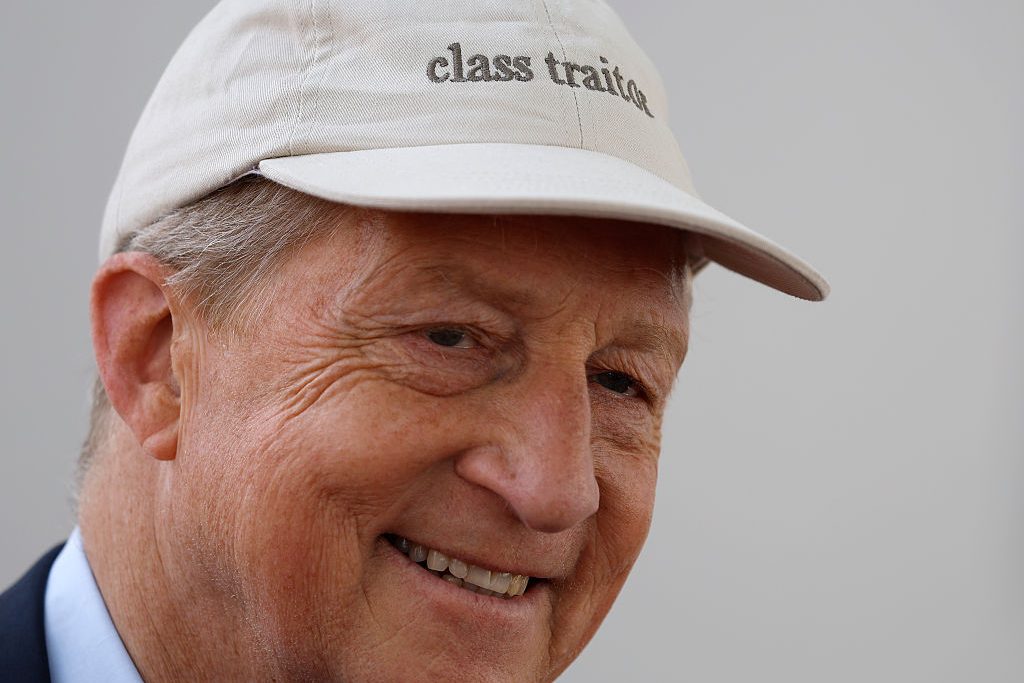
His job, in the meantime, is to be totally clear with the public and the civil service about what is coming, to give Reform the moral and constitutional authority to implement their plans. ‘Most governments come in with a manifesto that was as thin as possible, deliberately to avoid trouble in the election campaign. We think we need to prove to the public that we have the plan that’s needed. We need to ensure we have a mandate for it.’
Kruger is a polite chap and wants to level with the civil service. Many jobs will go, but he argues those who remain can expect talent to be rewarded. He is planning a speech to the Institute of Government to make his point. ‘My mission is to be very straight with them, not try and suck up to them. There will be storms, but sunshine to follow.’
There are plans for a prime minister’s department, which would have around 500 people taking charge of coordination across Whitehall, but with departments empowered to do the delivery. ‘The job of the prime minister’s office is to set the strategy, identify the priorities and then track progress with data.’ Reform would also set up a ‘co-located ministerial office like some other countries do, notably New Zealand’, where secretaries of state could work together. Kruger stresses this has all been drawn up with input from ‘former civil servants’ and Labour advisers ‘spat out by the Starmer regime’.
Kruger believes his plans do matter for Makerfield; without radical reform of the state it won’t matter who the prime minister is. ‘You can’t just change the face. Can the public really say there’s a massive difference between Sunak and Starmer? No, not really.’
Reform’s strange balancing act has had other effects. Kruger’s thoughtful policy plan was eclipsed by Robert Jenrick, the Reform shadow chancellor, unveiling a plan to end taxation on overtime, a move clearly targeted at the grafters of Makerfield. Many would have been annoyed by the PR clash, but Kruger is sanguine: ‘Our plan now is to demonstrate breadth and activity. And I think we were on four front pages on Sunday as a result, some of them for tax and some of them for my stuff.’
But cracks are showing. While Kruger and I were talking, Jenrick and Zia Yusuf – the Tory-hating shadow home secretary – were having a Twitter war about whether to deport illegal immigrants in social housing.
Isn’t it also distasteful for Kruger, a polite and godly fellow, to be upstaged by the pungent views of a plumber? ‘Are we genuinely suggesting that somebody who made an off-colour joke five years ago when he was a private citizen is ineligible for parliament?’ he says. ‘Surely not. It frustrates me that the state of the country is so serious and we have an obsession with trivia.’
Can this odd political combination work? There is a parallel to suggest it could. A compelling new BBC documentary on the 2016 referendum makes clear that Leave won precisely because there were two campaigns: Farage’s plain-speaking appeal to the migration–focused white working class, plus Boris Johnson and Michael Gove’s outreach to sovereignty-focused patriots. These divisions were in plain sight and yet they still delivered victory.


Comments