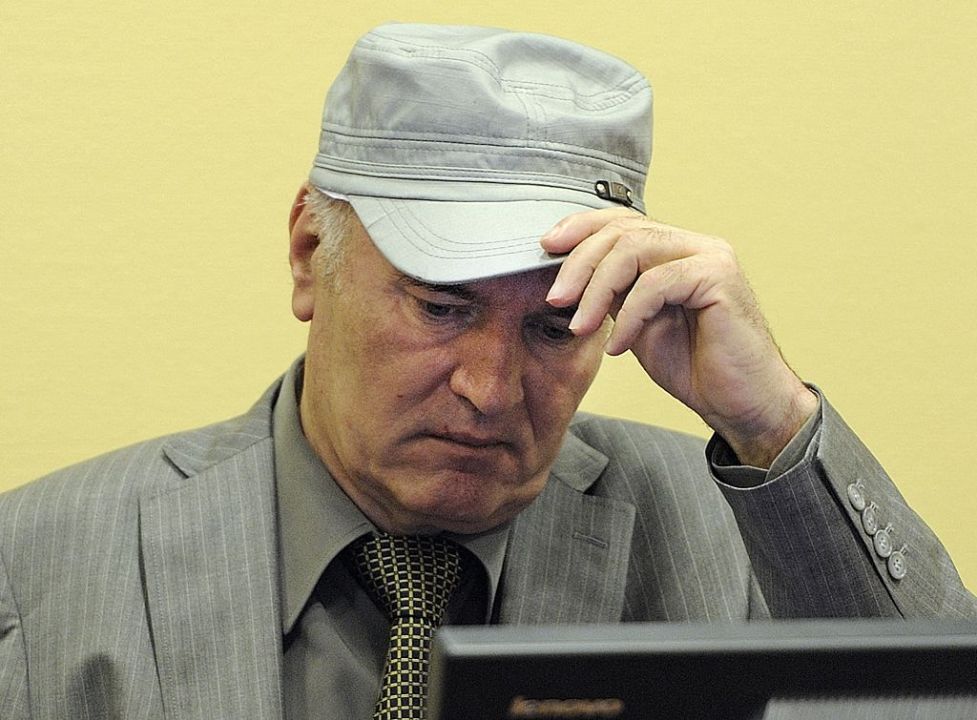
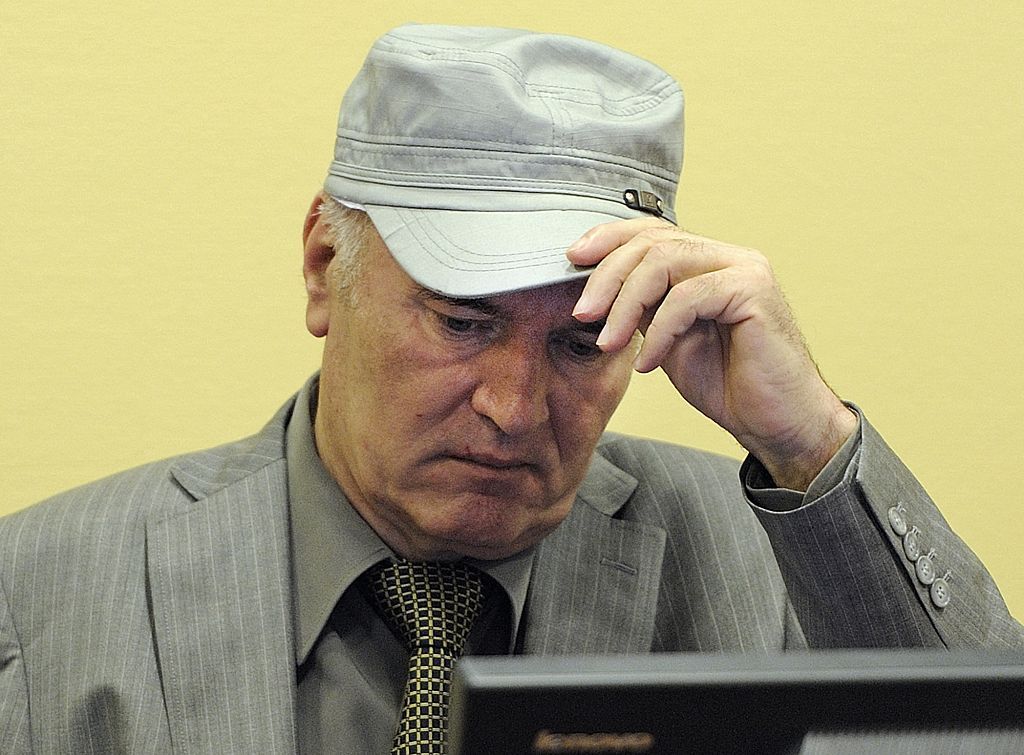
It’s rather appropriate that General Ratko Mladic, the 84-year-old former commander in chief of the Bosnian Serb army, “Butcher of the Balkans” died in the same week as Dolly Parton – he was the ultimate Serb hillbilly hero.
Shortly after his arrest, in the summer of 2011, I drove with my husband through the rocky hinterlands of Herzegovina. Mladic had finally been arrested, a month earlier, 15 years after the end of the war, by Serb special forces, masked, without insignia, to give them anonymity from possible reprisals from any sentimental Serb loyalties. He put up no resistance when he was arrested – he’d been on the run since 1996, and his Praetorian guard had long retired to their pig farms or were in prison for drugs.
When I first met Mladic, in 1992, he was high on the fumes from his bloody scourge of eastern Bosnia
The news was full of Mladic’s blood-soaked domination of the Bosnian war – his future convictions for genocide and crimes against humanity at the International War Crimes Tribunal for the former Yugoslavia (ICTY) in the Hague were hardly in doubt. Yet in the small town of Gacko, on a mural the size of a several buses, was his photograph, azure eyes gazing grimly down, under the banner “Nas Heroj! (Our Hero!).” For the Bosnian Serbs, he was their kind of warlord but had finally been arrested as part of Serbia’s bid to join the EU. The songs about him, however, had started back in the war: Serb turbo-folk singer Roki Vulovic’s Generale Generale (“You defended our doorstep… far from the mountains of Vietnam”) came out in 1995. And as recently as 2019, the Russian band Spermacum released the song “Ratko Mladic.”
I met first Mladic in the summer of 1992 at the Bosnian Serb HQ in Pale, a former Royal Ski resort outside Sarajevo, after a press trip to the concentration camps full of Muslims. Mladic was bulging in his camouflage fatigues, khaki kepi shading his acne-scarred face. He was a blow-up commando Ken doll, surrounded by equally pumped (and over-fed) henchmen. Imagine the man Sheriff J.W. Pepper in Live and Let Die wanted to be – pudgy bluster with an iron steel core. “Make Serbia Great Again” could have been Mladic’s motto: the four Cs around a cross – Samo sloga Srbina spašava (Only unity can save the Serbs) – was graffitied on every wall around him.
Mladic’s minions were like the Bosnian wing of the Ku Klux Klan, their victims the descendants of the Bosnian Muslim overclass who had controlled Bosnia for centuries under the Ottoman Turks – in the main part peasants whose ancestors had converted to Islam. Before the war they were 42 percent of Bosnia’s population.
In 1992, Mladic was high on the fumes from his bloody scourge of eastern Bosnia, bulldozing (sometimes literally: the Bosnian Serb death squads were innovative in their use of agricultural machinery) Bosnian Muslims from the towns, villages and mountain pastures they had lived in and farmed since time immemorial.
From the survivors, mainly women and children and the very old – shocked, shaking, cowering in sleeping bags in the urine-tinged gyms and old army barracks they had fled to in the relative safety of various Bosnian government strongholds – I heard of houses burned to the ground, mosques flattened or blown up, women herded into mass rape camps, menfolk tortured, shot and even fed through sawmills. It was the first time I had come across refugees en masse and their plight, their stories, never left me. Perhaps I should thank him – inspired by Mladic’s work, I now run a therapeutic drama project for refugees called the Trojan Women Project and we’ve got a hit one-woman show, Hecuba: Why Am I In Your Country? starring a Palestinian actress and former asylum seeker at the Edinburgh Fringe.
Ratko Mladic, like many hillbilly heroes, was born in rural poverty – a tiny village called Bozanovici, in the mountains, about 60 miles south of Sarajevo (population currently 66). His father was a dead hero, killed on his son’s third birthday in March 1945, leading a partisan attack against the Croat fascist war time leader, Ante Pavlovic. So that must have made little Ratko hate the Croats as well.
I met Mladic several times over the years of the war. Being the Observer’s Balkans correspondent based in Sarajevo for the siege, I spent a large part of my twenties talking to those whose lives he was trying to end, ringed by mountains held by Mladic’s forces. Our days were punctuated by the constant crack of the snipers shooting down from the frontlines rimming the treeline, the lazy thunk of his shells. Over 11,500 people died in the siege of Sarajevo alone, around 1,600 of whom were children.
Over 9,000 Bosnian Muslim men were killed after the fall of Srebrenica in 1995: either shelled and shot as they fled, picked off in the forests, or rounded up, held in gyms, then bussed up to mass execution sites, where they were mown down by Bosnian Serb firing squads and bulldozed (again) into mass graves. Every year, as their bodies are found, they are identified by DNA and buried together once a year in the Srebrenica memorial. In 2011, over 700 young men were being buried by a grieving crowd of over 30,000, including William Hague – a friend described it as Glastonbury with corpses. It was a shrine to Mladic’s later career.
Mladic was the architect of the butchery of the war from the start. It was he who told the Bosnian Serb poet-cum-sports-psychologist turned president Radovan Karadzic that it was not enough just to drive the Muslims from their homes. One of Mladic’s commanders – now serving 25 years – complained about the logistical nightmare after the fall of Srebrenica: what should his men prioritize? Killing the men they had captured, or stopping the remaining 5,000 or so escaping? “Why are we killing them? They are running away? We’d need a reason to kill that many chickens.” But Mladic insisted: “People are not like pebbles. You cannot move them from one pocket to another. One day if they are alive they will make their way back home.”
Cocky as ever – at his trial he was brought down partly by the amount of TV footage showing him handing out sweets or bantering in the ruins of some town he’d recently flattened – after the war, Mladic roamed free for several years. Despite being arraigned by the ICTY in 1995 for genocide, he was unmolested by the thousands of British and French troops based in Bosnia. It was said back then that it would have been impossible to take him alive and nobody (apart from the Serbs) wanted a dead hero. A mythical figure, he’d occasionally be spotted, surrounded by bodyguards in some Serb mountain bar – or the VIP box at a Belgrade football match. He was rumored to live in his old mountain HQ at Han Pijesak in Bosnia – a bit like Butch Cassidy or Bonnie Prince Charlie – or a suburb of Moscow. It’s said he demanded $5 million for his family to hand himself in. But by the time his own people came for him, 15 years after the war he’d lost had ended, the glamour, the entourage, and presumably the funding, had long gone. He was a lonely old man with a withered arm and a 10 million euro reward on his head. But the bluster and bravado were still there at his trial and even in jail: his last public showing was a Serb TV show phone call with his son Darko in 2018, much to the horror of his jailers.
Conveniently for the Serbs, whose greatest historic moment is still their 1389 crushing defeat at the hands of the Turks, he has died appropriately martyred, having lost his war, betrayed by his country, and denied compassionate release to go home, despite being terminally ill. His poster still dominates the Gacko skyline and the princes of Slav turbo-folk will be singing ballads to him for centuries to come. And, given the war’s legacy – a Bosnia crippled politically and economically by being perpetually split between the hostile political entities of the Muslim-Croat Federation and Republika Srpska – perhaps the Serbs will get their dream of Greater Serbia after all
Hecuba: Why Am In In Your Country is at the Gilded Balloon, Edinburgh Fringe, until Monday 31 August.



Comments