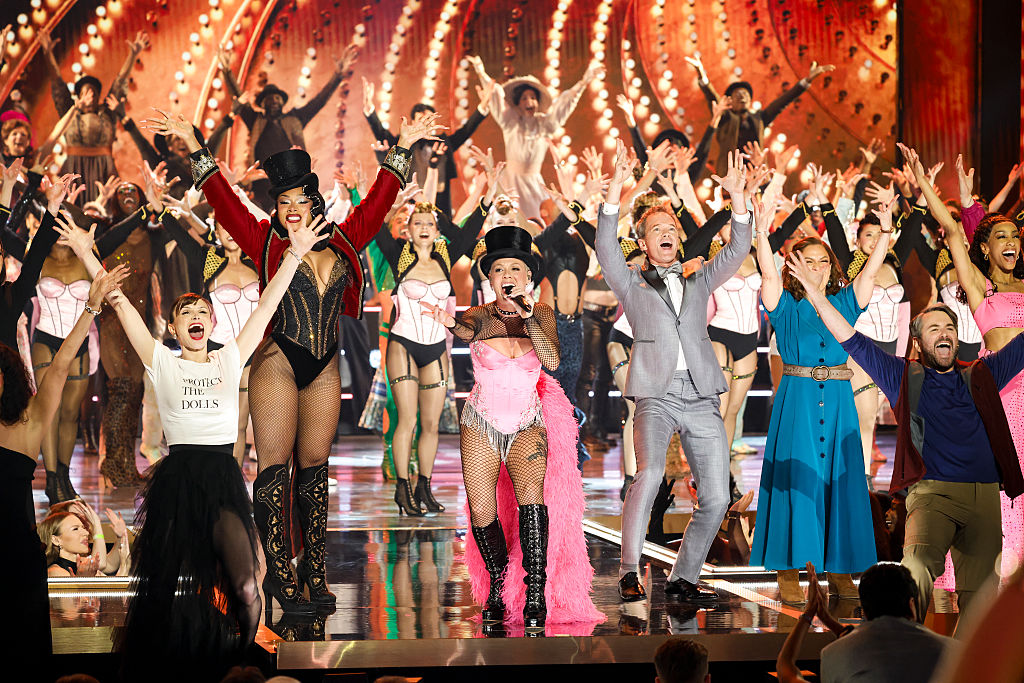
Every year, the American theater world gathers in New York to celebrate the best of the best, and every year, writers like me ask why the judges have made increasingly baffling decisions.
On the surface, it seems as if the 79th Tony Awards, hosted by Pink from Radio City Music Hall, were business as usual. The new revival of Death of a Salesman, with Nathan Lane and Laurie Metcalf and directed by Joe Mantello, was the big winner with six awards including Best Revival and Best Featured Actress. It also represented the partial redemption of the once-powerful, now-humbled super-producer Scott Rudin, whose penchant for big-star vehicles based on classic novels and plays was evident.
It was also notable that nobody thanked Rudin by name during their acceptance speeches, suggesting that he will remain a shadowy, behind-the-scenes figure for some time to come. There will be some who bristle at this obscurity – Variety sarcastically asked “did this show produce itself?” It is also a reflection of the way in which the theater world is an uneasy marriage between progressive political ideals and the need to make money. Rudin is, after all, very good at making money for people, and as long as he continues to offer this skill, he will be brought back into the fold. He will not be given any public acknowledgement, however. It’s a strange state of affairs, but that’s showbiz for you in 2026.
There were well-received Best Actor and Best Actress awards for a couple of peerless veterans, John Lithgow and Lesley Manville, for their excellent work in the Roald Dahl-antisemitism play Giant and Robert Icke’s electrifying new production of Oedipus, and the popular musical Schmigadoon! was an equally popular winner of Best Musical. Yet when its creator Cinco Paul declared “we need more new musicals on Broadway” – a mere six debuted last season – he tapped into a sentiment that Saturday Night Live producer Lorne Michaels seemed to second when he quipped “Sometimes singing, dancing, a lot of jokes and a happy ending is really all you need.”
There were an awful lot of happy endings going around at the ceremony, which might have been the loudest and queerest in living memory. The Luke Evans-starring production of The Rocky Horror Show was lionized, as was the popular Cats: The Jellicle Ball, which won best costume design for a musical for the aptly named Qween Jean. They drew applause and gleeful shouts when they declared that “We are here for the legacy of queer people, trans people. We have to take up space. We have to shift the paradigm.” It was not the time or the place to remark on the tension between the traditionally conservative instincts of Broadway patrons – who can afford the hundreds of dollars that a ticket for a show usually costs – and the belief that, somehow, an industry that has always been deeply queer must be even more so.
Away from the noise and the relentless wokery, it was Lithgow – the oldest winner of a Best Actor award at 80 – who spoke for a quieter and more dignified generation of performers when he said “I’m such a lucky actor. This is my third Tony Award. My first one was 53 years ago at my Broadway debut in the American premiere of an English play, which by an amazing coincidence originated at London’s Royal Court Theatre, just like Giant. Two Tony bookends with 53 years between them. In those years, I have worked with hundreds of just fantastic theater artists. I’ve had dozens and dozens of ecstatic moments on the stage, but I have to tell you right now, this moment has got to be one of the best.” Lithgow – who has had to weather criticism for daring to take on the role of Dumbledore in the new HBO reimagining of Harry Potter – is an actor of considerable intelligence and dignity, and offered a model for what an acceptance speech should be: modest, thoughtful, generous and inclusive. During a ceremony where the likes of a cross-dressing Luke Evans and Qween Jean dominated, his words may not have been listened to as they should have been. And this is a pity.


Comments