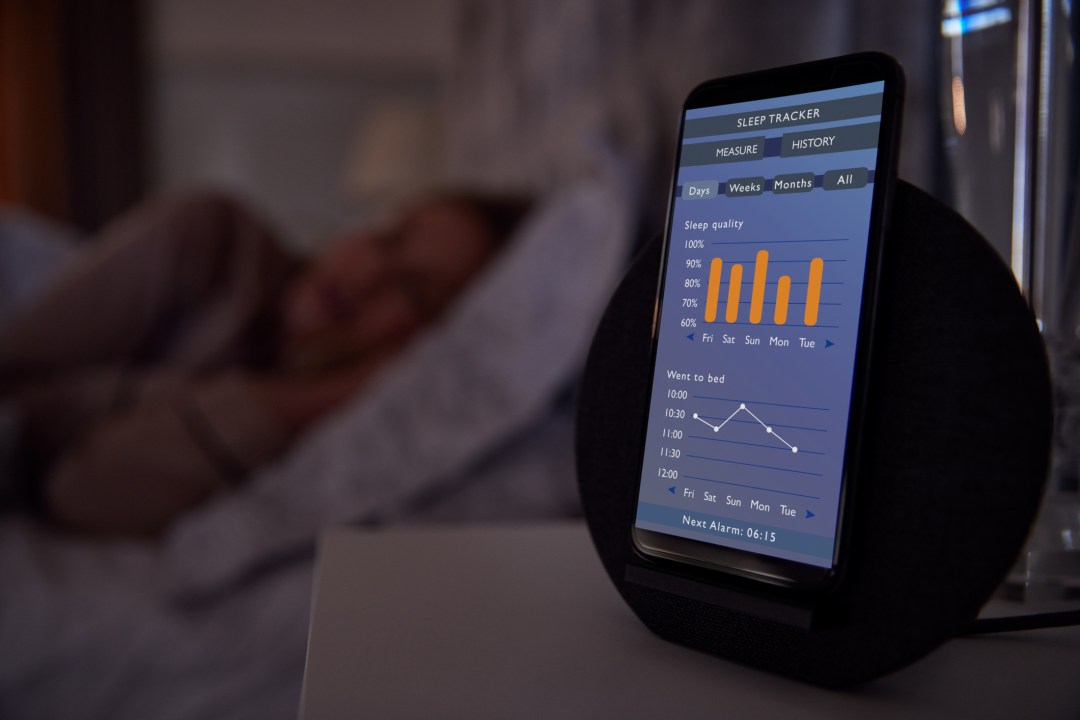
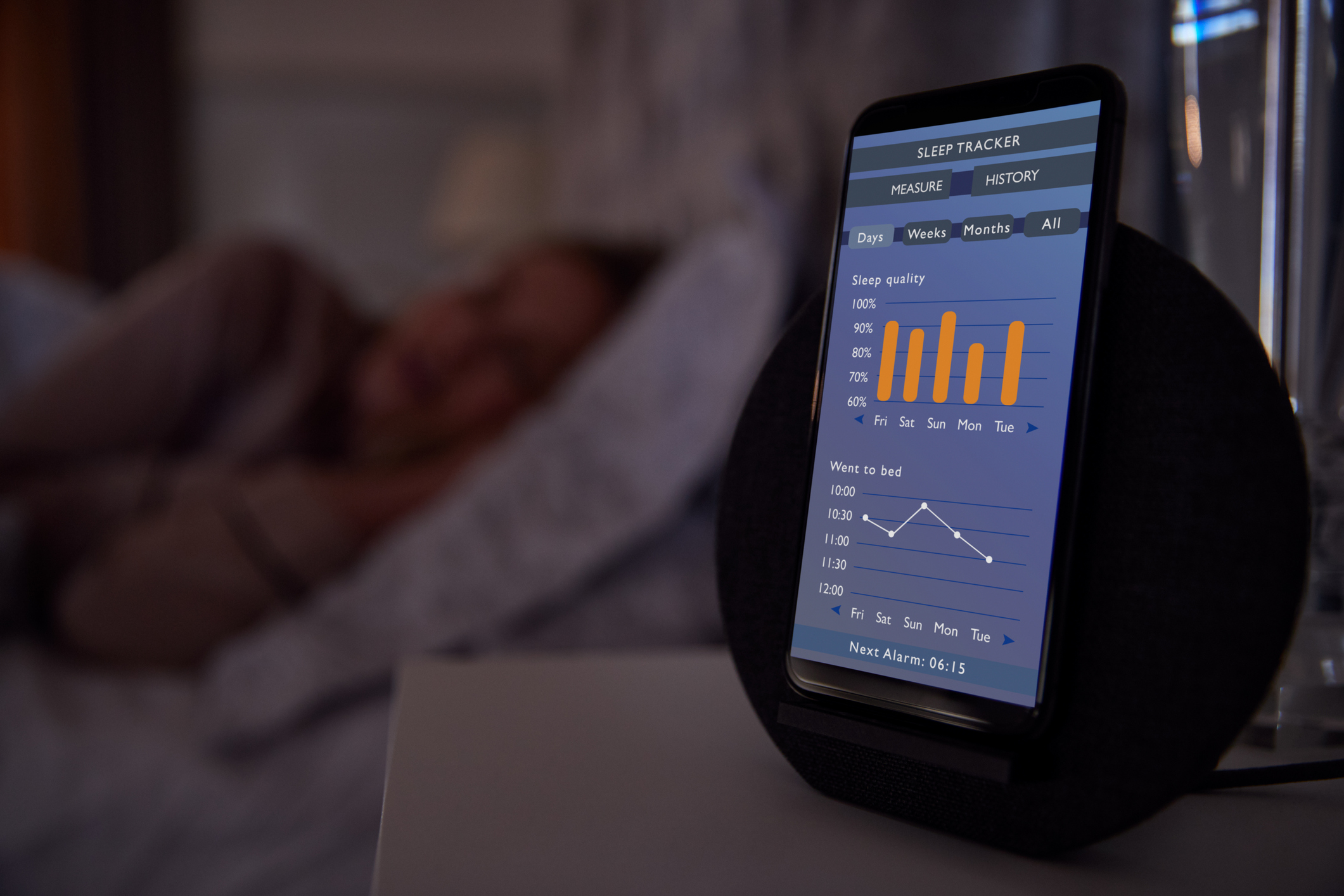
People say that there is nothing as boring as listening to someone tell you about a dream they have had. I think there may now be something even more tedious: someone telling you about their sleep score.

Since my husband bought himself an Apple Watch, he has become a sleep swot. Our morning conversations have become a one-way monologue in which he proudly tells me about his resting heart rate, his time spent in deep slumber, the number of wake ups (with a 16-month-old next door, I am quite aware of the latter already).
Honestly, is there anything less romantic than waking up to a breakdown of your spouse’s biometrics? John Donne once wrote a poem about wearing a lock of his lover’s hair around his wrist, a moving metaphor of the transcendence of spiritual love. My husband wears no such token. Instead, he is enamoured with wrist-wear that tracks your temperature and gives you advice for ‘sleepmaxxing’ strategies and schedules.
I am sick of self-care. Wellness and good health no longer merely constitutes ‘not being ill’: it is now an ongoing process of self-improvement, a continuous project of ‘working on oneself’. Wellness was once about simple, healthy habits in moderation. It has now metastasised into a nearly impossible-to-fulfill checklist of things you must do to be a well-rounded person.
It’s absurd. The average Instagram influencer now vlogs a two-hour morning routine in which they meditate, journal, go to the gym, make a green smoothie, ingest collagen and probiotics and strange mushroom teas, all whilst wearing matching LuluLemon and promising that their featureless foreheads are down to eating more broccoli, not Botox.
It’s also all just become so stressful. There’s the pressure to track everything: steps, macros, blood oxygen levels. There’s the pressure to follow ever-changing performative trends, from ice baths to hyperbaric oxygen chambers to a 12-step skincare routine (something my algorithm is particularly keen to impress on me now that I am – God forbid – in my 30s). Then there’s the pressure to conform to all the conspicuous consumption fuelling this trillion-dollar industry – after all, if you don’t have a brand-new blender, three different water filters and a constant supply of cacao-nibs in your cupboard, are you even trying?
I am convinced that this endless self-monitoring is making us sick and unhappy. I can understand how it might be satisfying to see your health trends mapped out for you; your daily routines and habits strung up like a row of pretty fairy lights. Yet too much knowledge can be a bad thing. This sneaking self-awareness encourages this main-character mindset that I think is at the heart of many of our modern-day mental health problems: we simply think about ourselves too much.
Yes, an Oura Ring can track my heart-rate variability, but should it? Does this actually help me in any way, physically or psychologically? Surely, there is nothing more anxiety-inducing than the ‘nocebo’ effect of an Oura warning that you are in a high-stress state? Does this not prove how disconnected we have become from our own bodies and instincts, that we need a gadget – and one, ironically, that continually pings us with attention-seeking notifications and floods of dopamine – to remind us to breathe?
And yet, we continue to clutch our Oura Rings like gymwear-clad Gollums, unable to throw them away because they give us an illusion of power and control. I am not immune to the temptation. Despite the fact that I have very little time as it is between teaching, writing and trying to keep a toddler alive and happy, I still worry that I am not doing ‘enough’. Should I be lifting weights to stave off osteoporosis (does my son not count)? Should I be taking magnesium supplements or creatine for energy? Should I be using a postpartum waist-trainer, or an LED-light mask for fine lines?
Then I remember that life is short, and I should not waste my one wild and precious life worrying about such things.
Wearable health tech might seem empowering and evidence-based, but like all wellness products it risks making people paranoid and perfectionist. Looking after yourself becomes an obligation, and one that is less about feeling good and more about meeting an expectation – and then, crucially, sharing it with others.
Much has already been made about how ‘clean eating’ is really disordered eating rebranded, fuelling anxiety and compulsion. Yet ‘clean living’ has become equally toxic, leading to self-diagnosis, rigid routines, over competitiveness and emotional burnout. As author Barbara Ehrenreich wrote, “we are killing ourselves to live longer.”
This pursuit of self-optimisation is inescapable in the online world, but it doesn’t have to be in the offline one. My husband’s Apple Watch doesn’t need to become the Strava for sleep: transforming something personal into a strangely competitive act for public validation. As I very politely told him this morning, analysing your sleep cycles does not necessarily make you a better, more relaxed, or more interesting person – now let me get five more minutes.





Comments