
Keir Starmer has had a pretty torrid couple of months but, as the curtain comes down on another turbulent week, not even Donald Trump attacking the Chagos Islands deal again, or the exposure of how the pressure group that got Starmer elected was smearing journalists, compares with the turmoil in the royal household.
The royals are known to keep excellent records in their archives. The ultimate concern is that the King might be asked to give evidence against his brother
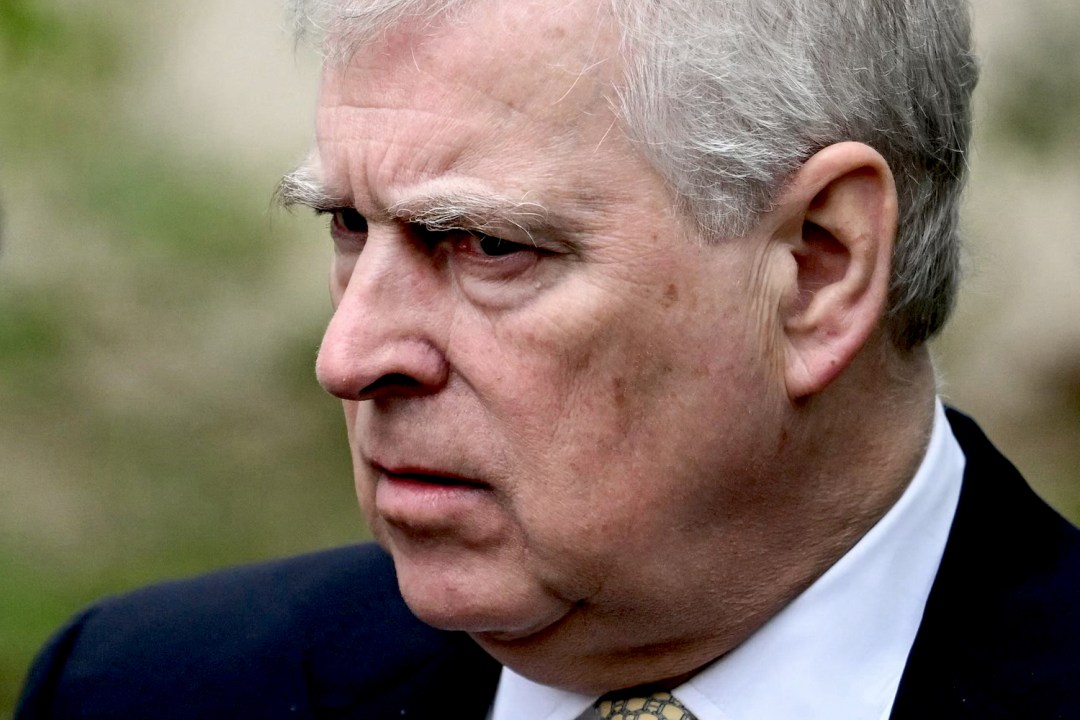
The Prime Minister waits anxiously to see what further demons are released from the Pandora’s box of the Epstein files, but for now No. 10 has done what it can to cauterise the wound by disposing of Peter Mandelson. There remains frustration in Downing Street that the police have not moved more quickly to let them release the files, but many were grateful when the spotlight shifted elsewhere with the arrest yesterday of the prince formerly known as Andrew on his 66th birthday.
Unprecedented doesn’t even begin to cover it. Andrew has consistently denied wrongdoing, but it’s hundreds of years since a royal had their collar felt and we haven’t put one of them on trial since Charles I in 1649. I was contacted this morning by one of those sources who surfaces from time to time, someone who has an excellent track record on the politics of the royals. He says courtiers are ‘terrified’ of what might follow, and not a few of them wish this was the Middle Ages when recalcitrant royals were drowned in a vat of malmsey, or given a similarly condign punishment.
‘The Palace is terrified’ about what could potentially happen, my man with his snout in the royal rosebushes informs me. ‘They would like to see him tried and convicted and sent to prison, or tried and cleared, because that would at least draw a line under things.’ This is fairly extraordinary.
Central to their concerns about Andrew is that the accusation of misconduct in public office, which refers to his time working as a government trade envoy, may only be the tip of the iceberg. ‘During the time he was a trade envoy, he also held senior rank in Royal Navy, the Army and the RAF. People are asking what he could have passed on.’
It seems provocative to suggest, as some privately are, that Andrew was hoodwinked into operating as an intelligence asset for a foreign power, but that might not be out of the question. ‘Everybody is concerned that Epstein was funded and set up by Russia,’ a security source notes. ‘If Andrew was sending details of trade to Epstein’, as it has been suggested he was, ‘defence export deals are some of the biggest business deals we do. He would have had knowledge of that and could also have requested information.’
The source close to the royal household says: ‘There’s a deep concern being voiced around Whitehall that the stuff we have seen so far is about civilian and political decisions, but we know they’re still trawling and there could be a military dimension. The sheer scale of what might emerge is enormous.’
Whatever happens, there is also a real risk of reputational damage to the King, who has said the law must run its course, and the late Queen, for whom Andrew was her favourite child. Lord Geidt was removed as the Queen’s private secretary in 2017 following pressure from both Prince Andrew and Prince Charles, who reportedly felt he was consolidating too much power. It has also been suggested that Geidt warned the Queen about Andrew’s behaviour. If that is true, and were to emerge as part of the investigation, it could cause the King embarrassment and posthumous harm to the Queen’s reputation as one of history’s most beloved monarchs.
The royals are known to keep excellent records in their archives. The ultimate concern is that the King might be asked to give evidence against his brother, or asked to recall if he was ever aware of his activities as a trade envoy. Worse still, if Andrew were found guilty, what if it transpires that the government of the day had known what Andrew was up to with state secrets about trade, and had warned Charles and he did nothing?
It has been assumed that there is a constitutional bar to the Met quizzing the monarch, but as the Buck House watcher notes: ‘Constitutional conventions are not law, they are habits. There is no legal bar to the King being interviewed by the police. One minute it’s impossible to strip Andrew of his honours and the next minute the King is booed in public and they’re gone in 15 seconds flat. It’s not a constitutional crisis, it’s a crisis of trust.’
Those with long memories will recall that while the late Queen was never interviewed, evidence passed from her to the courts is what caused the collapse of the case against Paul Burrell, the former royal butler, who was exonerated of stealing from the royal household.
A crisis of trust is precisely what is also afflicting the government. Andrew remains eighth in line to the throne. If he is found guilty, the next move, which will bring both the Palace and No. 10 into the spotlight again, is surely to remove him from the royal succession. The government is said to be looking at drafting primary legislation.
This one has a way to run and run, and the stench which surrounds both politics and the Palace will only contribute to the concern that the whole edifice of the British Establishment and its leading institutions is rotten.


Comments