The opening chords of L’incoronazione di Poppea roll out, stately and sculpted, when a door clatters open at the back of the Barbican Hall and we hear shouting. What do you know? It’s our old friends, the goddesses Fortune and Virtue (Danni O’Neill and Katie Bray), and they’re scratching each other’s eyes out. ‘Spent, neglected, loathed, unwanted!’ bitches Fortune as, dressed to kill, the allegorical frenemies take the stage. ‘Drown yourself, daughter of a whore!’ fires back Virtue, whom you’d have thought would have a nicer mouth on her. Claudio Monteverdi certainly knows how to get a party started.
Full disclosure: I came late to Monteverdi, and I’m still at the stage where every encounter with one of his operas comes as a delicious, subversive surprise. To a Wagnerite, the range and flexibility of Monteverdi’s musical imagination feels instinctively right – his Shakespearean grasp of human nature, the ability to turn on an emotional ha’penny, and above all, the sense that because he’s basically inventing his own artform as he goes along, anything is possible and everything is permitted. That (to coin a phrase) you can just do things.

So yes, let’s have performances (especially concert performances, such as this one by the Academy of Ancient Music under Laurence Cummings) where strapping tenors like Stuart Jackson (Arnalta) ham it up in a pinny, while Poppea (Anna Dennis) rocks tiger-print heels and Love (Rachel Redmond) unleashes havoc in an electric pink pantsuit. (Between Poppea in 1643 and Tristan und Isolde in 1865, the golden age of opera is bookended by two masterpieces whose moral, if they have one, is that love is basically a disaster zone.)
Curious, though (if not exactly surprising), to see the orchestra and most of the men dressed in monkish concert black on a largely bare stage. Yes, I know, I know: music critics aren’t supposed to care what it looks like. We’re meant to be dispassionate ears on stalks, silently marking our mental slate when someone begins a trill on the lower rather than the upper note. And it’s unfair to expect gods and monsters in a one-off concert performance.
But even the odd tailcoat might add a welcome and appropriate touch of flair. I was reminded that when the AAM was first founded back in the 1970s, sceptics referred to the pioneering period-instrument musicians as the ‘nut cutlet brigade’. Even now, it’s hard to shake the suspicion that many of the more fragile early-music devotees get a perverse buzz from austerity, and (as they imagine it) the purity of older music.
What Monteverdi actually creates in Poppea, of course, is a sumptuous multi-artform spectacle of cruelty, flamboyance and all those hot messy emotions that make opera of any era anathema to bores, Malvolios and the terminally literal. No significant opera composer from Monteverdi to Stockhausen meant their stage works to function wholly without visuals, which is why for anyone who regards opera as theatre rather than simply a recital with wigs, no concert performance will ever feel wholly satisfactory.
Still, this one came very close, and with performers of this pedigree the excellence of the musical side can almost be taken as read. The AAM presented a starrily cast Monteverdi opera cycle at the Barbican a decade and a half ago, under its then-music director Richard Egarr, so you might say that there’s a tradition here.
Are you a bad person if you enjoy it? Don’t ask Monteverdi; he might tell you the truth
Cummings has since established himself as a tireless, endlessly inquisitive presence in his own right, and while he generally allowed the singers to make the dramatic running, he mixed his continuo palette to support them in all sorts of droll and ingenious ways. Dry, po-faced organ chords accompanied the first mention of Seneca (Nahuel Di Pierro), and there was a little flash of harp – an aura, if you like – as the god Mercury (Robert Macdonald, sounding suitably otherworldly) appeared to tell him of his doom. Di Pierro’s singing in his final scenes was a model of measured nobility.
Then we had Christopher Lowrey as Ottone, Monteverdi’s precursor to Greg from Succession: sounding amusingly reedy as he vacillated between murderous sexual harassment from the spurned Empress Ottavia (Bray again, practically spraying out her lines) and fidelity to Drusilla, the girlfriend he clearly doesn’t deserve (Maryam Wocial had a voice like a bowl of dark cherries). Fiona Kimm danced away with her brief scene as the cougar-ish Nurse (another Monteverdi character with a one-track mind).
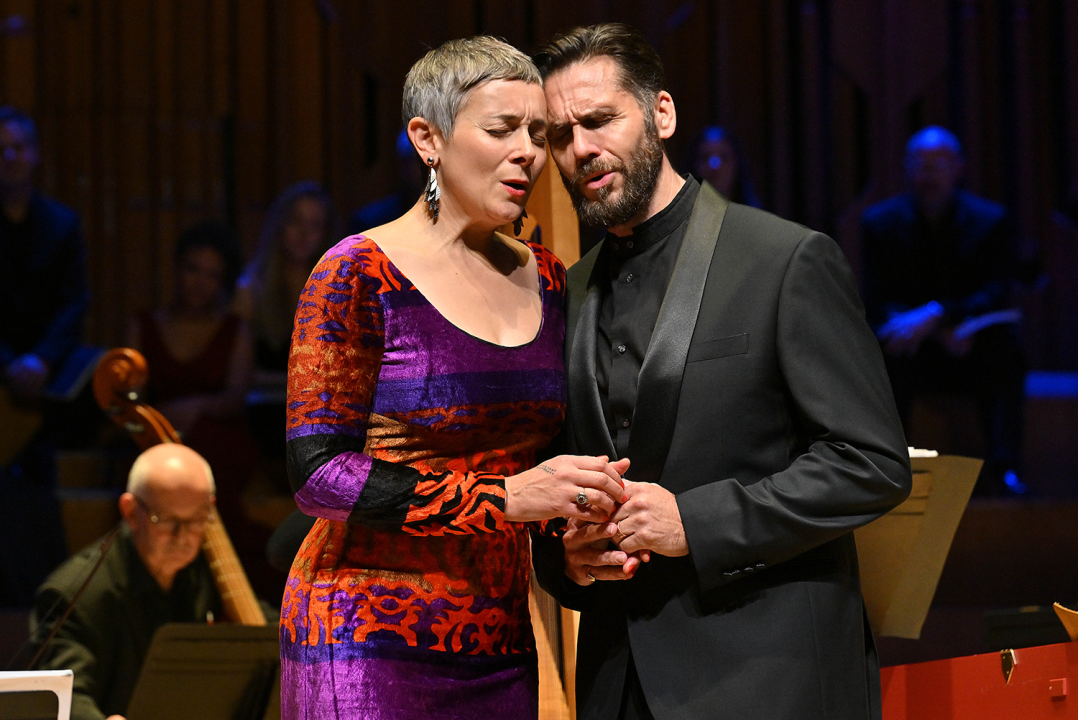
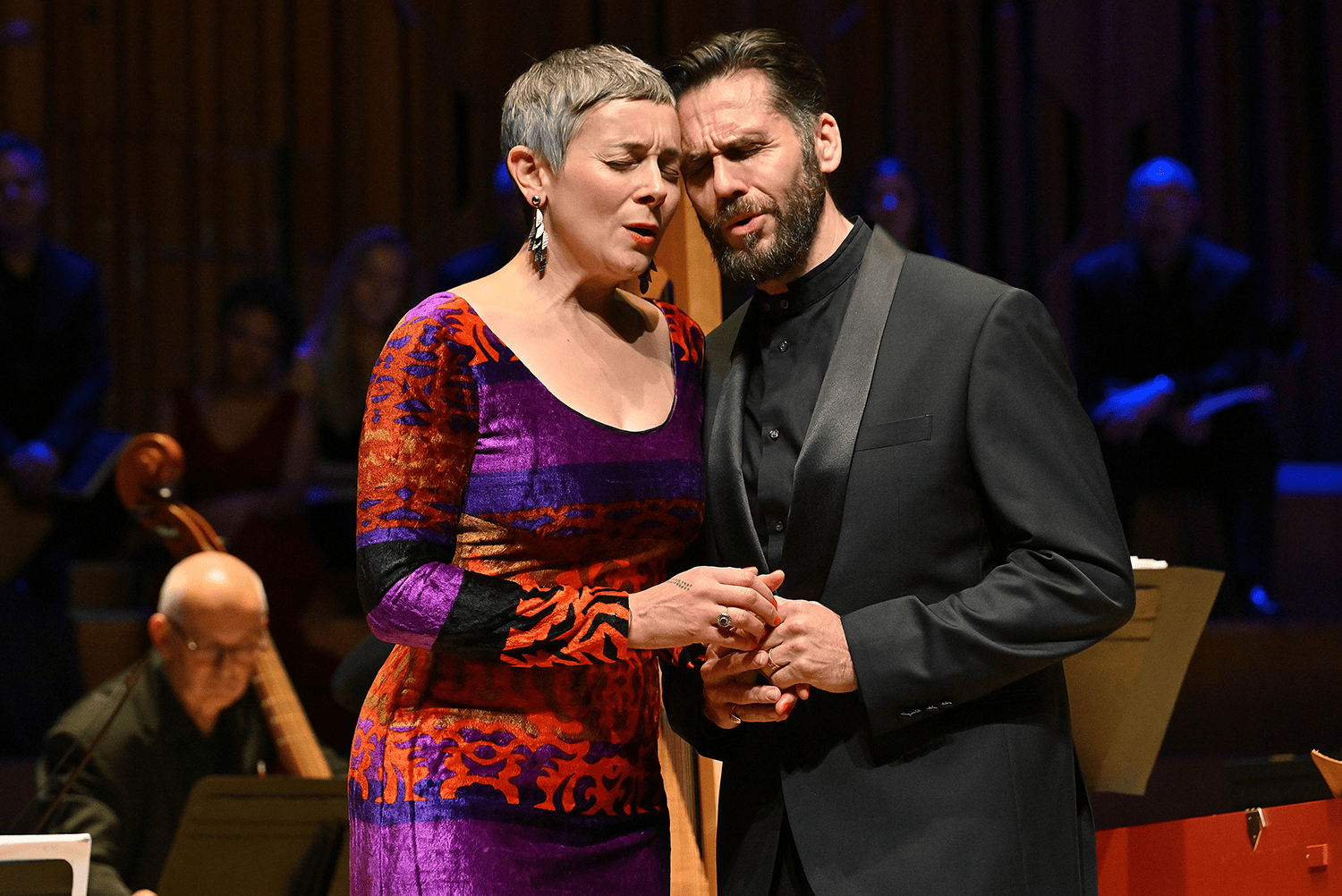
And at the centre of the whole thing we had the power couple of your nightmares. Dennis’s Poppea was luminous and scarily controlled, while Ed Lyon, as Nero, sounded both handsome and suitably hollow as he prowled, panther-like, about the stage. Their melting final duet was eerily tender and touching. Are you a bad person if you enjoy it? Don’t ask Monteverdi; he might tell you the truth.



Comments