
When Donald Trump’s political obituary comes to be written, none of his colorful phrases over the years will seem quite as outrageous as his remark in June, when the Consumer Prices Index hit 4.2 percent: “I love the inflation.” He later claimed that he meant he loved the inflation figures because they weren’t as high as they could have been. But that isn’t going to wash: he had scorned the very people who had voted for him, and for whom inflation is a very big deal, by dismissing inflation as something unimportant.
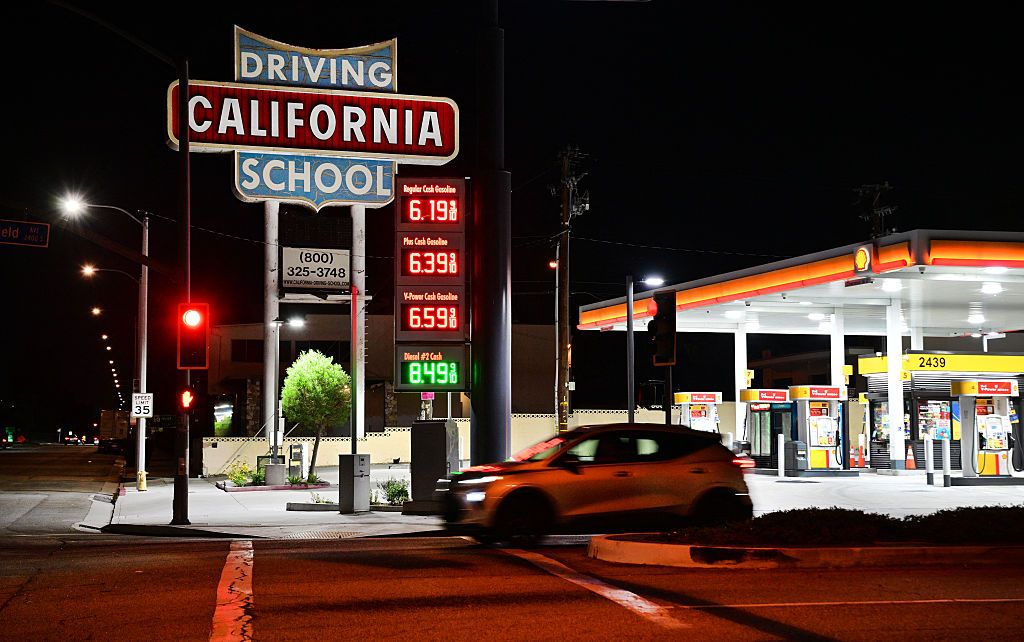
He won’t be making the same mistake, presumably, now that oil prices have hit $100 a barrel once more, for the first time since July. Until recently it was possible to believe that the worst was over, that the US and Iran would do a lasting deal, the Strait of Hormuz would reopen for good and that the oil would start flowing again. That is now looking a forlorn hope. Not only has the war between the US and Iran re-erupted, with two Iranian tankers attacked in the past day, but the conflict is spreading to other parties. Houthi rebels have seized the opportunity to attack Saudi oil interests. Saudi Arabia has sought to redirect its oil exports to its Red Sea coast, bypassing the Strait of Hormuz, but that will count for little if production facilities themselves come under attack.
Trump very much owns this crisis as well as the inflationary surge which has resulted from it. He did not need to attack Iran, even if the Netanyahu government was imploring him to do so. Oil was flowing freely through Hormuz until the end of February; for all Iranian belligerence, it was not attacking tankers and not affecting the global economy. To have attacked Iran without a viable plan as to how to avert a closure of Hormuz was a massive failure of strategy, for which Americans are paying the price. Trump’s natural voters are being hit on the pocket in spite of the success of a policy of energy self sufficiency pursued by presidents of both colors for the past two decades. The US cannot remain aloof from an oil-fed inflationary surge even though it can produce enough of the stuff to meet domestic demand. Indeed, it is remarkable that inflation has been higher in the US than in Europe this year, in spite of European dependence on imported oil. Trump’s tariff wars are another reason for this. Trump has thought of tariffs purely in terms of the benefits to the producers, not on their effect on consumers.

Oil at $100 a barrel marks a disaster for Trump. Yet the crisis is in some ways a defeat for Trump’s greatest critics, too. According to some, the fossil fuel age should be well over by now. Renewable energy, we are told by its enthusiasts, is unstoppable. The Hormuz crisis shows just what a piece of wishful thinking that is. Were we genuinely in an age of renewables, Hormuz wouldn’t matter all that much, because the world would rapidly be turning away from fossil fuels. But of course it isn’t. Global demand keeps reaching new highs, for all the investment in renewables.
Trump and his Energy Secretary Chris Wright are correct that oil is going to be around for a long, long time yet. Which makes it all the more odd that the President launched an attack on Iran without considering the consequences on global oil supplies and in turn on the global economy. Trump has often been claimed to be following a clever strategy of subduing America’s enemies by posing as a madman. But at the moment his strategy simply looks mad.





Comments