Two hours and 17 minutes after arriving at Wimbledon, I realise I hate tennis. Hate it? I loathe it. All ‘40-love’ jargon and thwack thwack of a ball. It’s football without the pack mentality. Badminton with better PR.

‘Why are you even here then?’ asks an Argentinian tennis agent when I say this by the players’ lounge. ‘This is the oldest tournament in the world! It’s the best!’ He’s right. He’s an international expert so of course he’s right. Even if all his singles players were knocked out by day three.
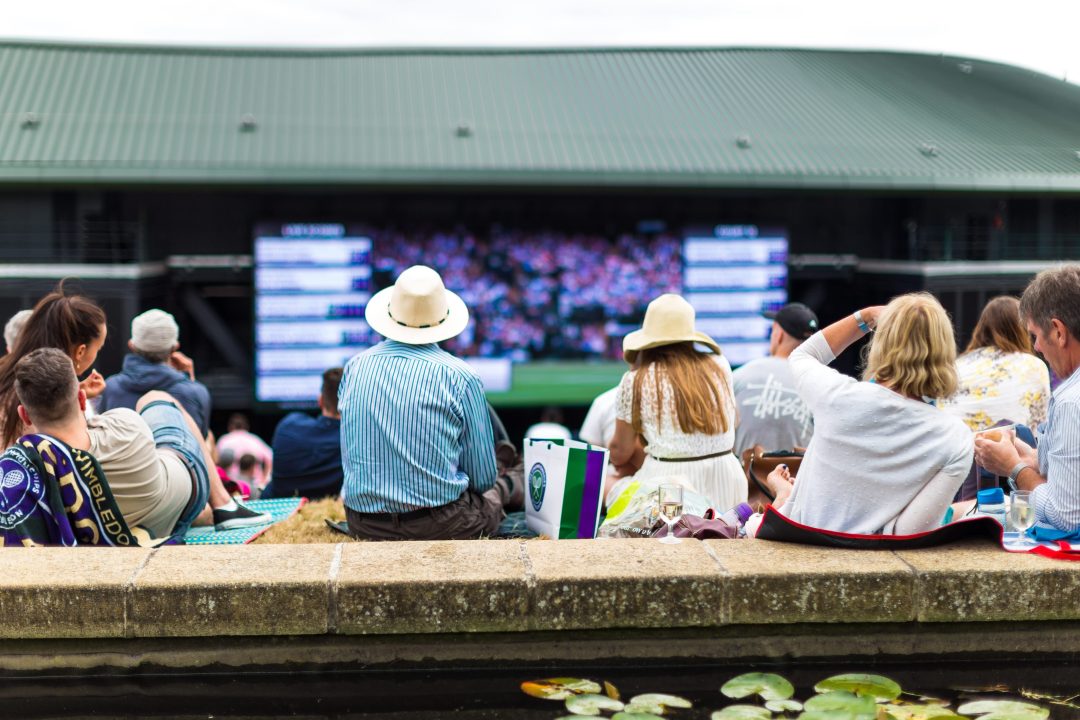
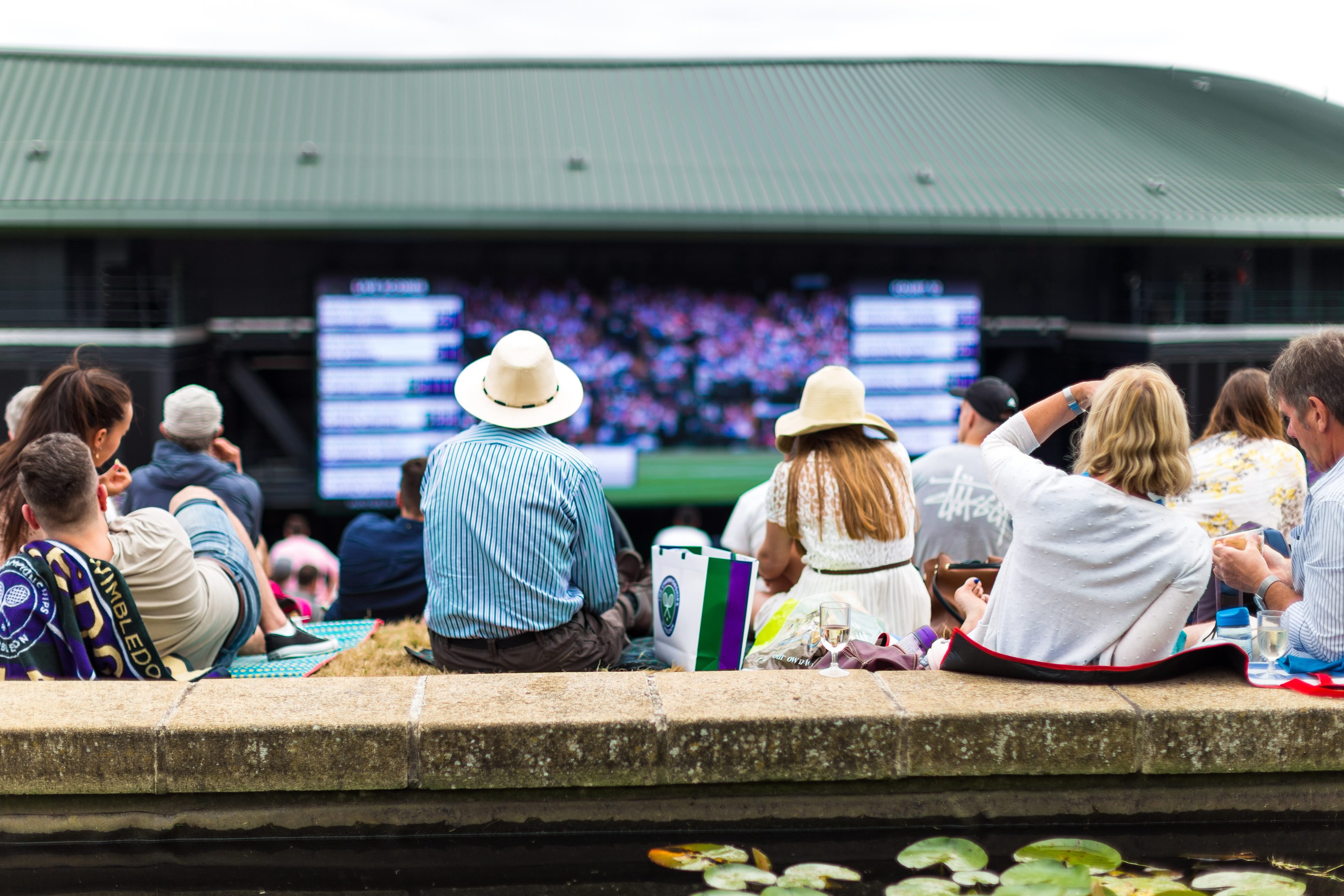
But, of course, that’s exactly why I’m here. Because no one – or very few at least – really come to SW19 for the tennis. They come to drink Pimm’s in the sun; to fan themselves on Henman Hill; to join queue after queue after queue.
Ah, the queues. The endless queues. Like socialism, they never quite go away. There’s The Queue, of course (one sleep-deprived spectator tells me they waited for eight hours to get in). But then there are all the others – to see Venus Williams on Court 14, to try the IBM ‘AI fan experience’ (whatever, exactly that is), to buy Stella Artois from its own-branded bar. Worst of all is the shop, selling every conceivable piece of merchandise from fresh cut grass diffusers to Babolat sports bags. ‘What’s the most expensive thing here?’ I whisper to one of the shop assistants from – you guessed it – a queue. She points to an enormous plushy strawberry with a cartoon grimace: ‘I’m pretty sure that’s like £500.’ Has anyone bought one? ‘God, no.’ Can she get one for free if she works here? ‘No! I just look at them instead.’
Then 1 p.m. strikes and the real tennis, the proper stuff, hits off. Naomi Osaka struts onto Court 1 in an embroidered jacket, bell sleeves and a floaty white train to thrash Daria Kasatkina in two sets. Over on Centre, the crowd (which includes Rishi Sunak in the royal box) roars for Novak Djokovic, who stumbles his way to history with a record-equalling 105th win over Arthur Rinderknech. World number ones Jannik Sinner and Aryna Sabalenka sail several serves closer to the final. All while the sun beats down at 27C and the smell of lukewarm white wine grows stronger in the stands…
Or so I imagine. I’m not watching. Nor are most of the 40,000-plus ‘fans’ here. They’re all off court, trying to get the most out of their £1 reusable cups. Eating their M&S picnics in the walled garden. Munching on miso roasted tofu or chicken karaage or, of course, strawberries and cream from the food market. They’re not, they’re definitely not, watching the tennis.
It’s a bizarre beast Wimbledon. A perfectly-mown relic from Victorian times that still somehow glitters in the modern age
It’s a bizarre beast Wimbledon. A perfectly-mown relic from Victorian times that still glitters in the modern age. The first ‘Wimbledon’ took place in 1877, at the All England Croquet and Lawn Tennis Club (now better known by its acronym AELTC) round the corner on Worple Road. A tournament of 22 male players expanded to include women and doubles the following decade. Players including British brothers Reggie and Laurie Doherty (known as the ‘gentlemen of the courts’) and America’s May Sutton (crowned the first international champion in 1905) became sporting celebrities. By the time the AELTC moved to its current site on Church Road in 1922, the self-proclaimed aesthetic of Wimbledon – tennis in an English garden – was as alluring as the tennis itself. And continues to be to this day, serving up grass champions from Evonne Goolagong to Serena Williams, John McEnroe to Andy Murray.
So traditional is Wimbledon that long-forgotten traditions are being remembered every year. Journalist Sarah Edworthy tells me that each year’s opening match isn’t only played by the reigning champions but is chaired by whichever umpire presided over the previous final. ‘Not very many people knew that until this year,’ she says. ‘Even the club historian didn’t know.’
And yet, somehow, Wimbledon’s power persists: straddling the gap between 19th-century conventionality and contemporary culture wars. That’s not to say it’s always succeeded. Arguments over unisex lavatories, dropped honorifics and the ban on Russian players in 2022 have erupted in recent years. ‘Sustainability’ remains the championship’s buzzword, with a pledge to reach net zero by 2030. It’s all so very ‘woke’, all so very gentrified. And yet still, generation after generation return, for the tea parties and the all-white dress code. For a slice of decorum and conventional order (however corporate-factured) in a city forever losing it.
As the afternoon begins to cool and the crowds thin towards Southfields station, one of the players sneaks out of the media centre and weaves towards the exit. I don’t see who it is, so I ask a starstruck woman to my left. ‘It’s… oh my God… I can’t… I can’t remember his name!’ She seems to be struggling to breathe. ‘We like him, though. He’s a good guy.’
I ask another woman in white, holding a punnet of strawberries in one hand, taking a photo with her phone in the other. ‘Oh, I don’t know, I was taking a picture of the view,’ she says with an American drawl. ‘They can’t have been that famous, though.’
Apparently it was Sinner. I didn’t see him. I can’t confirm. But neither, apparently, can half of the other ‘fans’ here.




Comments