Tennis

Nobody goes to Wimbledon for the tennis

From our UK edition

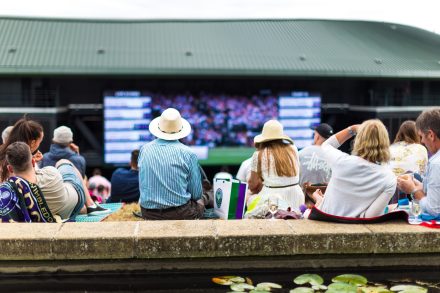
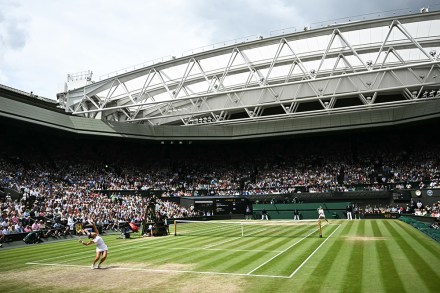
Two hours and 17 minutes after arriving at Wimbledon, I realise I hate tennis. Hate it? I loathe it. All ‘40-love’ jargon and thwack thwack of a ball. It’s football without the pack mentality. Badminton with better PR.   ‘Why are you even here then?’ asks an Argentinian tennis agent when I say this by the players’ lounge. ‘This is the oldest tournament in the world! It’s the best!’ He’s right. He’s an international expert so of course he’s right. Even if all his singles players were knocked out by day three.  But, of course, that’s exactly why I’m here.

Dear Mary: What should I do if the view’s no good with my free tickets to Wimbledon?

Q. Around this time of year a friend, who gets hold of tickets through an agency, usually asks me last-minute to Wimbledon. The trouble is it’s hard to know whether she has good seats. One year was perfection as we had shaded middle-tier seats, but last year we had an obstructed (pillar) view and I would rather have watched at home. I am sure there are those among her friends who would love to be there in any kind of seat so how, without sounding ungrateful or spoilt, can I ascertain what’s on offer before accepting? – H.S., London SW6 A. First familiarize yourself with the court layouts and seat numbers. Then, if she invites you, say: “What an incredible coincidence. I have just been speaking to X (a fictional friend). X has also managed to get last-minute seats.

Wimbledon

An enjoyably honest portrait of Rik Mayall

From our UK edition

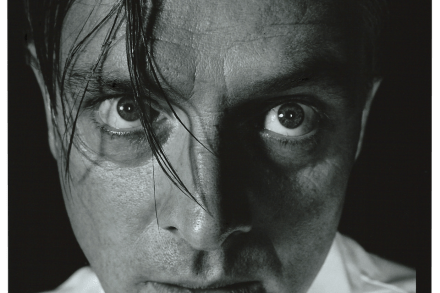
If you’ve tended to think Rik Mayall was both very funny and quite annoying, it turns out you’re not alone – because, with varying degrees of tact, that’s what most of the people who knew him suggested in Rik Mayall: Magnificent B’stard. At a time when far too many documentaries about celebrities are celebratory to the point of cloying, this one was, of course, all the better for it. By his own account, Mayall first discovered the joys of showing off in primary school. Instructed to mime in the choir, since his voice was ‘so horrible’, he did so with the wild exaggeration that would remain his speciality. The laughs he got duly turned his boyhood head.

Forties’ love: tennis serves me a perfect midlife crisis

There comes a time when every man must choose how to tackle an impending midlife crisis. A Maserati? A marathon? A mistress? Lacking the wealth, stamina or sheer Italian-ness for any of the above, I’ve plumped for that most gentile of sports to feel alive again: tennis. The problem with a new hobby, of course, is that you immediately feel more infantile than raffishly young. Picking up fresh skills means relearning how to learn, decades after university, when you actually had the appetite for self-improvement. Sure, tennis is, as studies have found, one of the most effective activities for staying healthy. But it’s also infuriatingly finicky. Technique-wise, I can fire off a decent groundstroke (forehand and backhand), thanks to lessons as a mopey teen.

tennis

Forties’ love: tennis serves me a perfect midlife crisis 

There comes a time when every man must choose how to tackle an impending midlife crisis. A Maserati? A marathon? A mistress? Lacking the wealth, stamina or sheer Italian-ness for any of the above, I’ve plumped for that most gentile of sports to feel alive again: tennis. The problem with a new hobby, of course, is that you immediately feel more infantile than raffishly young. Picking up fresh skills means relearning how to learn, decades after university, when you actually had the appetite for self-improvement. Sure, tennis is, as studies have found, one of the most effective activities for staying healthy. It’s also infuriatingly finicky. Technique-wise, I can fire off a decent groundstroke (forehand and backhand), thanks to lessons as a mopey teen.

Don’t write off Wales just yet

From our UK edition

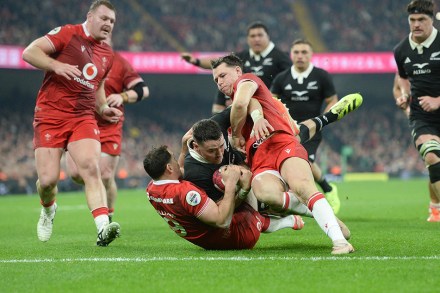
My friend Tim Andrew has admirable priorities. When I told him I had tickets for this week’s Six Nations opener at the Stade de France, he texted back: ‘Final whistle to a restorative glass in the 6ième arr: 40 minutes. Can’t even get to the station at Twickenham in that time.’ That’s the attitude you expect from a former chairman of the P.G. Wodehouse Society. I last saw Ireland play in Paris 14 years ago, as a reporter, when the first attempt at holding the match was called off at the last moment. I arrived at Gare du Nord at noon with the temperature already below zero. There is no undersoil heating at the Stade as it was built on a gasworks. It had dropped to -10°C by the scheduled 9 p.m. kick-off.

Don’t let Serena bully you into taking the fat shot

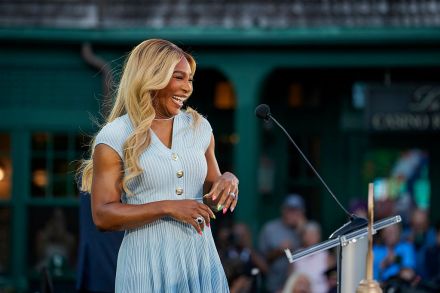
Serena Williams is one of the world’s greatest living athletes, but in her retirement, she seems to have forgotten the basics of diet and exercise. You’ve likely seen Williams’ ad campaign for Ro, a telehealth provider that specializes in GLP-1 weight loss medications like Ozempic, Wegovy and Zepbound. In the now ubiquitous commercials, Williams tells how she personally used the drug to burn stubborn postpartum fat, a respectable 31 pounds over 8 months.“It’s not a short cut, it’s science,” reads the company’s tagline. Williams looks great – of course, of course. But just because scientists have discovered a cure for fatness doesn’t mean she still hasn’t taken the easy way out.

Serena Williams

True winners steal from children

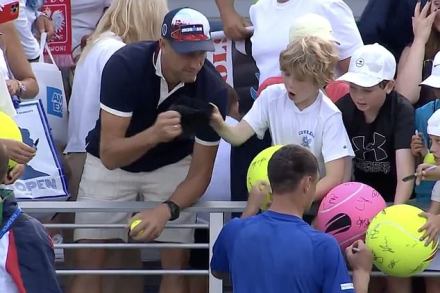
“Sack of garbage,” “common thief,” “shameful jerk” – but a few of the choice words tennis fans had for the man who swiped an autographed hat from a child at the US Open over the weekend. Sure, the alleged thief is no saint. But now that he’s reportedly been identified as a self-made millionaire, I’d rather just call him a shark. The video of the courtside incident quickly went viral, showing a grown man snatch the hat away as Polish tennis star Kamil Majchrzak passed it up to a boy who pleaded in vain. The internet did as it wont, and identified the alleged thief as pavement plutocrat and fellow Pole, Piotr Szczerek. What is this world coming to? A man can’t even steal from a child anymore without having his whole life dissected by an internet mob.

Kamil Majchrzak

The US Open OnlyFans star

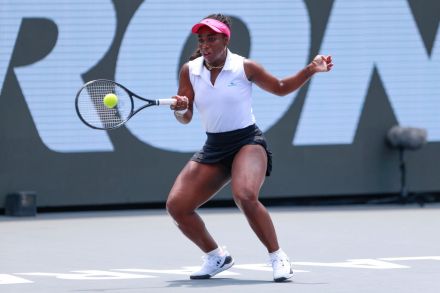
Sachia Vickery, a 559th-ranked player, lost her qualifying match yesterday, but likely gained new followers from her activity off the court: OnlyFans. That’s right, Vickery charges $12.99 a month for any fan or sexually-charged viewer to subscribe to exclusive content. During an Instagram Q&A this week, she said, “I’m very open-minded and I don’t care what people think of me. It’s also the easiest money I’ve ever made and enjoy doing it.”Clutch your pearls and breathe. Your first thought might be: Does she need money? Why else would an athlete of her stature resort to OnlyFans. Vickery is hardly broke. She made a reported $2 million in 14 years of professional tennis and even cracked the top 100 in 2018.

Sachia Vickery

The Washington Post can’t cancel John McEnroe

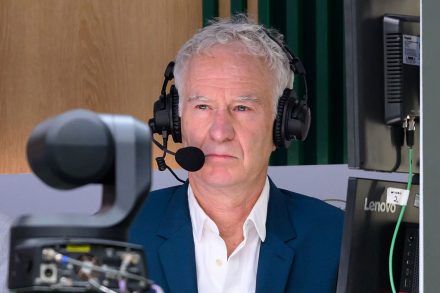
From his lofty BBC and ESPN perches at Wimbledon, John McEnroe is agitating people… again.In particular, he has irked Sally Jenkins from the Washington Post who has accused him of “belching up words” in a diatribe column dedicated to removing him from TV.This, however, only goes to prove that McEnroe can still move the needle. As he should. It is the McEnroe way. Dare I say, it’s the American way – brash, loud, and a bit erroneously confident.Sure, McEnroe mispronounced names this tournament, notably calling Hungarian Marton Fucsovics, “Fuskovitz,” or “Fuksovitz,” in a third round loss to American Ben Shelton. He didn’t fare much better with 26th ranked Stefanos Tsitsipas in this year’s Australian Open.

John McEnroe

Murray shouldn’t have relied on injury-prone Raducanu

From our UK edition

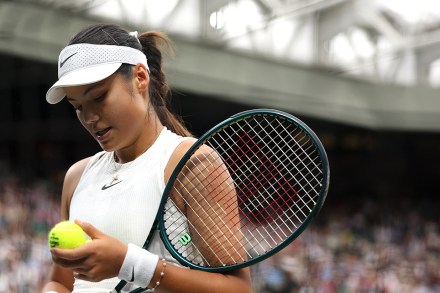
Talk about raging against the dying of the light: Andy Murray and President Biden both. Murray because he is no longer as quick on his feet and Joe Biden because he’s no longer, well, quick. At all. Biden has said he will only step down if the Lord Almighty tells him to, and ethereal intervention might not be too far away, after the BBC’s Thought for the Day turned its spiritual gaze on to the Biden/Murray dilemma the other day. Raducanu’s dodgy wrist was not good enough for tiger mum Judy Murray Poor old Murray had tried to keep the end at bay with a mixed doubles partnership with golden girl Emma Raducanu. But this always seemed like a ropey idea dreamed up on the back of a PR man’s napkin after a few too many Pimm’s.

Does AI belong on the tennis court?

From our UK edition

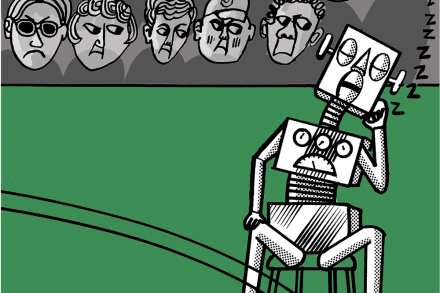
The evidence was clear, the official had dropped a clanger. At 4-4 in the first set of the women’s match at Wimbledon last Sunday, the British player Sonay Kartal should have had her serve broken when she hit a backhand long. Anastasia Pavlyuchenkova saw the ball land well out of court, as did those watching the replay, but the line judge remained mute. ‘Replay the point,’ the umpire said, leading the Russian to complain that ‘they stole the game’. This nameless offender – let’s call him Hugh after Hugh Cannaby-Serious, the official who used to wind up John McEnroe – was napping. It turned out that Hugh had been switched off for a few points. Robots can be human too. Cameras have replaced line judges at Wimbledon after 148 years.

How football found God

From our UK edition

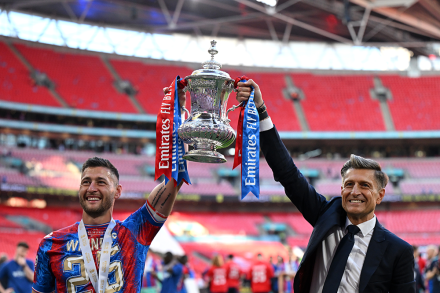
Without wanting to sound like a refugee from the 1950s, it was a shame that last week’s Cup Final was not the climax to the domestic season but sandwiched between a cluster of Premier League games – and kicked off at 4.30 p.m., which must have been unhelpful for those hoping to get a train back to Manchester. Palace wholly deserved to win: they defended brilliantly, broke like lightning and cunningly sabotaged any momentum a ponderous Manchester City might have been trying to develop by hurling themselves to the ground at the slightest opportunity. Never mind: the Palace fans were fantastic and kept Wembley afloat on a rich sea of sound throughout.  As for kick-off timings, don’t expect them to get any better.

Rafael Nadal: king of the orange brick court

From our UK edition

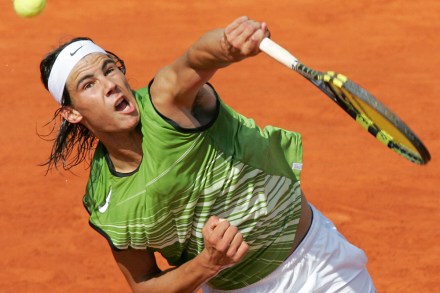
Even the greatest have setbacks. It is how they respond that makes them great. Take your chances, forget the lapses. The triumvirate who ruled men’s tennis this century – Novak Djokovic, Rafael Nadal and Roger Federer – each won just 54 per cent of the points they played. It was about turning it on when it counted. No one could turn it on like Nadal on Parisian clay. The orange brick dust of Roland Garros on which he slid and scampered so well seemed to inspire the Spaniard with magical powers. From 19 visits to the French Open, he returned to Mallorca only five times without the Coupe des Mousquetaires – and once was due to injury. No performer was so suited to a stage.

On the front line of the tennis magazine wars

The issue appeared without fanfare at the 2017 US Open giftshop: a bright-red background offset an Impressionist yet unmistakable painting of Yannick Noah hitting a forehand, dreadlocks flaring. And with that, publisher Caitlin Thompson and editor-in-chief Dave Shaftel — an unlikely journalism pair who had met bonding over the poor state of tennis media — announced the launch of Racquet magazine, a journal that would explore the lifestyle, culture, history and zeitgeist behind modern tennis. In his first editor’s letter, Shaftel more or less laid out his and Thompson’s grand plans. “We don’t think of the game as a country club sport lumped in with golf and healthy only in the suburbs,” Shaftel wrote.

tennis

The best (and worst) of this year’s sport

From our UK edition

It was quite a year for some of the worst of sport – America’s golfers, already among the richest and greediest men on the planet, wanting a massive extra bung to pitch up for the Ryder Cup and, equally noisome, Bill Sweeney, chief executive of the Rugby Football Union, paying himself £1.1 million while announcing a loss of £37.9 million. That salary included a performance-based one-off payment of £358,000. Performance? Well may you ask. As Francis Baron, a former RFU chief, observed sagely: ‘We are paying stellar salaries for junk-bond performances.’ Fair enough in my view, and that’s not even looking at the England rugby team’s less than stellar showing.

This month in culture: July 2024

The Bear, season three Hulu, June 27 America loves a misanthropic, depressive chef. How else would we know the chef is a real artist? The Bear returns for its third season with the trailer promising lots of arguing, screw-ups, failures and everything else you’ve come to expect from the beloved show. We’re not sure why you would take a perfectly good beef-sandwich shop in Chicago and try to turn it into a Michelin-starred restaurant, but we hope Carmy and the gang give us some sort of good reason. — Zack Christenson Jeremy Allen White in The Bear Wimbledon ESPN and ABC, July 1 You know summer has arrived when the brilliant green grass of the All-England Lawn Tennis and Croquet Club lights up your screens.

culture

Tennis romance that doesn’t contain much tennis: Challengers reviewed

From our UK edition

It sounds straightforward enough: a tennis romance starring Zendaya, idol of the mid-teen demographic and last seen riding a sandworm in Dune: Part Two. She plays Tashi Duncan, a junior player tipped for greatness, who finds herself in a love triangle with two other juniors: spoilt-but-roguish Patrick (Josh O’Connor) and nice-but-needy Art (Mike Faist). You might anticipate a girl-power version of Richard Loncraine’s Wimbledon (2004), with white skirts fluttering in summer breezes, coy glances at a face in the crowd, and a dramatic climax featuring a net rally in a final-set tie-break. Despite the lengthy game sequences, it’s not a film about tennis But Challengers is a very different kettle of fish.

How sport helped shape the British character

From our UK edition

Faith in state planning was central to Harold Wilson’s pledge to modernise Britain. It was his rhetorical vision of a country guided by strategic foresight and ‘forged in the white heat of technology’ that helped him win the 1964 election. But Wilson also displayed the same attachment to planning in his personal life. Back in 1934 he joined the Port Sunlight tennis club, not because he was interested in the sport but because he felt it would provide the right environment to approach one of its young female members, a shorthand-typist called Gladys Baldwin. Unlike his ‘white heat’ agenda, the policy worked. After a lengthy courtship, during which Gladys dropped her first name in favour of her second, Mary, they married.

Does tennis have a doping problem?

From our UK edition

Is it more remarkable that Romanian two-time Grand Slam tennis champion Simona Halep took performance enhancing drugs, or that she was caught? I ask only because the sport's authorities seem to catch vanishingly few dopers, which surely means either they're very bad at it, or elite players rarely cheat to win enormous sums of money.   Certainly, it's easy to be cynical about tennis. When in 2017 I interviewed legendary doping chemist Angel ‘Memo’ Hernandez – who during the nineties and 2000s was the world’s leading illicit sports chemist, providing undetectable super-stimulants to a wide range of household name athletes – he burst out laughing when I asked about doping in tennis.