Welfare

Letters: No, pensioners don’t ‘have it easy’

From our UK edition

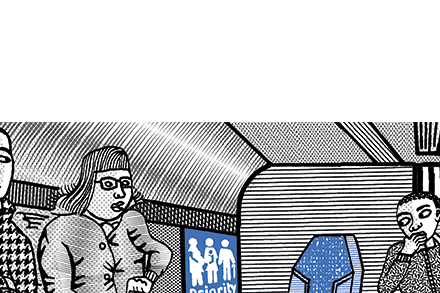
Same old Sir: In Michael Simmons’s otherwise excellent yet alarming essay on ‘Benefits treats’ (11 April), one sentence spoiled the rest of my day: to say that pensioners are ‘protected from and by every government decision’ is maddening nonsense. Pensioners are affected in exactly the same way as everyone else whenever the government of the day changes anything. Every time we switch on the heating, shop, fill up the car, pay any bill, we are suffering under the same government-fuelled inflation as everybody else. The chaotic finances of local government mean our council tax goes up along with everybody else’s. Every time tax thresholds are frozen, many of us pay more tax.

Is Britain losing its sense of fairness?

From our UK edition

49 min listen

Has Britain become a freeloader’s paradise, asks the Spectator’s economics editor Michael Simmons in our cover piece this week. Michael analyses ‘the benefits of benefits’, at a time when Britain’s welfare bill is burgeoning and most households are struggling with cost of living. For example, while a family of four can expect to pay £111 to visit the Tower of London, that is just £4 total on Universal Credit (UC), and for London Zoo it is £108 compared to £26. Michael is not arguing against the idea of helping those in need, but pointing out that – as the benefits bill continues to increase – this is another case of governments prioritising ‘welfare over work’ and ultimately squeezing the working poor.

Is Britain losing its sense of fairness?

America’s Somalis and the ‘learing’ explosion

I suspect that Somalis around the country – especially, but not exclusively, in Minneapolis – wish about now that they had spent more time studying the wit and wisdom of Gertrude Stein. Stein, had she lived in our own day, might well have become commissioner of New York City’s Fire Department. She had the one qualification that Zohran Mamdani seems to deem essential to the post. A modicum of fraud among friends often gets a pass. Overdo it, however, and the authorities get waspish Sadly, that was not to be. But there is no denying that, on certain matters, Stein was a font of practical wisdom that remains as pertinent today as it was when she was pontificating in Paris a century ago.

learing somalis

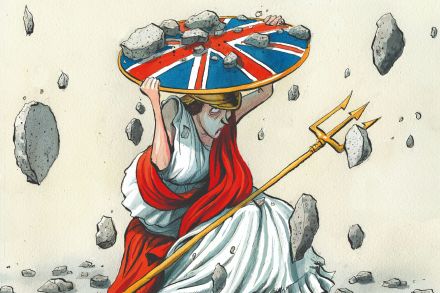
Britain is broke – and we all need to face it

From our UK edition

Sometimes when I go to bed, I think that if I were a young man I would emigrate,’ said James Callaghan, the then foreign secretary, in 1974. He was referring to that decade’s chronic economic dysfunction, with its double-digit inflation, growing unemployment and stuttering growth. Two years later, as prime minister, he would have to go cap in hand to request a bailout from the International Monetary Fund. Two years after that came the Winter of Discontent. Today’s economic picture may not be quite so bleak. Even so, the young see only intractable stagnation, cost-of-living pressures and visible decline.

Portrait of the week: Welfare rebellions, Glastonbury chants and Lucy Letby arrests

From our UK edition

Home Sir Keir Starmer, the Prime Minister, in the face of a rebellion by 120 backbenchers over the welfare bill, undertook to limit to new claimants restrictions on personal independence payments (Pip). Modelling by the Department for Work and Pensions predicted that 150,000 people might be pushed into ‘relative poverty’ by the revised welfare cuts, compared with 250,000 before. Still fearing defeat, the government made more last-minute concessions, postponing changes to Pip rules until after a review by Sir Stephen Timms, the disability minister. The government then won the second reading by 335 to 260, with 49 Labour MPs voting against. It was not clear that the eviscerated bill would reduce spending.

Is Britain’s Rachel Reeves the new Hillary Clinton?

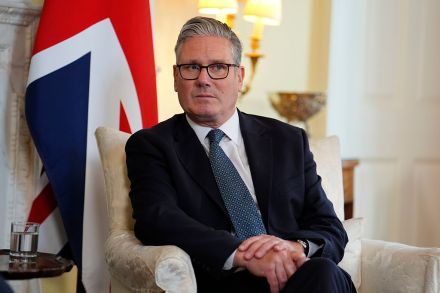
Britain's Chancellor of the Exchequer Rachel Reeves, the second most powerful politician in the country, shed a few tears from the front row of the government benches in the House of Commons during the weekly Prime Minister's Questions session. Her boss Prime Minister Keir Starmer – to her mounting horror – pointedly refused to confirm whether she'd be staying in her current post. "We’ve got free school meals, breakfast clubs, we’ve got £15 billion invested in transport funds in the North and the Midlands. We’re cutting regulation, planning and infrastructure is pounding forward," Starmer said with affected bolshiness.

Reeves

Does Starmer still want to be PM?

From our UK edition

13 min listen

There have been a number of navel-gazing interviews with the Prime Minister over the weekend. Across thousands and thousands of words, he seems to be saying – if you read between the lines – that he doesn't particularly enjoy being PM. In better news, Labour seems to have quelled the welfare rebellion. Liz Kendall is making a statement in the Commons this afternoon, in which she will outline the concessions that Labour has made on its controversial welfare bill. All in, the cost has spiralled by £3 billion per calendar year – which an already put-upon Chancellor will have to find. Whilst it remains the largest rebellion of this government, the number of rebels has shrunk to around 50.

Steve Baker on how to organise a successful rebellion

From our UK edition

25 min listen

As Labour rebels appear to have forced concessions from Keir Starmer over welfare this week, former Conservative MP Steve Baker joins James Heale to reflect on his own time as a rebel, and to provide some advice to Labour MPs. Steve, an MP for 14 years and a minister under Theresa May, Liz Truss and Rishi Sunak, tells James about the different rebellions he was a part of (from Brexit to Covid), explains how to organise a successful one and reveals how he has lost close friends when he has made the decision to compromise.

Welfare U-turn: is Keir in control?

From our UK edition

15 min listen

Keir Starmer has performed a screeching about-turn on his flagship welfare reforms, all in the hope of quelling the rebellion from more than 120 MPs who have been promised ‘massive concessions’ over concerns about disability benefits. These include moderating the bill to make it easier for people with multiple impairments to claim disability benefits, and offering to protect Personal Independence Payments (PIP) for all existing claimants for ever – to ensure there would be no detriment from the reforms for existing claimants, a key concern of the welfare rebels. But new claimants will be affected, as ministers desperately try to stop ever-spiralling disability and sickness welfare spending climbing to £100 billion by 2030.

Who’s having a worse week: Keir or Kemi?

From our UK edition

20 min listen

It’s bad news all round for Labour and the Tories. An MRP poll out today forecasts that if an election were held tomorrow, Labour would not only lose its majority, but fall behind Reform to become the second-largest party. The Conservatives would be reduced to a mere 46 seats, placing them fourth behind the Lib Dems. But that’s just the beginning of their collective woes. On the Labour side – despite Keir Starmer’s charm offensive and ongoing talks with Labour MPs about potential changes to welfare policy – the number of rebels appears to be growing. The feeling increasingly is that someone might have to go, and calls for ‘regime change’ splash the Times. Is time up for Morgan McSweeney?

Welfare rebellion: why Starmer – and Reeves – should be worried

From our UK edition

17 min listen

Keir Starmer is facing war on both fronts. He is in the Netherlands to talk about defence and announce a major change in the UK's nuclear posture in response to rising challenges in the Middle East. But everyone in Westminster wants to talk about a different kind of warfare: the warfare over welfare. MPs will vote on the government’s controversial welfare bill, after more than 120 MPs signed a reasoned amendment that would effectively stop the bill in its tracks. What has been most concerning for the government is how organised the rebellion appears, with many picking up on the mutinous mood since Kim Leadbeater’s assisted dying bill. The government is increasingly looking like it will lose the vote. Are Labour going to pull the bill?

Iran: ‘what the f***’ is going on?

From our UK edition

14 min listen

It is rare to see the President so visibly frustrated (see The Apprentice, circa 2004), but after Iran and Israel seemingly ignored his ceasefire announcement – and his plea on Truth Social, ‘PLEASE DO NOT VIOLATE IT!’ – Donald Trump has come down hard on both sides. In a clip taken this afternoon he exclaimed: ‘These are countries who have been fighting so long and so hard, that they don't know what the f*** they're doing.’ Succinctly put by the President. The exchange of fire could be the expected tit-for-tat seen after the announcement of ceasefires in other global conflicts, but it has dampened the mood at Nato, which world leaders were approaching with cautious optimism, believing the road to de-escalation was clearing. What happens next?

Will any party stand up for ‘Nick’?

From our UK edition

Meet Nick. He is 30 years old, has a good job and lives in London. He keeps himself to himself. He isn’t political. At least he never used to be. And yet the struggle of Nick has become the struggle of our age. For Nick, the social contract has broken down. Nick embodies a generation for whom achieving the same life quality as their parents is a distant dream  After he has paid his taxes, student loan and the rent for his Zone 4 shoebox, Nick’s take-home pay is meagre. He knows where his money goes: on the benefits, social housing and remittances of one Karim, 25, an aspiring grime artist; and on Simon and Linda, 70, a retired couple spending the fruits of their final-salary pensions and property portfolio on cruises.

What do ‘Labour values’ actually mean?

From our UK edition

Keir Starmer’s appearance before Labour MPs on Monday was a crowded affair. Such was the level of excitement that organisers set up an overspill room in parliament. A fortnight after a dire set of local election results, the Prime Minister promised to fight the next election ‘as Labour’. Yet his troops seem increasingly divided as to what that actually means. More than two dozen MPs spoke at that meeting, criticising Starmer’s Gaza policy, migration speech and welfare cuts. It is those benefit changes that are causing the most immediate grief to the whips. Ministers want to restrict the eligibility requirements for disability payments, meaning only those with the most serious conditions can claim support. The hope is this will save £5 billion a year by 2030.

Winter fuel U-turn and a rift at the heart of government

From our UK edition

12 min listen

After sustained speculation and a local elections drubbing, Keir Starmer announced today at PMQs that the government will be softening their policy on winter fuel. Whilst it won’t come into effect for some time, they have agreed to ensure that ‘more pensioners are eligible for winter fuel payment.’  This comes hours after a memo was mysteriously leaked to the Telegraph. It contains an extensive list of recommendations from Deputy Prime Minister Angela Rayner to the Treasury, including a set of eight tax rises such as reinstating the pensions lifetime allowance and altering dividend taxes. This amounts to a direct challenge to Rachel Reeves’s fiscal approach and preference for spending cuts.

Abolishing the care worker visa is a mistake

From our UK edition

For years I worked as an NHS manager, seeing first-hand the consequences of Britain’s broken social care system spill over into hospitals. Elderly patients, who no longer required medical care, were frequently marooned on wards because there was no one to support them at home. Behind every delayed operation or jammed A&E corridor was the same bottleneck: a care sector too understaffed to function. The government’s decision this week to abolish the care worker visa may please Labour strategists wary of Reform, but it’s incomplete. Ministers are killing off a flawed solution without putting anything in its place.

Your state pension is a socialist bribe

From our UK edition

Every four weeks the government sends me my state pension. Those words have a socialist, almost Soviet, ring. The amount has recently risen to £11,973 a year – a preposterous sum to send a 67-year-old man still in paid employment. But from the state’s point of view, the money is not entirely wasted: it buys a kind of loyalty. Because I accept the money, and do so with a certain pleasure, I am bound into the system and am less likely to say it’s a bad one. I’ve allowed myself to become a dependent. I may criticise the way the welfare state is run and demand improvements in the administration of one or another part of it, but I have become less likely to challenge the principle of the whole thing. This is bad, because we’re heading for a smash.

class

Where to find self-esteem

It’s a month before publication day for my second book, Second Class: How the Elites Betrayed America’s Working Men and Women. I start an Instagram account in the hopes of drumming up interest in the book on a new platform. I post a few clips of TV hits from recent weeks and follow a few friends. Instagram immediately recommends an article about how to grow your Instagram following, and I click on it and learn that consistency is key on Instagram. Roger that. Later that day, I find myself arranging my overachiever elder millennial self into an artfully nonchalant pose while stirring a lamb curry I’m whipping up for my regular Shabbat dinner salon. “There once was a Batya,” my husband mutters on his way to the fridge. “Now there’s a content creator.

How Fetterman appealed to a suffering Pennsylvania

Dr. Mehmet Oz has conceded to John Fetterman but has yet to say anything publicly, probably because, like many Republicans — myself included — he’s just not sure what to say. How could Fetterman, a tattooed, scowling, sloppily dressed goon with a concerning and unsightly neck lump (when I Googled his name, “Fetterman neck” was the third suggested search term), whose debate performance a mere two weeks ago was nothing short of pathetic, possibly have defeated a polished, successful, well-spoken heart surgeon for US Senate? Fetterman’s victory is almost unbelievable, until you zoom out and look at the state of Pennsylvania and most of the country.

fetterman

Poverty is a major issue in the midterms

My friend here in rural Pennsylvania is the director of our local anti-hunger program. It’s orchestrated through the YMCA and has been ongoing for years, mostly providing supplemental food for rural children. But the program started running at full throttle when Covid hit in March 2020, and now, more than two years later, my friend tells me they’re doing about 25 food distributions a month — more than they were doing at the height of Covid. What’s more, he’s seeing twice the number of people lining up for free food, and 85 percent of those people have jobs. “When people think of hunger, they think of poverty,” my friend says.