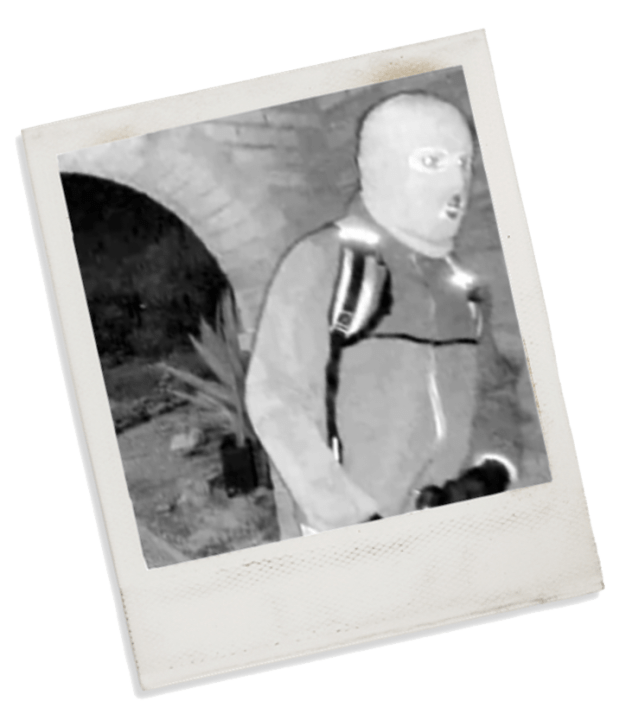


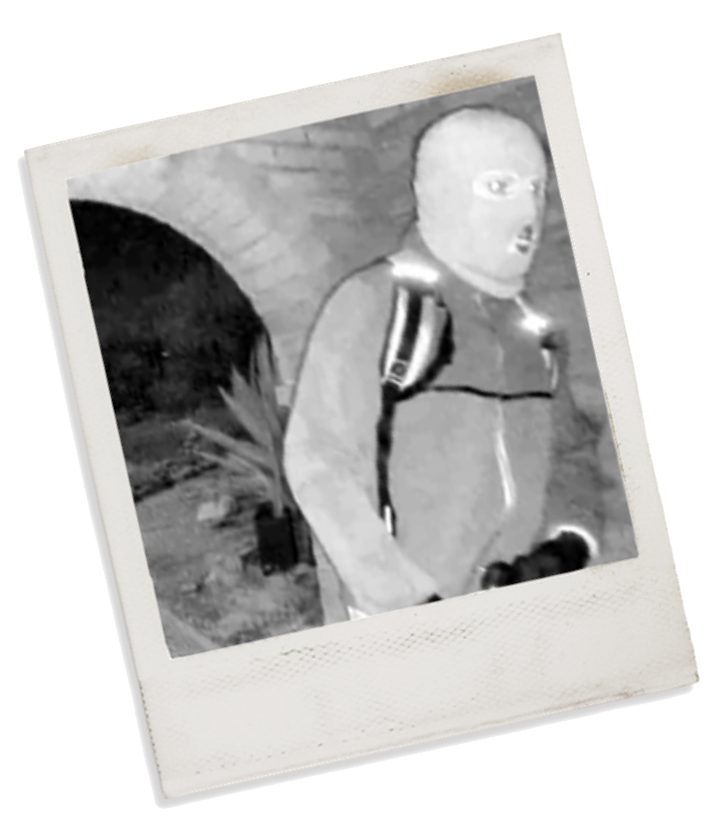
Nancy Guthrie had been missing for less than 48 hours when the game began. Not the investigation, which was already under way, with FBI agents crawling the Catalina Foothills and more than 30,000 tips flooding in from the public, but the thing building around her disappearance, the thing that one could generously call “journalism” in both its legacy and citizen varieties.
By the time Ashleigh Banfield named a suspect in the case on her podcast, by the time Megyn Kelly had structured coverage around episode titles such as “Nest Camera Questions, Savannah Stalker Possibilities and Bitcoin Rumblings,” by the time dozens of true-crime influencers had weighed in, the kidnapping of an 84-year-old woman from her home in Tucson, Arizona had become a piece of participatory entertainment. But we expect this now, in the age of QAnon and the Epstein files and near-constant social media use. It’s par for the course.
The conventional account of this kind of thing, though, almost always places the audience at the center. With participatory culture, or fan culture, the onus falls on the fan, the consumer. Internet sleuths and TikTok detectives and Reddit theorists materialize out of nowhere, spontaneously organizing around high-profile crimes and turning tragedy into collaborative storytelling. Game designer Reed Berkowitz’s analysis of QAnon as an alternate-reality game, published in 2020, introduced the concept of “guided apophenia,” which is basically the deliberate encouragement of pattern-recognition in unrelated data. Most commentators have applied his insight to crowds. The crowd finds connections, the crowd decodes – critically, the crowd plays. I’m not going to argue that this doesn’t happen – that it isn’t true – because it visibly is and it often gets out of hand. But it obscures the more interesting and uncomfortable question: what if the game has a game master? And what if she knows exactly what she’s doing?
Once you build a game that blurs fiction and reality, you don’t get to decide when people stop playing
In a 2022 New Atlantis essay, State Department policy advisor Jon Askonas came close to this when he pointed out that the structural origins of most online systems lie in the world of role-playing games, and that what we haven’t yet figured out how to make sense of is the fun that so many Americans seem to be having with the national fracture. He’s right about the fun, which sociologists such as Sherry Turkle had long documented (and which I’d been writing about for several years by the time his piece came out).
But Askonas, like Berkowitz, and indeed, myself, were mostly describing a condition, an environment in which gamified behavior emerges organically from the architecture of platforms and the superabundance of competing facts. What I think is happening with figures such as Banfield and Kelly is something more specific: they aren’t just operating in a gamified environment. They’re self-consciously playing up to it.
The intellectual history that makes this legible isn’t criminology but fan studies, a field that is, despite being decades old, constantly being re-discovered by journalists and pundits. Media scholar Henry Jenkins spent decades documenting how information industries learned to engineer the emotional bonds that turn casual viewers into loyal fans, consumers so invested they seek out additional content across platforms, evangelize to friends and do the free labor of distribution. Jenkins called this “affective economics,” and his most critical observation was that corporate America had come to embrace audience activity not as a threat but as what he called “the golden gateway into more reliable patterns of consumption.” You never suppress participation – fan art, fan fiction, fan theories. In fact, you design for it, to build content architectures that channeled audience energy into forms useful to the producer.
What Jenkins documented in Hollywood and television has now migrated, intact, into the coverage of actual crimes.
An interesting example of this is Candace Owens. Now, I’m on the fence about Owens – I think it’s plausible she’s just crazy, that she’s our generation’s Bill Cooper with a prettier face. But consider, for a moment, that maybe she’s not crazy, that maybe she’s a media savant. Think about how she structured her months-long campaign around Charlie Kirk’s assassination. Each podcast episode introduced a new claim that expanded the conspiracy’s scope, and the escalation followed a logic that anyone who’s ever played an alternate-reality or role-playing game might recognize.
First, she questioned the FBI’s findings. Then she alleged that Kirk had been threatened by a hedge fund manager, then shared private text messages between herself and Kirk, then implicated the Israeli government in his murder, then the US military. She established a tipline, which transformed passive listeners into active contributors (or fan-fiction writers, or story collaborators) whose submissions she could select, reframe, and redeploy at will. She teased upcoming revelations on social media with the explicit language of serialized entertainment.
This is textbook cultivation of what Jason Mittell, a professor of film studies and media at Middlebury College, calls “forensic fandom”: the deliberate creation of texts so layered with apparent significance that audiences feel compelled to dig into them. Mittell coined that term to describe complex television, not crime coverage. Shows such as Lost embedded puzzles in the episodes, knowing that online fan communities would work to decode them. This feedback loop between producer design and audience behavior produced increasingly elaborate shows. But Mittell’s insight contained a seed he never quite developed, which was the recognition that producers weren’t just responding to forensic fandom, they were engineering it – planting what he called “rich veins of drillable content” with the expectation that audiences would mine them.
The adaptation of this gameplay by true-crime fans is unnervingly natural. When Banfield dropped her claim, supposedly stemming from an unnamed but reliable source, that Guthrie’s son-in-law Tommaso Cioni could be involved in the kidnapping, she didn’t report a conclusion. She tossed out a thread for audiences to pull, one that could be pursued through surveillance footage analysis and competitive theory-building across platforms. The Pima County Sheriff called her reporting “reckless.” He wasn’t wrong, but “reckless” doesn’t quite cover it. “Reckless” implies she wasn’t thinking. I think she was thinking. I think she just wasn’t thinking about the crime as a physical event. Police have never even suggested Tommaso is involved, let alone accused him.
The standard version of analysis treats the viewer as the active agent and the host as a neutral, if occasionally exploitative, conduit, someone who covers the case – maybe inappropriately – but it’s the audience who does its weird thing with the content. Yes, the host might be dropping lurid details and playing them for clicks, but it’s the audience who has the real pathology here. To use a somewhat dated example, there’s Nancy Grace harping on the case of missing two-year-old Caylee Anthony – speculating about potential gruesome outcomes – and then there are those obsessed with the case, who are orders of magnitude worse.
But if you’ve watched Owens operate – or Banfield, or Kelly – what you’re looking at isn’t a journalist who happens to attract obsessive followers and might exploit them for clicks. It’s a lot more complex than that. You’re looking at someone who has internalized – or, more nefariously, learned how to consciously deploy – the mechanics of participatory culture so completely that they’ve become indistinguishable from editorial instinct. This isn’t just gory media for views and clicks – it goes deeper than that. These are people who know, whether they could articulate it in these terms or not, that serialized revelation drives engagement, that co-creation builds loyalty, that cliffhangers retain subscribers.
Joseph Matheny learned the hard way what happens when this kind of thing works too well. His Ong’s Hat project, which started in the late 1980s as a collaborative fiction about renegade Princeton scientists who’d discovered interdimensional travel, is widely considered the first alternate-reality game. Matheny planted the story across the then-nascent web – and, perhaps to a great and fatal error, sent it to the conspiracy talk radio show Coast to Coast AM – embedding it in the texture of the real media ecosystem so that participants couldn’t easily distinguish the game from genuine conspiracy.
It worked, and then it kept working after he wanted it to stop. By 2000, true believers were showing up on his lawn demanding the truth about dimensional portals. He had to end the project in 2001, and even then, participants refused to accept his confession, accusing him of covering up the cover-up. Matheny has since said of QAnon that they’re using his methods “and I don’t like that,” which is about as concise a summary of the problem as I’ve come across.
Once you build a game that blurs fiction and reality, you don’t get to decide when people stop playing.
The Guthrie family were officially cleared as suspects in Nancy’s kidnapping on February 16. Banfield didn’t retract her claims. Owens spent four and a half hours with Kirk’s widow, Erica, in December – and she didn’t walk back a single claim about his death. That’s the tell, if you need one. Anyone genuinely trying to figure out what happened changes their mind when the facts change, but that’s not what’s happening here. The new information just gets absorbed into next week’s content, the clues get adjusted, the scope gets wider and everyone moves on to the next round of the game.
I don’t think the people watching Owens understand any of this as a game. They think they’re “doing their own research.” Sure. The hosts may or may not see what they are doing as engagement bait. It’s anybody’s guess if it’s as calculated as I’ve theorized. But life can surprise you.
I have many times been surprised when meeting or getting to know a high-profile pundit, only to find that there’s no “bit” – a lot of the time, they really do think like that. The interesting question isn’t about intention, but about the distance between “covering a crime” and “producing a participatory experience about a crime.” Perhaps that distance has become so small, thanks to platform incentives and 20 years of everyone growing up inside fan culture, that you can’t tell the two apart anymore.


Comments