True crime

Nancy Guthrie and the gamification of crime

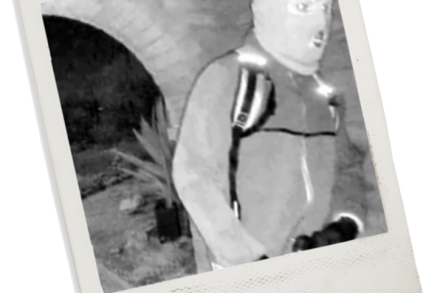
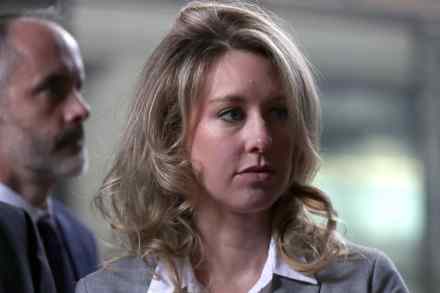
Nancy Guthrie had been missing for less than 48 hours when the game began. Not the investigation, which was already under way, with FBI agents crawling the Catalina Foothills and more than 30,000 tips flooding in from the public, but the thing building around her disappearance, the thing that one could generously call “journalism” in both its legacy and citizen varieties.

Why we dramatize history — and why we should stop

A few weeks ago, a friend asked if I had watched the Newsnight interview with Prince Andrew. That interview, yes — the one with all the sweating and the pizza in Woking, in which he definitely didn’t meet Virginia Roberts Giuffre but he did single-handedly crash his reputation, and Emily Maitlis, like the Medusa of journalism she has since become, just let him tie his own noose. Of course I’ve watched it. I’m a journalist. And a twenty-first-century citizen. Who hasn’t? My friend, for one, though she pointed out that she can just watch the three-part Amazon dramatization of the whole affair, A Very Royal Scandal, which is even juicier than the interview. (“I’m the son of the sovereign,” bellows the Duke of York, played by a soapy Michael Sheen.

history

How the Rillington Place murders turned Britain into a nation of ghouls

From our UK edition

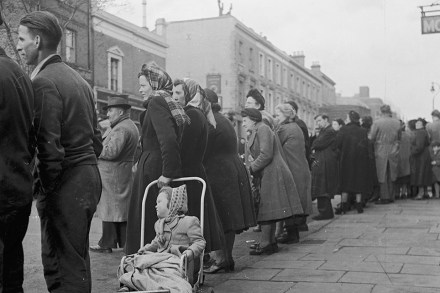
‘You never seem to get a good murder nowadays.’ With this ‘fretful complaint’ George Orwell imagined newspaper readers bemoaning the decline of the classic English murder. Gone were the ‘old domestic poisoning dramas’ – a solicitor or dentist killing his wife in a quiet suburban home – which made the perfect News of the World spread to curl up with after Sunday lunch. In their place was an altogether more brutish type of murder committed by ruthless serial killers. Everyone seemed to want to peep behind the curtains of 10 Rillington Place Orwell was writing in 1946. Seven years later, one of the most notorious serial killers in British criminal history was hanged at Pentonville.

Gripping tale of Ireland’s most polite bank robber: I’m Not Here To Hurt You reviewed

From our UK edition

There should really be a special word for it: that vicarious fragility you feel when hearing of a minor decision with catastrophically heavy consequences, as if a falling acorn had tipped a boulder. In the case of John O’Hegarty, the subject of the engrossing podcast I’m Not Here To Hurt You, the catalyst for disaster was a quick short cut the wrong way down a one-way Dublin street while working as a bicycle courier. It would ultimately lead him – an academic with a master’s degree in psychology – into heroin and crack cocaine addiction, followed by a stint as a bank robber and eight years in prison.

An untrue true crime story: Penance, by Eliza Clark, reviewed

From our UK edition

Remember the teenage girl who was murdered in Crow-on-Sea in 2016? A horrific story. Google it. Or the journalist Alec Z. Carelli, the guy who went to school with Louis Theroux, Adam Buxton and Giles Coren and wrote a book about it? Remember how it was pulled because of the controversy over the way he obtained some of his material? Well, the publisher has decided to release that book after all. There will be no upset loved ones –except perhaps those who were affected by the true crimes mentioned None of this is true.

TikTok sleuths: inside the weird world of social-media detectives

The hashtag #truecrime has been viewed over 27 billion times on TikTok. I think I can probably claim a few thousand myself, scrolling endlessly through gruesome murder cases dictated by a spotty teenager until I’m frozen stiff with fear. It was only a matter of time before these TikTok detectives began to blur the line between their feeds and the real world, and between what really happened and what they wished had happened. More clicks means more exposure. More exposure means more money. Last week in England, Lancashire police officers investigating the disappearance of a woman called Nicola Bulley held a press conference where they slammed TikTokkers for “playing private detective,” claiming they had been “inundated with false information.

tiktok murders nicola bulley

The Murdaugh trial is twisted true crime at its peak

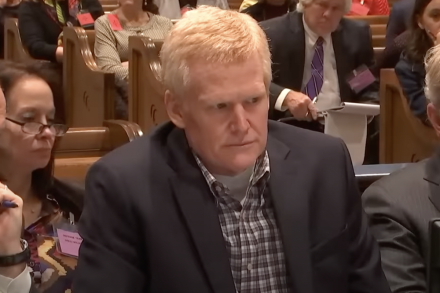
The murder trial of prominent South Carolina patriarch Alex Murdaugh has it all: two deaths, a lethal drunken boat accident, a suicide-for-hire plot, the mysterious death of the family's housekeeper and a suspicious hit-and-run. That's why the case has caught the attention of true crime fanatics and the national media — ABC News, Discovery, HBO, CNN and Netflix have all taken a stab at various documentaries and podcasts. Others still might find themselves lost in the schadenfreude of watching a powerful and wealthy family descend into tragedy. The Murdaugh family has long exercised a significant amount of legal influence in the Low Country region of South Carolina.

alex murdaugh

No genre of storytelling is more formulaic or more exhausted than true crime

From our UK edition

Nothing new under the sun. Or at least it feels that way these days, doesn’t it? The movies are TV shows are comic books are children’s toys. The TV series are podcasts are non-fiction books are magazine articles. The radio shows are real-life stories are Twitter threads are TV series. Even the interesting movies are remakes now. Intellectual property is king, franchises rule the entertainment world and audiences are left to chew the cud from a hundred-stomached cow. Sunrise, sunset and nothing new to offer. So it is with radio, and especially with true crime, the staple crop of narrative radio. No genre of storytelling is more formulaic or more exhausted. No narrative form more consistently fails to deliver what it promises. Yet on it goes.

true crime

Mind of a murderer

There are a lot of theories as to why we are living through a true crime boom. Is it white women fetishizing our pain and fear of men? Is it a psy-op to discredit leftist attempts to defund the police and abolish prisons? Or is it the collective psyche trying to metabolize a few decades of turmoil and violence now that murder rates are down from their Seventies and Eighties peak? I think it’s less complicated. It’s entertaining, it’s cathartic and it’s a way of externalizing anxiety. You listen to stories of bloody murder and grave injustice, and then you listen to the problem getting resolved as the murderer is revealed, the innocent person released, the mystery solved.

Why are we so fascinated by crime?

From our UK edition

A suitcase landed in my garden. It seemed to have come from the sky. Soon after, two policemen urgently knocked on my door. Confused, I invited them in, they hurriedly went to retrieve the bag. Inside was a load of money, drugs and keys belonging to expensive cars. They inquired if the items were mine. ‘Certainly not,’ I said. After they’d gone, I was filled with questions. That evening the policemen returned and I was interviewed for an hour. I asked them for more information, but they were unable to tell me anything. Drug deals occur regularly on our street. They happen in a flash; a hand through a car window, bowed heads and hushed voices. The flying suitcase incident added a touch of reality to one of my favourite past times which is crime fiction.