

Last Saturday evening, the American media class descended for its annual jamboree of back-slapping at the Washington Hilton. Protesters outside waved signs reading “Death to tyrants” and “Death to all of them.”
The atmosphere inside was more jovial. Donald Trump was attending the dinner for the first time since becoming President, along with most of his cabinet and senior officials. We were expecting him to give the assembled media a good roasting – and some of us were looking forward to it.
Attendees had to show invitations to get into the hotel, but there were few ID checks and no screening as we went to the pre-parties thrown by the major news organizations. Only when we walked into the main dinner hall did we pass through metal detectors.
How pleased a few journalists looked to be able to report from the front lines while having access to a buffet
The President, Vice-President and heads of the White House Correspondents’ Association took their places at the raised head table. The US colors were displayed and the national anthem sung. Then we got down to the real business of the evening: gossip.
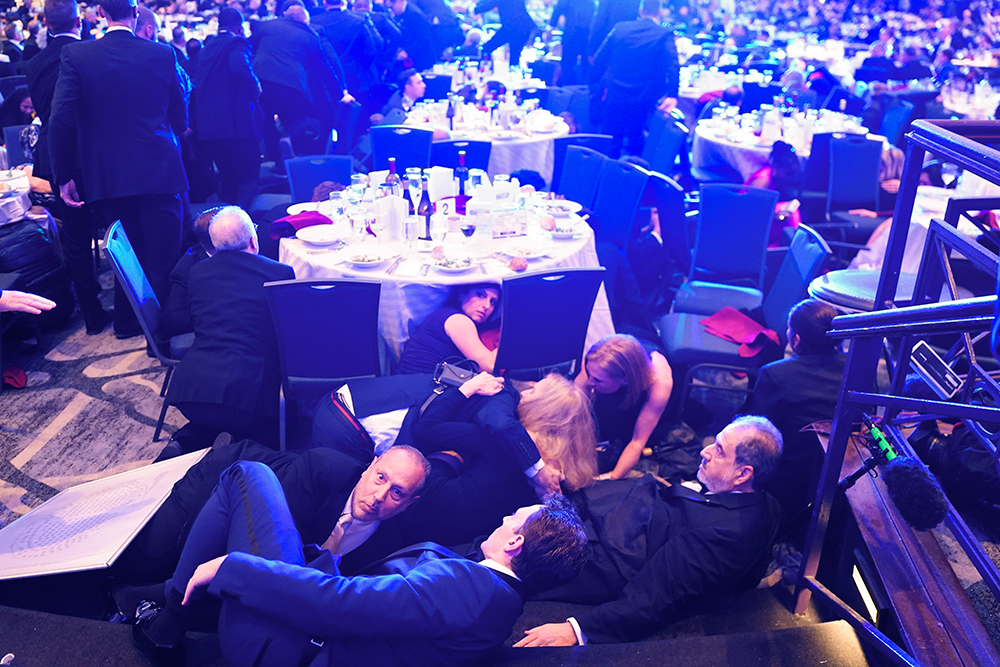
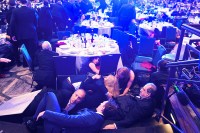
I was picking at my burrata and talking to colleagues when the chaos began. Those by the main doors heard the gunshots first, but I was seated at one of the New York Post tables, just in front of the President. All I heard was a crash from the back and then gasps before what seemed like a legion of armed agents, guns drawn, swarmed through the center of the room, shouting: “Get down.” Everybody did as they were told, though I see from the live footage that I kept poking my head up to try to work out what was going on. With the music cut, the sole, eerie noise was that of secret service agents clambering over tables and chairs. I assumed they were looking for a second shooter. At some point a man started shouting “USA, USA” but the hall hushed him. It is hard to quiet a roomful of journalists but most people knew the secret service needed silence to do their job.
The main thing that struck me was how disciplined everyone was. The secret service threw aside whatever was in their way to get the President, Vice President and then the rest of the cabinet out. Kneeling on the floor, I looked at Robert F. Kennedy Jr, directly across from me, and felt a terrible sadness, wondering what was going through the mind of a man who had lost his father and uncle to such moments.
As the central aisle was cleared, the cabinet ministers at our table were rushed out by their security teams. What had felt impressive earlier – almost everyone in the chain of command being within a few feet of each other– suddenly seemed an unimaginable risk.
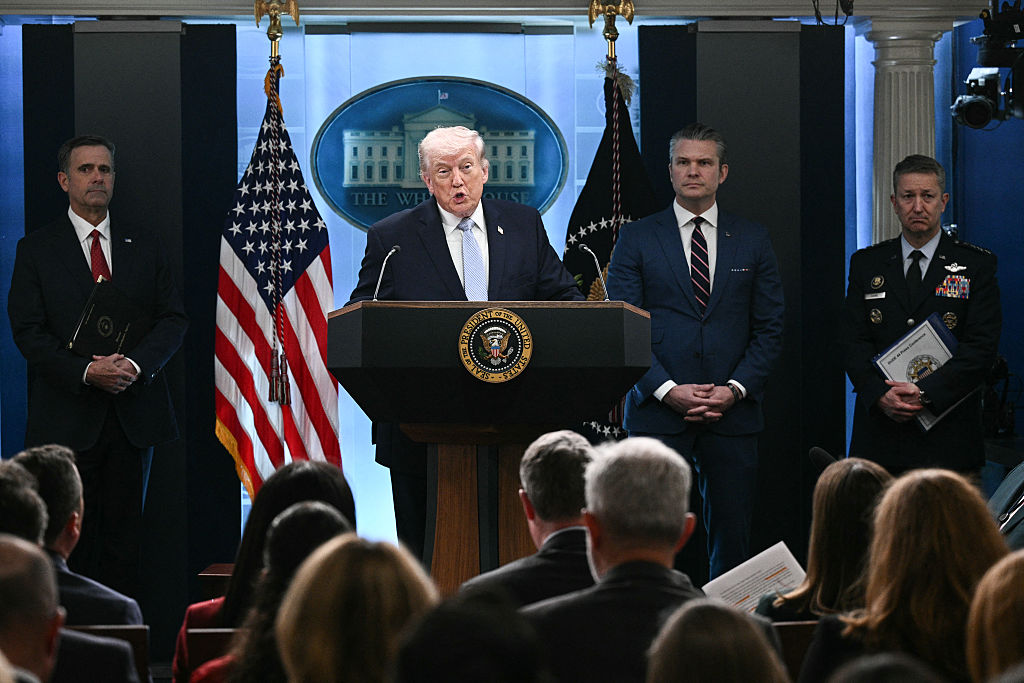
Shielding his wife, Secretary of War Pete Hegseth marched down the center of the room. Then we were locked down. People started whispering about what they had heard. A confirmed shooter was said to be dead in the hall outside, then it was two dead shooters. Some journalists started to do “live to camera” pieces on their phones, some under their tables, others moving around. I quipped to a friend how pleased a few looked to be able to report from the front lines while having access to a buffet.
The internet takes a harsher attitude. I learned later that a blonde woman had become a hate figure after being filmed grabbing a bottle of champagne when we were finally allowed out. In Britain she would be deemed a legend.
The online inferno also unearthed Charlie Kirk’s widow, filmed leaving the venue in tears, saying she wanted to go home. It is amazing how heartless the virtual world can be. I had seen her earlier in the evening and can’t imagine how someone who lost her husband to an assassin’s bullet just seven months ago felt that night.
Meanwhile, for those who remained, there was only professionalism and stoicism. Some people had been trampled upon and others wounded by flying chairs and the like. In order to avoid a crush, many of us stayed until ordered out, exchanging accounts of what we had seen, knew or guessed. I assured people that the President would want to come back and finish the dinner. I was right, but it became clear that the secret service wouldn’t allow it.
While huddling in the hotel lobby, the New York Post got hold of the would-be assassin’s “manifesto.” The contents sounded remarkably similar to what the protesters outside had been screaming. The Post’s scoop revealed the insane claims that the gunman had made against the President – that although he wanted to kill Trump and everyone in the administration, those who had “chosen” to attend the dinner were also “complicit” and therefore fair game, too.
“Demonization” is one of the words of the era, but last Saturday night the effects of demonization took on a fresh aspect. The people who have for years called Trump “Hitler” and much more once again nearly got the logical end-point of their claims. The people who say we are all run by a perverse pedophile class of Jeffrey Epstein–associated child-rapists almost got their moment of impact. And the people who pretend that everyone in the media is a corrupt liar almost got a replay of their fever dreams too.
There is a phrase in America – “Monday-morning quarterbacking” – which refers to all the things that people claim in hindsight should have happened. There is a reason why it is used sarcastically. In hindsight, the security at the Hilton should obviously have been tighter. But as a great philosopher said, it is one of life’s tragedies that while it is lived forwards it is only understood backwards. In the moment, people do the best they can. The secret service did the best they could – and succeeded in keeping everyone in the ballroom safe. The journalists did their job – with their editors checking on them while keeping abreast of the news and informing the public. It is often said that true character is shown in moments of trial. Everyone did themselves and their professions proud.
Meanwhile, the event is to be rescheduled. We will gather together again within the next 30 days.
Comments