Orson Welles (1915-85) considered the notion of posterity vulgar, but he knew that he’d be loved once he was dead. That death came suddenly, just over 40 years ago, on October 10, 1985. There was a poignancy to the way death took him – sitting at his typewriter after appearing on Merv Griffin’s talk show. By then, the co-writer, director and star of the greatest film ever made, Citizen Kane (1941), hadn’t finished a film since 1973’s ignored but now quietly loved F for Fake. At the end of his life, he may have been better known as the guy in Paul Masson wine commercials than as a cinematic genius.
To commemorate the 40th anniversary of his passing, Paris’s Cinémathèque Française last fall arranged the illuminating exhibition My Name is Orson Welles. It’s fitting that Paris should host such a show – Welles spent much of his life in France and loved the country. The curators manage to show lesser-known sides of this monstre sacré, but their notion of him as a victim of the Hollywood system ducks the truth that Welles was his own worst enemy. Too often he let down those who believed in him, squandered cash and bolted from project to project.
This is a lovingly designed show,compelling to the point where you’ll want to re-enter as soon as you exit
Welles called himself a “third-rate boy-genius” who started at the top and worked his way down. He was born into an upper-class Midwestern family in Kenosha, Wisconsin, to distinguished but mismatched parents. His father was an inventor who made a fortune from bicycle lamps, lived between hotels he owned in America and houses in Jamaica and Beijing and drank his way into the grave; his mother was a noted pianist. Welles planned to follow in her footsteps, but she died when he was nine, and with her died his dreams of a musical career. His alcoholic father died six years later. Welles was taken in by his mother’s friend Maurice Bernstein, whose name the director borrowed for Charles Foster Kane’s mentor.

The exhibition’s first room shows a 1926 clipping from the Capital Times of Madison of a beaming, round-faced Welles, “cartoonist, actor, poet and only ten.” Other early pictures indicate a self-satisfied boy who must have irritated schoolmates. But his headmaster at Todd Seminary for Boys, Roger Hill, believed in young Welles’s brilliance and collaborated with him on Everybody’s Shakespeare, a series of educational and successful books on the playwright.
The boy earned a scholarship to Harvard but instead dashed off to Ireland’s Dublin Gate, where he pretended that he was a New York actor. Using the blarney paid off, and pretty soon he became a star within the country. Back in America, he met Thornton Wilder at a party; Wilder put him in touch with the Broadway actress Katharine Cornell and, pretty soon, Welles actually was a famous New York actor on stage and radio. The exhibition shows us a May 9, 1938, TIME cover of George Orson Welles, aged only 23 and heavily made up as the octogenarian Captain Shotover in Bernard Shaw’s Heartbreak House.
Welles joined the Federal Theatre Project, then part of Franklin D. Roosevelt’s Works Progress Administration, and he co-created his own troupe at the Mercury Theater, which he later took to Hollywood. He produced controversial shows, including Julius Caesar set in modern times to attack Mussolini and Hitler, and an all-black Macbeth, transferred from Scotland to a voodoo-infested Harlem. That show toured America to screaming success; the novelist Anthony Powell praised Welles’s adaptation, though with the caveat that Shakespeare’s dialogue was too North British to travel to the tropics.
The exhibition went to great lengths to paint Welles as radical “political analyst.” This feels like a stretch. He was merely a standard Roosevelt liberal. He wrote columns for a now-defunct left-wing paper in the early 1940s, but the FBI failed to find communist tendencies in him; for what it’s worth, the Soviet Union banned Citizen Kane. The show also goes to great lengths describing Kane as the Donald Trump of his time. This is an exaggeration and further proof that in the European mind all American tycoons are interchangeable. More to the point, Welles discouraged the general belief that Kane was simply the populist baron William Randolph Hearst. The director said he mostly put himself in the character.
The exhibition goes to lengths to paint Welles as radical ‘political analyst.’ This feels like a stretch
The exhibition also featured a dark room in which visitors could hear excerpts from Welles’s 1939 radio version of The War of the Worlds, which so terrified listeners that many Americans actually believed Martians had landed on the New Jersey shore.
Welles rode this success into a massive movie contract with RKO, but things were rocky from the start. The studio refused his Heart of Darkness, plans for which the exhibition shows us, in favor of Citizen Kane. Beloved now, that film failed to draw audiences. He ran off to Brazil for a war-propaganda mission. While he was gone, RKO seized control of the editing of his follow-up, The Magnificent Ambersons, butchering it in the process. The film, which had been edited by Welles, could have been as brilliant as Kane, the exhibition tells us.
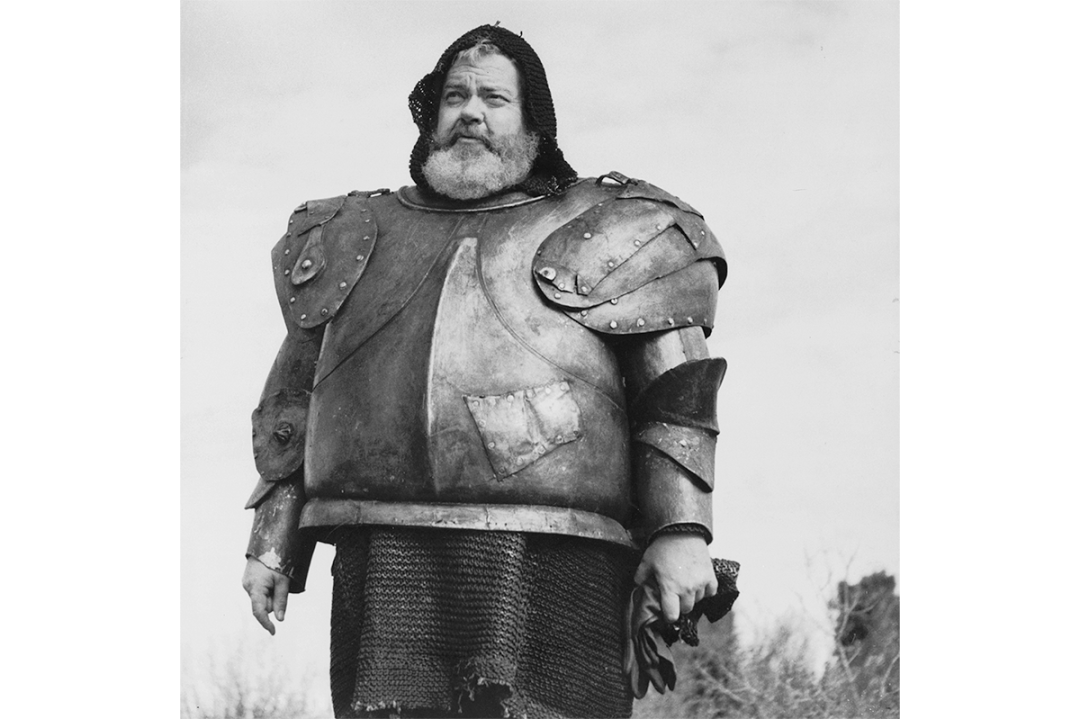
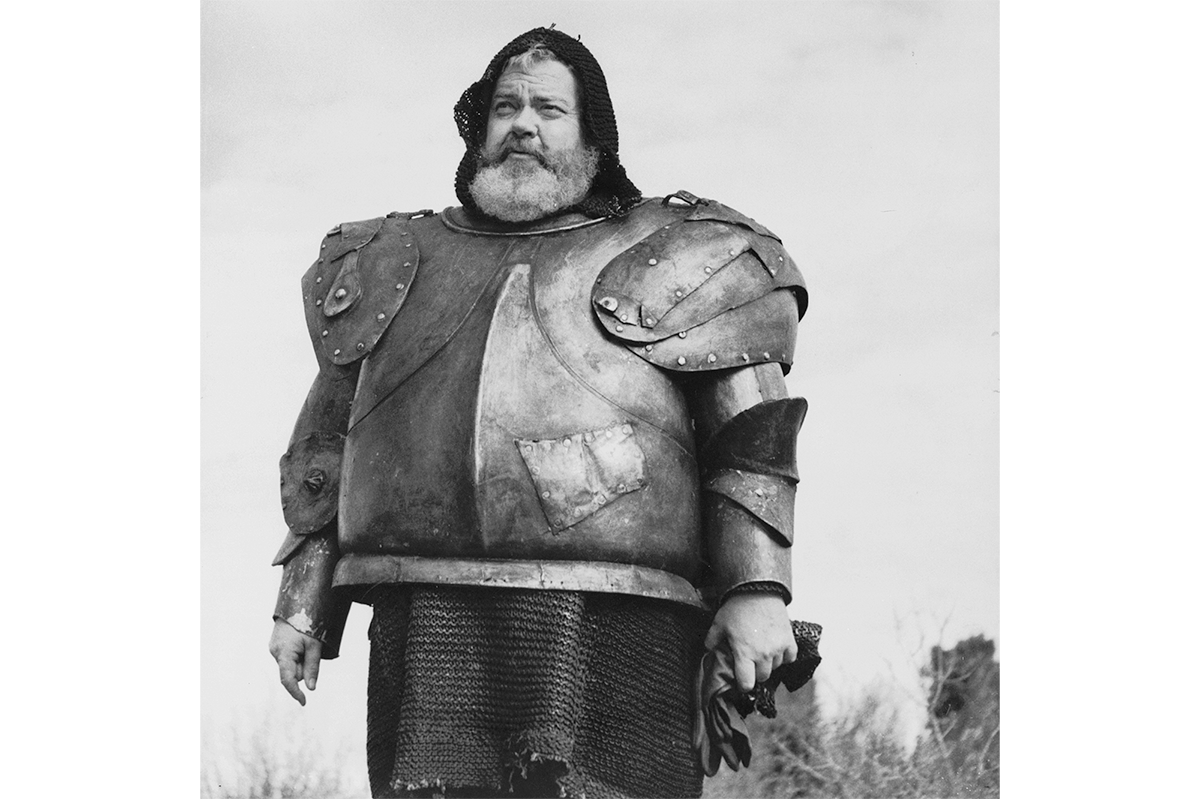
In perhaps its most intriguing moment, the exhibition asked if Welles was the greatest of all Shakespearean actors. Probably not. His age contained giants of the genre – among them John Gielgud and Ralph Richardson, both of whom Welles employed in his Henriad adaptation Chimes of Midnight (1965), an elegy to Merrie England. The director was cast as the movie’s central figure, Falstaff, a part he was born to play and not only for his girth. Made on a shoestring budget, this film is nearly as outstanding as Citizen Kane, though much lesser known.
This was a lovingly designed show, compelling to the point where it made you want to re-enter as soon as you’d exited. Or to simply want to go home and rewatch all of this boy-genius’s movies.
This article was originally published in The Spectator’s January 19, 2026 World edition.



Comments