Orson welles

My Name is Orson Welles was illuminating

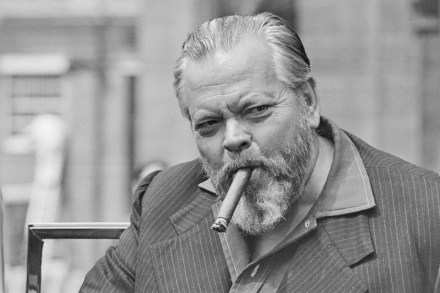
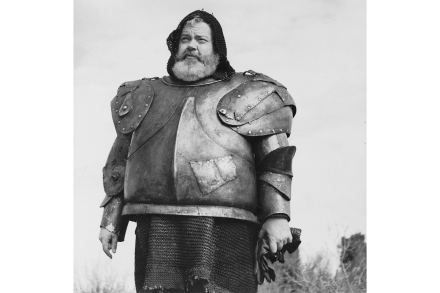
Orson Welles (1915-85) considered the notion of posterity vulgar, but he knew that he’d be loved once he was dead. That death came suddenly, just over 40 years ago, on October 10, 1985. There was a poignancy to the way death took him – sitting at his typewriter after appearing on Merv Griffin’s talk show. By then, the co-writer, director and star of the greatest film ever made, Citizen Kane (1941), hadn’t finished a film since 1973’s ignored but now quietly loved F for Fake. At the end of his life, he may have been better known as the guy in Paul Masson wine commercials than as a cinematic genius. To commemorate the 40th anniversary of his passing, Paris’s Cinémathèque Française last fall arranged the illuminating exhibition My Name is Orson Welles.
orson welles

What should we believe about New Jersey’s drones?

The past few weeks’ frenzy around alleged sightings of mysterious drones flying above my home state of New Jersey reminds me of one of my grandfather Jack McCarthy’s favorite stories. He was a teenager on October 30, 1938 — the day that Orson Welles’s famous War of the Worlds Halloween broadcast claimed that Martians had landed in a rural Garden State hamlet called Grovers Mill, which happened to be one town over from where my grandfather lived.  According to Jack’s frequent retellings of the story during family holidays, he and his friends hadn’t actually heard the broadcast themselves. They were loitering around Princeton when someone they knew drove by in a car and asked if they wanted to hop in and drive to Grovers Mill to see the Martians.

drones

A century of Hollywood’s spectacular flops

From our UK edition

Gore Vidal once sighed that ‘every time a friend succeeds, I die a little’, and there is inevitably a sense that when some idiotic blockbuster makes $1 billion worldwide, our collective intelligence loses a couple of IQ points. It’s a relief, then, when the worst examples of their kind, made at enormous cost to negligible artistic impact, flop hideously: proof that audiences will not fork out for any arrant piece of trash. The most recent high-profile failure of this kind was Todd Phillips’s bewilderingly poor Joker sequel, Folie à Deux, which insulted its audience and thus precipitated its commercial failure.

James Shapiro’s timely account of the rise and fall of an influential public theater

James Shapiro, a distinguished Shakespeare scholar, has turned his attention to the seeds of today’s culture wars in this fascinating, timely and deeply researched book. He unearths them in the demise of the New Deal’s Federal Theatre Project, brought down by a Red-hunting congressional committee. Shapiro’s is an unexpectedly gripping tale, as he exposes the “playbook” of the Texas Democratic congressman Martin Dies, a white supremacist and glory hound who seems to have settled on destroying the Federal Theatre simply as a means of boosting his profile, while also exploring the relationships between politics, plays and propaganda. The Federal Theatre was a utopian project of galactic size, of a kind which, in these days of funding cuts, now seems impossible.

Shapiro

Reminders of the Cold War in Vienna and Budapest

Apparently an acquaintance has dubbed me the “Kremlinologist of the right.” Redolent as it is of the Cold War-era drama surrounding the Kremlin, when the West was desperately trying to suss out what Winston Churchill called a riddle wrapped in a mystery inside an enigma, I could hardly object to this quip upon learning of it. Indeed, I recently traveled to two hot spots of the Cold War, Vienna and Budapest. I went full immersion in Vienna, where I attended a screening of Orson Welles’s The Third Man, a humdinger of a movie if there ever was one. Graham Greene set it in postwar Vienna, which was divided between the four occupying powers, France, Great Britain, America and the Soviet Union.

Cold War

So long, Orson Welles

During his seventy years on Earth, and for much of the nearly forty years since he left it, Orson Welles has managed to rub people the wrong way.  Welles, who was born in 1915 and died in 1985, was plainly a genius: a theatrical impresario whose Mercury Theatre was legendary in its own day; a puckish conjurer whose War of the Worlds radio broadcast misled millions; and a so-called one-man-band who, like few filmmakers before him, combined the jobs of director, producer and actor in such masterpieces as Citizen Kane, Chimes at Midnight and F for Fake.  But this record earned him little credit among the naysayers who hounded him and told us to believe them rather than our lying eyes.

orson welles

The journalists who scripted the golden age of Hollywood

From our UK edition

When talkies appeared in 1927, Hollywood went searching for talkers to write them. It turned to men like Herman J. Mankiewicz: to journalists. The greatest screenwriters of the golden age were journalists first; unlike novelists, they thrived in Hollywood — at least professionally. Good films and good journalism need brevity; novels don’t. Reading about F. Scott Fitzgerald struggling at MGM, 12 years after The Great Gatsby, is brutal, like trying to watch a man learn to walk. The film Mank, by David Fincher, tells the story of how Mankiewicz and Orson Welles created Citizen Kane — for which they shared an Oscar for the screenplay in 1942 — and how they bickered over the credit.

The best Macbeths to watch online

From our UK edition

The world’s greatest playwright ought to be dynamite at the movies. But it’s notoriously hard to turn a profit from a Shakespearean adaptation because film-goers want to be entertained, not anointed with the chrism of high art. Macbeth is one of the texts that frequently attracts directors. Justin Kurzel’s 2015 version (Amazon Prime) didn’t triumph at the box office despite two fetching performances from Bamburgh Castle in Northumberland and the snow-wreathed mountains of Skye. The trailer is a marvel. Two exhilarating minutes of virile swordplay, ravishing scenery and dramatic cathedral interiors. The film itself is a cold, muddy slog. Michael Fassbender plays the thane as a gruff Celtic robo-hunk married to a skinny, nun-like beauty, Marion Cotillard.

The director that everyone loved to hate: David Thomson interviews Peter Bogdanovich

From our UK edition

Peter Bogdanovich’s new documentary about Buster Keaton, The Great Buster, is a match made in movie heaven. I can’t think of two men more devoted to making motion pictures — huge successes in their day — more acquainted with the merciless climate of Hollywood, or more aware that they were as instrumental in their own downfall as in their glory. ‘Buster said he made the great mistake of his life in 1928,’ says Bogdanovich. ‘He had done these masterpieces in the 1920s — Steamboat Bill Jr, Sherlock Jr, The Navigator, The General — and done them the way he wanted with his own production unit... It couldn’t get any better. But then [he was] told to sign with MGM. And Buster was never the same again.