

Mocktails. Even the name sounds dodgy. Who is this apparently innocuous canned drink mocking, pray? Probably you, if you’ve shelled out close to four quid for a can of artfully tinted water.
Like much today, mocktails in tins make me want to cross my arms and make a ‘humph’ noise. When I was a girl, you drank alcohol from the age of 14 or – if you were on primitive antibiotics for VD, this being the sexed-up 1970s – you drank plain tonic with a twist, hoping that no one would spot the absence of gin and mock you as a milquetoast. In the 1980s, my American father-in-law introduced me to a cocktail without alcohol, the Shirley Temple. The contempt in the name was clear: composed of ginger beer, lime juice and grenadine, with a cherry on top, this was a drink for small children. If you supped one while your compadres were chucking down martinis, you would be going home alone.
Men and women rubbed along nicely, because they so often got drunk in the pub and fell into bed with each other
These days, non-alcoholic tipples have grown-up, sociable names: ‘Mingle’ (a brand which recently added Subtly Spicy Margarita and Juicy Watermelon Spritz to its ‘functional beverage’ line, boasting such ingredients as lion’s mane, L-theanine and ashwagandha) makes me laugh. If there’s one thing guaranteed not to make young people want to mingle – a generation already atomised and experiencing a loneliness blight – it’ll be a non-alcoholic cocktail.
Many years ago, Candace Bushnell wrote of coming to live in London and being amazed at how (unlike with the power-struggle dating she had chronicled in New York) men and women rubbed along nicely together, because they so often got drunk in the pub and subsequently fell into bed with each other. Those days are, regrettably, gone, and young people are having less sex than any generation since the 1960s. Booze, and the absence of, has a lot to do with it.
In Forbes, Louis Biscotti opines of this caution-in-a-can: ‘Health and wellness lead the shift. Consumers increasingly prioritise sleep, mental clarity, weight management and long-term health. The sober-curious movement has shifted moderation from fringe behaviour to mainstream consideration.
‘Gen Z is accelerating the evolution. Many were introduced to wellness culture, functional ingredients and credible alcohol-free options early. For them, alcohol-free socialising isn’t the exception; it’s the norm…
‘Functional beverages are a big part of that shift with products aimed at energy, relaxation, hydration, gut health and mood. Brands are also moving into adjacent categories, including fibre, beauty and cognitive-performance drinks.’
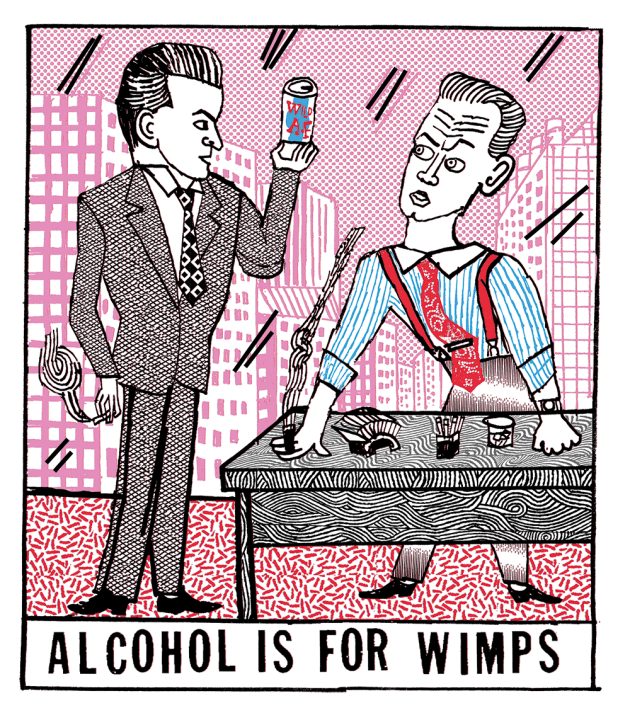
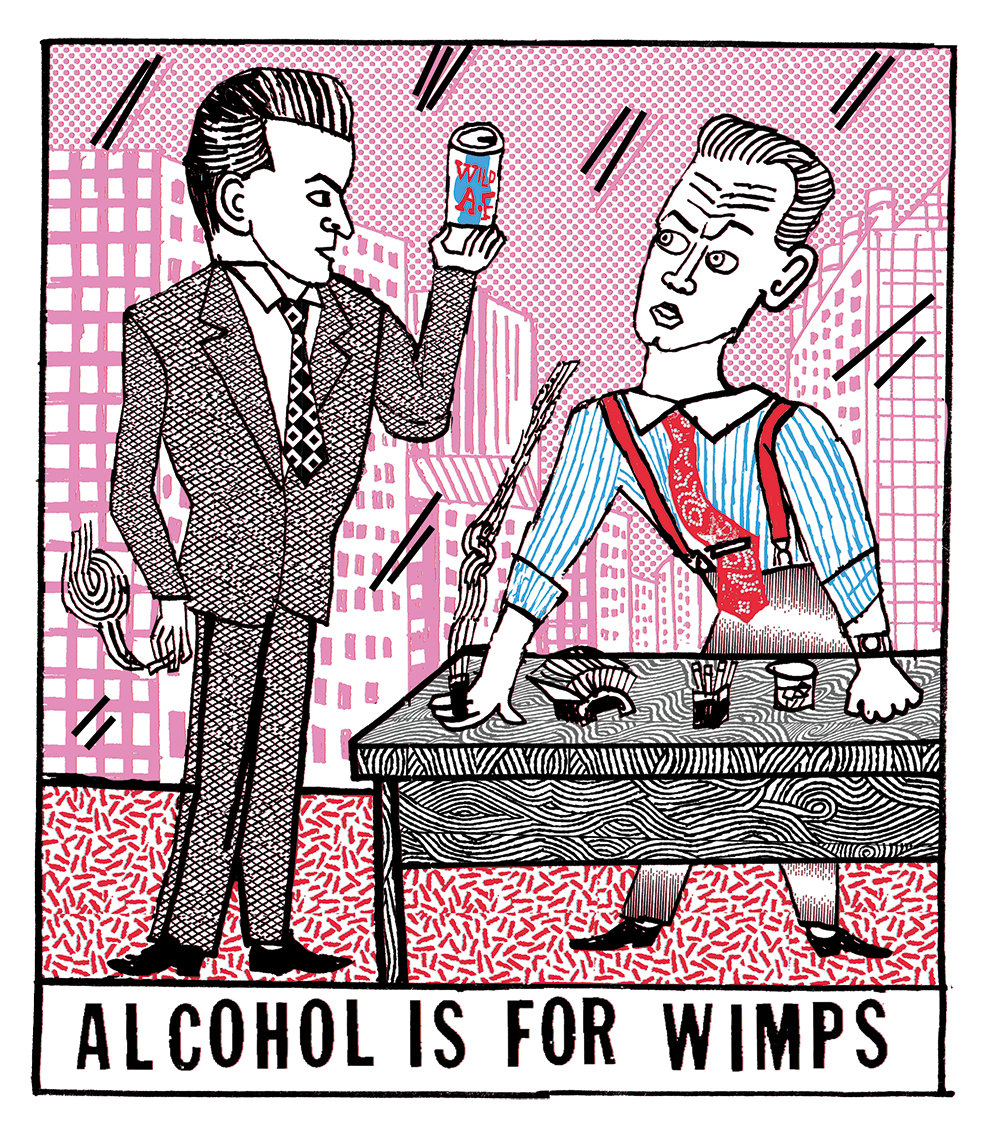
Money-mad celebs are naturally getting in on the act. Having made a fortune from his tequila brand, George Clooney and his Casamigos crew recently secured $15 million of investment for a non-alcoholic beer called Crazy Mountain; a type of beverage also favoured by the ex-hellraiser Charlie Sheen, whose Wild AF ‘is a bold new non-alcoholic beer brewed for unfiltered truths and wild nights, with all the fun with none of the fallout’. Good luck with that: a long glass of water is as much of a prompt for a wild night as a non-alcoholic beer.

But at least these beers don’t claim to be nourishing you – unlike the canned cocktails. According to Biscotti: ‘Sixty per cent of Gen Z and millennials cite mental health concerns, with many focused on improving anxiety, energy focus and memory. Functional drinks are now competing across hydration, energy, relaxation and mood support.’ All in all, ‘more than 67 per cent of Americans now practise mental and emotional self-care, up from 59 per cent in 2022, with goals that include reducing stress and improving wellbeing’. Doesn’t seem to be working too effectively, does it?
‘Alcohol will remain part of the beverage landscape, but it no longer owns every social occasion,’ Biscotti concludes – and you can almost hear the wagging finger. ‘The three-martini lunch is gone. In its place there is a more fragmented, health-conscious and experience-driven beverage culture.’
Granted, people are free to spend their money as they see fit; my bar bills would make Bukowski baulk. A few quid on some stuck-up H2O isn’t obscene by any means, unlike the world’s most expensive mocktail, which costs more than £2,400 and was – needless to say – invented in Dubai. It’s made of pomegranate juice, sparkling water and ‘EU-certified 24-carat edible gold’.
But I’m thinking that the copious use of the term ‘functional beverages’ is just another example of our old friend ‘magical thinking’, seeing as there are of course only two genuinely functional beverages – apart from medicines – and those are alcohol and caffeine. That’s why the human race has used them continually, all over the world, ever since we first discovered them, whereas guarana, lion’s mane and ashwagandha… hmm, not so much? They too would probably have seen widespread usage if they’d been even vaguely effective – but they didn’t because they weren’t.
Yet in a world where a man can become a woman just by putting on a frock, maybe it isn’t such a stretch to say that a worthless herb can become a powerful stimulant just because it’s in a funky-looking tin.



Comments