Politicians often refer to examples in history to make a point about a particular idea, policy or event. It can be an effective tool in everything from election campaigns to legislative speeches. Except when it’s not.
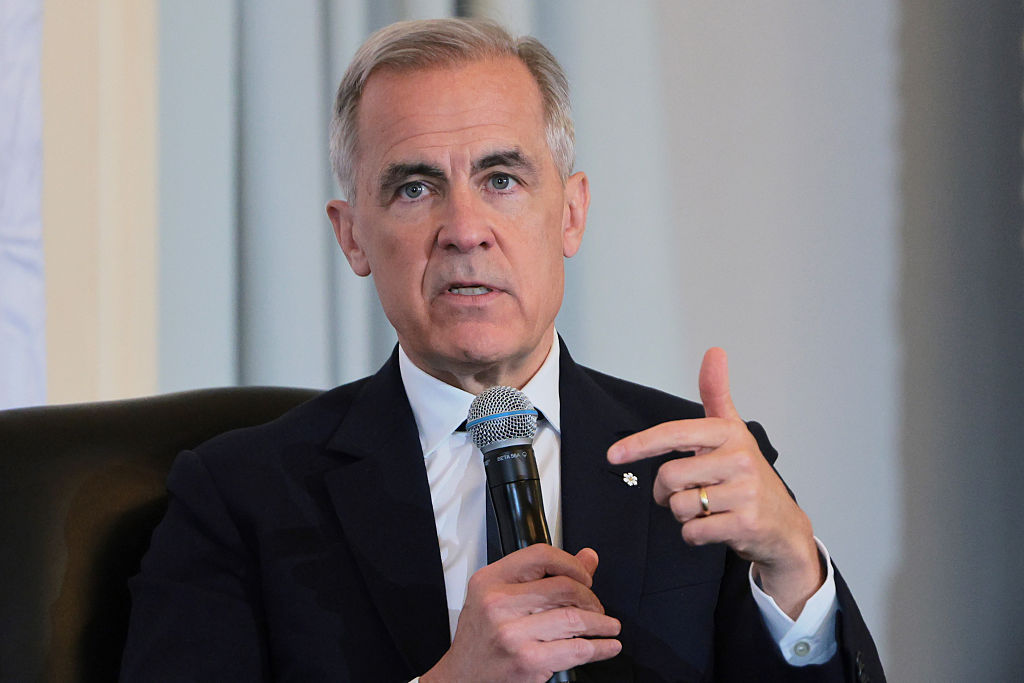
Canadian Prime Minister Mark Carney recently made a significant political blunder when he tried to compare a referendum that will occur in one of the country’s provinces to, of all things, Brexit. Not only was this a poor campaign strategy, it ended up massively backfiring and leaving the PM with plenty of egg on his face.
Let’s go back a few steps to understand why.
Alberta Premier Danielle Smith announced a referendum in her province that may determine its future in our country. The question will be quite straightforward, ‘Should Alberta remain a province of Canada or should the Government of Alberta commence the legal process required under the Canadian Constitution to hold a binding provincial referendum on whether or not Alberta should separate from Canada?’
Carney, who served as the Governor of the Bank of England from 2013-2020, unwisely decided to fan the political flames by comparing the forthcoming Alberta referendum to Brexit. He described the former a ‘dangerous bluff’ to reporters earlier this week and suggested it was a similar situation to the UK’s 2016 referendum to either remain in or leave the European Union. The Canadian PM also stated the UK was ‘trying to undo what people didn’t think they were voting for, but what they ended up having’ with Brexit nearly a decade later.
While no one is suggesting that Brexit has been perfect, Carney’s point of comparison was also far from perfect to use as a juxtaposition to the current situation in Canada.

To begin with, Alberta is going through a two-step process. The upcoming referendum will determine whether a second binding referendum about separating from Canada will be necessary. If the first referendum fails, then the entire discussion about Alberta separatism will be immediately put to rest. That’s not what happened with Brexit, which was a one-and-done referendum process. Carney knows full well that it’s not the same.
The language used in the question for the Alberta referendum is fairly cut and dry. Participants will decide whether they want to stay in Canada, or move to the next stage of deciding whether to leave or remain in Canada. The same could be said of Brexit, in which the question was even simpler, ‘Should the United Kingdom remain a member of the European Union or leave the European Union?’ While some British political commentators still insist the Brexit question confused senior citizens and others into voting for it, that position has always rang hollow. Which isn’t to say the same thing wouldn’t likely happen in Canada if the separatist movement succeeds, with Carney possibly leading the charge.
The PM also cautioned Albertans not to vote in favour of separation as a means of strengthening the province’s position with Canada, similar to the way some Brexit supporters likely did when it came to the EU. ‘People say it’s the start of a negotiation process, but for some people it’s the start of real separation,’ Carney told the media. ‘I saw firsthand what happened in the United Kingdom, when the view was, “Vote for this, it will be soft, and then we’ll negotiate”.’
At the same time, Carney ignored the fact that Alberta has a massive economic advantage over the vast majority of Canadian provinces. Alberta has the ‘fourth-largest proven oil reserves in the world, after Venezuela, Saudi Arabia and Iran,’ according to the Alberta Energy Regulator report and Oil & Gas Journal. Many countries would surely be overjoyed to negotiate with an independent Alberta and dip their toes in the province’s largely undeveloped oil sands. Hence, Alberta’s first choice for negotiations for the sale of oil and gas wouldn’t necessarily be with Canada, in spite of what Carney seems to think. If Alberta separates from Canada, the latter could potentially end up being its last choice.
Canada has experienced and survived several provincial referendums, including two in Quebec. There’s no reason to believe the newest referendum will have a different result. The Forever Canadian petition in Alberta has reportedly obtained more than 400,000 signatures, while the Stay Free Alberta petition has acquired roughly 300,000 signatures. With Smith, federal Conservative leader Pierre Poilievre and other Alberta-based politicians of the political right and left speaking out in support of Alberta remaining part of a strong and free Canada, the separatist charge will likely fail.
If this happens, it would mean the only ‘dangerous bluff’ that occurred during the Alberta referendum was uttered by the Liberal Prime Minister of Canada.



Comments